




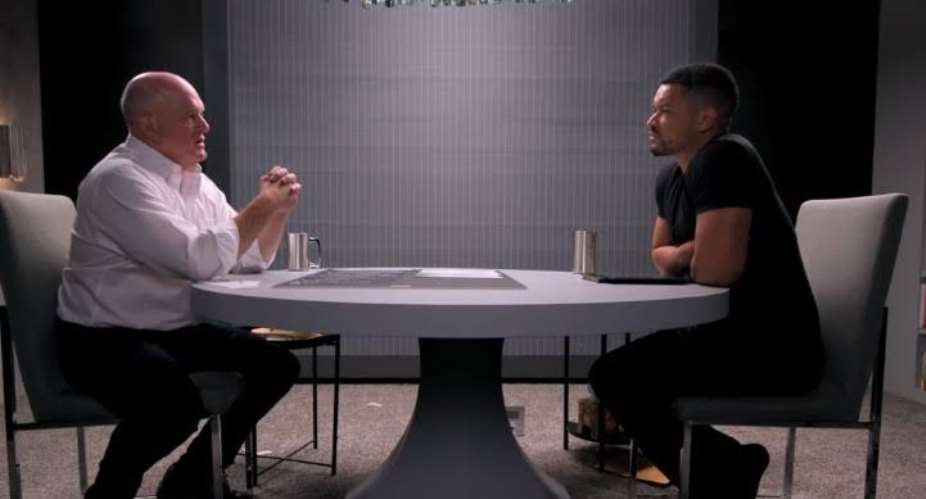
Most of us picture death as a horror film. Machines beep, a body struggles, and a terrified mind fights to the last second. That picture is so common that we rarely question it.
A hospice doctor in Buffalo, New York, has spent about three decades quietly questioning it. His name is Dr. Christopher Kerr, and what he found at the bedsides of the dying has made some of his own colleagues uncomfortable.
The nurse who knew better
Kerr's story starts in 1999. He advised a nurse that a terminally ill patient still had good time ahead if given IV antibiotics. The experienced nurse disagreed and told him the man was dying, and she was right. The nurse knew something the doctor had missed: what patients live through near the end carries meaning.
Kerr had not planned this career. He began moonlighting at Hospice & Palliative Care Buffalo that same year, and the vivid dreams and visions his patients described made him uneasy at first. Before long he saw that these inner experiences could be deeply therapeutic, for patients and families alike. He told one interviewer they "couldn't be ignored."
Today he is CEO and Chief Medical Officer of Hospice & Palliative Care Buffalo. He is also a trained neurobiologist, which matters, because he came to this work with a scientist's skepticism and not a believer's.
The numbers behind the stories
Kerr did what scientists are supposed to do. He asked questions, wrote down the answers, and counted.
The first major study, in the *Journal of Palliative Medicine*, interviewed hospice patients repeatedly as death approached, asking about the content, frequency and comfort of their dreams and visions. Almost half occurred during sleep, nearly all patients said they felt real, and the most common featured deceased friends and relatives. Dreams of the dead were significantly more comforting than the other kinds, and the comforting ones became more common the closer patients came to death.
The later headline figure came from a larger body of work. Kerr's team found that 88.1% of patients reported at least one end-of-life experience, and 99% of those patients said it felt real. A separate 2014 study found visions far more common than other researchers had reported, with 88 percent of patients describing at least one.
Across his work, Kerr and his colleagues have recorded the experiences of about 1,400 patients and families over ten years, and over 80% of them, whatever their background or age, had experiences that seemed to be more than strange dreams. In his recent podcast conversation the figure had grown past 1,500 interviews, which fits with the nine or so studies his organisation has now run.
These are interview studies done at a hospice, so they describe what dying people report, not what causes it. That distinction matters, and I will come back to it.
Who shows up
Who appears in these visions is what moves people most. In the research, the most common visions were of deceased relatives or friends, and these became more frequent as the person got closer to death.
Kerr stresses that these are not still images. He describes them as interactive experiences with specific people, not like looking at a photograph. A mother who died years ago sits by the bed. A dead brother reaches out a hand. Children in the research often see beloved pets who have died.
Some visions carry what he calls unfinished business, such as a need for forgiveness or resolution. Researchers have sorted the content into interaction with the deceased, unfinished business, and preparation for the journey ahead. Kerr also reports that dying people often work through old wounds, including childhood trauma, in their final days. In his experience the dying can reach a peace that eluded them for decades.
"Isn't this just delirium?"
This is the obvious objection and Kerr takes it head on. Delirium is real at the end of life, and so are medication side effects. But the researchers argue the two look different.
Their published position is that in delirium a person loses their grip on reality and cannot communicate rationally, whereas these visions are typically comforting, realistic and often very meaningful. The patients Kerr describes are often alert, oriented and articulate while describing them. He has said the striking thing was the matter-of-factness, the awareness, and the peace these people found, none of which the team expected.
There is a limit to what the research claims. A journalist who spent a year with Kerr noted that the study was not designed to show how these visions differ neurologically from hallucinations or delusions. So the honest summary is this. The experiences are common, consistent, and nothing like the confusion of delirium, but science has not settled what produces them. Brain chemistry, spirit, memory and love all remain on the table. Kerr himself does not claim to have settled the question of an afterlife. He insists only that the experiences deserve to be taken seriously and not dismissed.
What the dying stop caring about
Kerr says the most striking lesson is not about visions at all. It is about what matters.
In his podcast interview, he described how dying people drop the usual scoreboard. Titles, bank balances and legacy fall away. What remains is relationships: Who is in the room? Have I made peace with them? Am I a burden to the people I love? Many of the dying worry less about death than about the weight their illness places on their families.
This is why he argues that a human life is measured by interdependence and love and not by individual achievement. His research also suggests the experiences change the dying. Patients who had visions agreed more strongly that their priorities had shifted and that they understood spiritual matters better, which suggests the visions sparked inner change even at life's end.
For those of us who spend our lives chasing the next title, the next contract, the next trending moment, that deserves a pause.
The ripple to the living
One of the most useful findings concerns the people left behind. Kerr's team surveyed grieving relatives. Their first study with bereaved caregivers was the first to quantify how these visions reach beyond the dying to the family, with caregivers reporting that comforting experiences influenced their grief. A later survey reached five hundred bereaved caregivers, backed by five focus groups. Kerr puts it simply: what is good for the patient is good for the loved ones, and it soothes them in grief.
This speaks to a fear many families carry quietly, the guilt of a loved one dying alone. Kerr's work suggests that even in solitary moments, the dying may not be as alone as we imagine.
Dying is not what the films told us
Kerr describes dying as a gradual dimming of the senses and not a violent event, and he says that for many people the end is peaceful. A fair caution is in order here. Peaceful dying is not guaranteed, and it depends heavily on good palliative care, pain control and a calm environment. Many families, in Ghana and everywhere, watch loved ones die in hospitals with poor symptom relief. Kerr's point is not that death is always gentle. It is that good care and honest attention make a gentler death far more likely, and that fear is often worse than the thing itself.
He also criticises the language of "fighting" death. Modern medicine has done wonders, but it has also taught us to see every death as a defeat. When dying is treated only as failure, we lose the chance to say goodbye, forgive, and be present.
Kerr's own turn
The man who studied dying has had to face it. In the podcast Kerr talked about losing his father, a loss he has described in public before. His father died early the next morning after a night Kerr now calls an end-of-life vision. He also spoke about his own cancer diagnosis and how it changed his view of death. When the researcher becomes the patient, his words land differently.
Why this matters at home
I write for readers in Accra, Kumasi, London, Toronto and Hamburg. In many of our communities we speak openly of ancestors, of the departed welcoming the dying, of death as a journey and not a full stop. Western medicine long dismissed such talk as superstition. It is striking that a physician, after more than a thousand careful interviews, found that dying patients themselves speak of reunions with the dead. Kerr notes that dreams and visions at life's end have been spoken about in every culture throughout history, but as death has become a medical, institutional event, the human story of dying has drifted further from us.
That is the real lesson for me. We do not need to settle the metaphysics to learn from this work. We can listen to the dying. We can stop treating their dreams as symptoms to be sedated away. We can say what needs saying while there is still time, to the father we have not forgiven, the sister we have not called, the friend we owe an apology. Kerr's patients, near the end, wished for exactly that.
His book *Death Is But a Dream: Finding Hope and Meaning at Life's End*, co-written with Carine Mardorossian and published in 2020, is the fullest account of this research for ordinary readers.
If this piece stirred grief in you, please speak to someone you trust, a pastor, a counsellor, a family elder. You do not have to carry it alone.
*Chief Tutu Baffour Asare Brownsy Williams is an author, columnist and filmmaker, and founder of Brownsy Silva Company.*


 NDC not worried about NPP’s Kojo Bamba, he is small boy – Azorka
 Obuasi SHTS: 'Children are not buffet' – NPP’s Fatimatu confronts Zuba
 'I didn’t know I was supposed to chop and not work' – Blakofe on her time at GTD...
 Resource exploitation fuelling Africa’s conflicts – Mahama
 Our ports' growth always depended on collaboration across maritime, logistics va...
 Stranded Ghanaian fishermen narrate how they ate fresh fish, drunk sea water to ...
 How notorious armed robber died on the way whiles leading police to arrest accom...
 'We must continuously improve cargo handling, coordination among port operators'...
 Nii Lante Vanderpuye confident of winning NDC national chairmanship despite Gold...
 Agalga dismisses critics, assures Builsa North of progress on Sandema–Wiaga Road


