




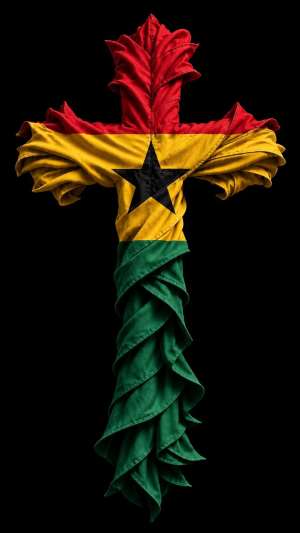
A Date I Was Taught to Cheer For
Every Ghanaian child learns to cheer for 6 March. We learn the flag, the anthem and the black star.
What most of us are never taught is how thin the line was between a colony and a country, and how many ordinary people stood on that line without knowing history was watching.
I want to show you that line. I will also admit I feel uneasy writing this part, and I will tell you why at the end.
Wide Shot: Accra, February 1948
Start wide, on a city under strain. The Second World War was over, but its bills had arrived. Prices were climbing and families were stretched. The protests that followed had been triggered by a boycott of foreign merchants in Accra. People were angry about what things cost, and they were angry about who was setting the price.
Among the angriest were men who had fought for Britain. They were veterans of the Gold Coast Regiment, which had served alongside British troops in Burma. The pensions and benefits they were promised were either too small or went unpaid.
They had been asked to risk everything for an empire, and the empire had not paid its debt.
Zoom: The March
Move in on a column of men, in step, on the road toward the Governor’s residence at Osu.
On 28 February 1948, the last day of the boycott, African ex‑servicemen began a march to present a petition to the Governor at Osu Castle about unpaid wages and broken promises.
Their march was peaceful. It was a disciplined attempt by former soldiers to bring their grievances to the Governor. These were men who knew exactly how to march in formation.
Then they reached the crossroads.
Micro‑Story: The Man Who Marched
The scene below is reconstructed. The man is invented, but the road and the day are real.
Picture one of the men in the column. He has kept his boots from the war, oiled and cared for. He wears them because a march with a petition deserves proper feet.
He is thinking about Burma, not out of nostalgia but because it is the only comparison his mind can make. He thinks: I carried a rifle for them. Now I carry a piece of paper for myself.
He does not feel angry, only certain. Whoever reads that paper will see that men who did their duty are asking only for theirs.
He walks toward the crossroads with steady, patient steps.
The Crossroads
At the crossroads, police stopped the march, and then opened fire. Three veterans were killed: Sergeant Adjetey, Corporal Attipoe and Private Odartey Lamptey.
Accounts differ on exactly what happened in the moments before the shooting — who gave which order, and what was said. I will not pretend to settle it. What is not in dispute is the outcome. Unarmed men carrying a petition were shot, and three of them died.
The reaction was immediate. People in Accra took to the streets in riot over the killings. The riots lasted five days, and on 1 March the Riot Act was read.
The Arrest That Backfired
Here the story takes the turn that colonial officials could not have wanted.
The colonial government blamed the political leaders of the United Gold Coast Convention, the UGCC. On 12 March 1948 the leading members were arrested — among them Kwame Nkrumah, J.B. Danquah, Edward Akufo‑Addo, Ebenezer Ako‑Adjei, William Ofori Atta and Obetsebi‑Lamptey.
They became known as the Big Six, and the arrest made them famous. After their imprisonment, their popularity increased. Today, the Big Six appear on the banknotes of the Ghanaian cedi. The government had intended to silence six men, and instead it handed them a platform.
London also felt the shock. A commission was sent to investigate, and the Watson Commission published its report in June 1948. The Commission examined the circumstances of the riots and paved the way for the constitutional changes that culminated in Ghana’s independence.
The Man Who Wanted It Now
Now a seventh figure enters, and the story becomes about him.
The UGCC leaders were largely lawyers, professionals and gradualists. They wanted self‑government, but by constitutional steps. J.B. Danquah had formed the UGCC to work for self‑government by constitutional means.
Kwame Nkrumah, the party’s organiser, wanted something faster. He had returned from studies in the United States and Britain in 1947, and he supported the protests of the poverty‑stricken ex‑soldiers. (Some web sources give a different return date; I follow the Oxford University teaching resource.)
The disagreement became a split. In June 1949, Nkrumah formed the Convention People’s Party, a mass‑based party committed to immediate self‑government. Its slogan was short and impossible to misunderstand: “Self‑Government Now!”
This is a point I want you to notice, because it matters later. Independence was not driven by one movement or one man. It was driven by lawyers, veterans, traders, workers and a fast‑growing mass party that disagreed with each other all the time.
Positive Action, and an Election from a Cell
In January 1950, the campaign escalated. The Trade Union Congress declared a general strike, and Nkrumah announced the start of the Positive Action campaign. Positive Action meant nonviolent protest, strikes and non‑cooperation. In practice the line was not always held. When the campaign was launched, riots erupted in the capital.
Nkrumah was arrested. And then something happened that no one had planned.
Nkrumah was imprisoned after the 1950 protests, won the 1951 elections from jail, and was released soon afterwards to lead the transition. The election was held on 8 February 1951. Elected to Parliament, Nkrumah was released from prison to become leader of government business and, in 1952, prime minister of the Gold Coast.
A man walked from a prison cell into government on the strength of ballots. I find that one of the most extraordinary sentences in our history.
The Midnight
The remaining years were negotiation: constitutions, transitions and a British governor working alongside the man he had once imprisoned. Governor Arden‑Clarke and Nkrumah worked closely together for six years to prepare the Gold Coast for independence.
Then, on the night of the handover, the country went quiet and then loud. The Gold Coast officially became independent Ghana on 6 March 1957. Ghana was the first country south of the Sahara to gain independence from colonial rule.
Let that sink in. The same date as the Bond of 1844. A treaty that opened a door in 1844 was answered, on the same day and month, by a flag raised in 1957.
Won or Granted?
Here is a debate you will meet if you read widely. Was independence won by Ghanaians, or granted by a Britain that had decided it was time?
I do not think the honest answer is one or the other. The scholarship is divided on the weight of each factor. One historian notes that Nkrumah’s Positive Action was one element in the political processes that led to early independence, though its significance is disputed by some historians. Oxford’s teaching resource frames the question the same way and invites students to weigh the aims of the British against the aims of the Ghanaian people.
My own view, held loosely, is that it was both. A mobilised people changed British calculations, and British calculations opened a legal path. Neither would have been enough alone.
Why I Am Uneasy
I said I would tell you. I feel uneasy because I know where this road goes. The man who walked from a prison cell to the premiership later became something else. In early 1964, Ghana was officially designated a one‑party state, with Nkrumah as life president of both nation and party, and he was overthrown by a coup in 1966.
I do not want to flatten him into a hero or a villain. The same record that includes his rise includes his fall. One thing is certain, though: a flag raised at midnight is not the same as a country built by morning.
I am a young writer, and I am afraid of getting this wrong in both directions. If I praise too much, I lie. If I condemn too fast, I forget the crossroads and the three men who did not come home. I will keep both in view, and I hope you will hold me to it.
What This Teaches Us
Independence began with ordinary people. Veterans with a petition and traders with a boycott sparked what the lawyers and organisers then carried. A country’s freedom is rarely given by one person, and it is rarely held by one person either.
Repression can create what it fears. Arresting the Big Six made them symbols. Power that responds to protest by jailing its leaders often builds a stage for them.
The flag is where the work starts. A new anthem does not feed a family. The harder test is not what we do on the day the flag goes up. It is what we do in the sixty years after.
Next Time
We have reached the high point of the story, but the most important questions come after it.
A new nation with the world’s attention, a treasury full of cocoa money, and a leader with a dream that spanned a continent.
Nine years after that midnight, the architect of the dream would be removed by a coup, and the country would begin a long argument with itself that has not finished.
In Part 7: The Dream and the Debts, we ask what the First Republic built, what it broke, and what it left us to settle.
A Note on Sources and Method
Dates and events in this series come from the historical record. Where accounts differ, as they do on the exact sequence of events at the Christiansborg crossroads and on Nkrumah’s return date, I say so. Scenes marked as reconstructed, such as the marching veteran, are written to carry feeling, not to claim documentation. Corrections from readers are welcome.
Sources and further reading:
- “1948 Accra riots,” “The Big Six (Ghana),” and “Watson Commission,” Wikipedia and their cited sources
- University of Oxford Faculty of History, teaching resource: “Was the Gold Coast ‘decolonised’ or did Ghana win its independence?”
- Civil Resistance Network: “Ghana (Gold Coast) to 1957,” with references to Dennis Austin, Politics in Ghana, 1946 to 1960
- Kwame Nkrumah Memorial Park, biography of Osagyefo Dr. Kwame Nkrumah
- Ghana News Agency, “The bloodshed that sealed Ghana’s agitation for self‑rule” (2026)
- Kwame Nkrumah, Ghana: The Autobiography of Kwame Nkrumah (1957)

 NDC not worried about NPP’s Kojo Bamba, he is small boy – Azorka
 Obuasi SHTS: 'Children are not buffet' – NPP’s Fatimatu confronts Zuba
 'I didn’t know I was supposed to chop and not work' – Blakofe on her time at GTD...
 Resource exploitation fuelling Africa’s conflicts – Mahama
 Our ports' growth always depended on collaboration across maritime, logistics va...
 Stranded Ghanaian fishermen narrate how they ate fresh fish, drunk sea water to ...
 How notorious armed robber died on the way whiles leading police to arrest accom...
 'We must continuously improve cargo handling, coordination among port operators'...
 Nii Lante Vanderpuye confident of winning NDC national chairmanship despite Gold...
 Agalga dismisses critics, assures Builsa North of progress on Sandema–Wiaga Road


