





Ghana is estimated to have lost about 1.1 million ounces of gold to smuggling in 2023, raising concerns about revenue losses and weaknesses in the regulation of the country’s extractive sector, according to the 2023 Ghana Extractive Industries Transparency Initiative (GHEITI) Mining Report.
The report’s findings come against the backdrop of mineral export earnings of approximately GH¢94 billion and a contribution of about GH¢12.4 billion from the mining sector to government revenue during the year.
National Coordinator of GHEITI, Ms Phyllis Adwoa Fraikue, disclosed the findings at a stakeholder workshop in Bolgatanga to disseminate the 2023 mining and oil and gas reports.
She said the estimated volume of gold smuggled out of the country highlighted the need to strengthen regulatory enforcement, address revenue leakages and ensure Ghana retained a greater share of the value generated from its mineral resources.
“The Report also estimates that approximately 1.1 million ounces of gold were smuggled out of Ghana during the reporting year.
“This raises serious concerns about revenue leakages, regulatory enforcement and our ability to capture the full value of our mineral resources,” she added.
Ms Fraikue stressed that the country’s performance in the mining sector should not be assessed solely by the quantity of gold extracted or exported, but also by the economic value retained and its contribution to national development.
“These findings point to a fundamental principle: our success must be measured not only by how much gold we extract, but by how much value we retain and what we achieve with it,” she said.
She called for concrete action to address shortcomings in the management of extractive resources, insisting that transparency must be accompanied by accountability and enforcement.
“But publishing information is not enough. Where revenue leakages occur, corrective action is required. Where statutory transfers are delayed, the causes must be addressed. Where public institutions fail to meet their obligations, accountability must follow.
“The publication of information must be the beginning of accountability, not its conclusion,” she added.
The GHEITI National Coordinator said the findings had particular significance for the Upper East Region, where gold deposits had been identified in several municipalities and districts.
She noted that mineral discoveries could create jobs, attract investment and increase public revenue, but said effective management was necessary to translate the opportunities into sustainable development.
Dr Steve Manteaw, Co-Chair of the Ghana EITI, also called for measures to ensure that Ghana and mining communities derived greater benefits from the country’s mineral wealth.
He urged authorities to improve gold traceability to establish the origin of the mineral and strengthen the monitoring of exports. He also called for export data to be captured in the national Integrated Customs Management System (ICUMS).
According to him, better traceability would enable authorities to account more effectively for gold produced by both small-scale and large-scale mining operators, while improving the management of mineral revenues.
Dr Manteaw further urged beneficiary district assemblies to channel mineral royalties into projects that would deliver long-term benefits instead of allocating much of the funds to recurrent expenditure.
Upper East Regional Minister, Mr Akamugri Donatus Atanga, said the region was emerging as an important mining area, with gold deposits identified in several districts. He stressed the need to ensure that the resources contributed meaningfully to local development.
He said discussions were underway to strengthen the region’s share of mining royalties, land rents and other revenues generated from extractive activities, including proposals to amend relevant mining laws.
Mr Atanga said the region was pursuing a coordinated development strategy under its PEARL framework, which stands for Prosperity through Enterprise, Agriculture, Resilience and Livelihoods.
He explained that the framework was intended to guide investment and development initiatives and ensure that natural resources supported shared regional priorities rather than fragmented projects pursued by individual assemblies.
The workshop, organised under the auspices of the Ministry of Finance, brought together stakeholders to review findings from the 2023 mining and oil and gas reports and discuss transparency, revenue management and accountability in Ghana’s extractive industries.
GNA

 NDC not worried about NPP’s Kojo Bamba, he is small boy – Azorka
 Obuasi SHTS: 'Children are not buffet' – NPP’s Fatimatu confronts Zuba
 'I didn’t know I was supposed to chop and not work' – Blakofe on her time at GTD...
 Resource exploitation fuelling Africa’s conflicts – Mahama
 Our ports' growth always depended on collaboration across maritime, logistics va...
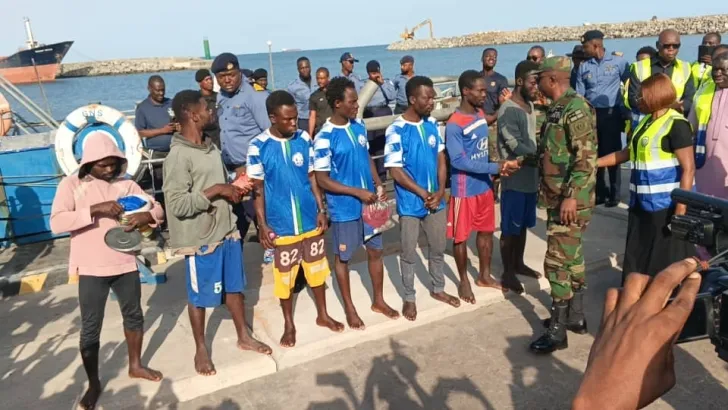 Stranded Ghanaian fishermen narrate how they ate fresh fish, drunk sea water to ...
 How notorious armed robber died on the way whiles leading police to arrest accom...
 'We must continuously improve cargo handling, coordination among port operators'...
 Nii Lante Vanderpuye confident of winning NDC national chairmanship despite Gold...
 Agalga dismisses critics, assures Builsa North of progress on Sandema–Wiaga Road


