




Africa stands at a defining moment in its economic history. For generations, the continent has supplied the world with valuable minerals while receiving only a fraction of the wealth generated from their transformation into finished industrial products. Gold, bauxite, manganese, lithium, cobalt and other strategic resources have powered industries across the globe, yet many African economies remain heavily dependent on exporting these commodities in their raw or minimally processed forms.
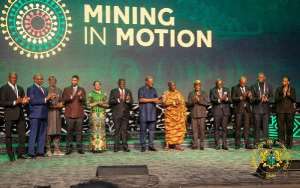
This longstanding economic contradiction dominated discussions at the second African Minerals Policy Forum–Mining in Motion Summit, reportedly held in Accra from October 19 to 21, 2026, under the theme “One Continent, One Voice on Minerals.”
The gathering brought renewed attention to Africa's determination to move beyond raw mineral exports towards domestic processing, industrial manufacturing, technological development and greater control over its natural resources.
Organised by the Ashanti Green Initiative, with reported support from the African Union and the Government of Ghana, the summit sought to promote a coordinated continental approach to mineral governance, investment and industrialisation.
At the centre of the discussions was a fundamental question: Why should Africa continue exporting the minerals that power global industries while importing expensive finished products manufactured from those same resources?
For Ghana, this question carries particular significance. The country possesses substantial deposits of gold, manganese and bauxite, alongside emerging lithium resources. Yet the economic benefits derived from these minerals have historically been constrained by limited domestic processing capacity and insufficient integration with local manufacturing.
According to accounts of the summit, President John Dramani Mahama reaffirmed Ghana's ambition to move away from exporting unprocessed mineral ores, with 2030 presented as a target for strengthening domestic mineral processing.
Such a policy, if formally adopted and effectively implemented, could represent an important shift in Ghana's industrial development strategy.
Rather than relying primarily on royalties, taxes and export earnings from raw minerals, the country would seek to capture additional value through refining, manufacturing, technology transfer and skilled employment.
Bauxite could support alumina refining and aluminium production. Manganese could provide inputs for steelmaking and battery-related industries. Lithium could create opportunities for mineral processing and participation in emerging energy technology supply chains.
However, the transformation of mineral resources into competitive industrial products requires far more than political declarations.
It demands substantial investment in electricity, transport infrastructure, processing facilities, technical education, research and development, and reliable industrial financing.
Mineral processing is often energy-intensive and technologically demanding. Without affordable electricity, modern equipment and competitive production systems, domestic processing requirements could increase costs and discourage investment.
Ghana must therefore ensure that any restrictions on raw mineral exports are introduced through a carefully sequenced industrial strategy supported by commercially viable processing capacity.
The wider African challenge is equally significant.
Countries such as the Democratic Republic of Congo, Zambia, Guinea, South Africa and Ghana possess important mineral resources, yet much of the higher-value industrial activity associated with these commodities takes place outside the continent.
Africa's participation in global mineral supply chains must increasingly extend beyond extraction to include refining, component manufacturing, engineering services and technological innovation.
This ambition is consistent with the African Mining Vision, adopted by the African Union in 2009, which promotes transparent, equitable and development-oriented exploitation of mineral resources.
The African Continental Free Trade Area also provides an opportunity to develop regional mineral value chains, allowing countries to combine resources, infrastructure, skills and markets rather than attempting to establish every industry independently.
For example, regional cooperation could support mineral processing facilities, shared industrial infrastructure and manufacturing clusters serving multiple African economies.
Such cooperation would strengthen Africa's bargaining position in international markets while creating opportunities for indigenous businesses.
The summit also highlighted the importance of responsible mining and environmental protection.
In Ghana, illegal mining, popularly known as galamsey, continues to threaten rivers, forests, agricultural lands and public health.
The destruction associated with unregulated mining demonstrates that mineral wealth can become a national liability when extraction is pursued without effective governance.
Environmental rehabilitation, transparent licensing, stronger enforcement and improved monitoring technologies must therefore become central components of mineral policy.
Formalising responsible small-scale mining, supporting legitimate operators with technical expertise and enforcing reclamation obligations could help reduce environmental damage while protecting livelihoods.
Equally important is the need to prevent arrangements in which local ownership requirements are circumvented through nominal Ghanaian partners acting on behalf of foreign operators.
Local participation must be genuine, extending beyond ownership on paper to meaningful involvement in financing, management, engineering, procurement and manufacturing.
Traditional authorities, local communities and civil society also have important roles in ensuring that mining contributes to sustainable development rather than environmental degradation and social conflict.
The reported involvement of prominent continental leaders and international institutions at the Accra summit reflects growing recognition that Africa's mineral resources must serve broader development objectives.
Nevertheless, declarations of continental unity must translate into enforceable policies, measurable investment commitments and functioning industries.
Africa has held numerous conferences on resource beneficiation and economic transformation. What has often been missing is sustained implementation.
The continent cannot achieve industrial independence simply by demanding higher prices for raw minerals. It must develop the technical and commercial capabilities required to manufacture competitive products.
This means investing in engineers, metallurgists, geologists, industrial chemists, technicians and entrepreneurs capable of building and managing modern processing industries.
It also requires transparent contracts, predictable regulations and partnerships that promote technology transfer rather than perpetuating dependence.
The growing global demand for minerals used in renewable energy systems, electric vehicles, electronics and advanced manufacturing presents Africa with an important opportunity.
But that opportunity will be diminished if the continent merely replaces its historical dependence on exporting gold, cocoa and crude oil with a new dependence on exporting unprocessed lithium, cobalt and other critical minerals.
The minerals may change, but the underlying economic imbalance will remain.
Ghana and its African partners must therefore pursue a coordinated strategy that combines responsible extraction, competitive processing, local manufacturing and access to regional and international markets.
The success of the Accra discussions should ultimately be measured not by the prominence of participants or the strength of political declarations, but by the processing plants established, technologies acquired, skilled jobs created and additional value retained within African economies.
Africa's mineral wealth must become the foundation of African industrial prosperity, not merely a source of raw materials for factories elsewhere.
The Accra Reset represents an important call for a change in economic direction. Its promise will depend on whether African governments can translate that vision into practical, accountable and commercially sustainable industrial policies.
For Ghana, the challenge is clear: mineral resources must contribute to building industries, developing technical capabilities and expanding economic opportunities for future generations.
Africa must no longer be satisfied with owning the minerals beneath its soil while other nations capture most of the wealth created above it. The continent must increasingly process what it mines, manufacture what it can and retain a greater share of the value generated from its natural resources.
That is the true pathway from mineral dependence to industrial sovereignty.


 Kwame Dzokoto reportedly dies
 Ghana intensifies airport screening and Ebola surveillance amid reported cases i...
 'Our wives are not our slaves' – Nigerian man urges husbands to share housework
 'My son is mentally unstable' — Father of man arrested over alleged Gbewaa Palac...
 15,000 aspirants to contest NDC constituency executive elections this weekend
 Seven 'missing' Sekondi fishermen to be repatriated from Benin to Ghana — Police
 Websites go dark as AI exposes critical security flaws worldwide
 Ghana remains friends to all and enemies to none — Mahama
 October 22: Cedi sells at GHS12.25 on forex market, GHS11.66 on BoG interbank
 Foreign Affairs Ministry denies Minority’s claim of harassing staff over South A...


