




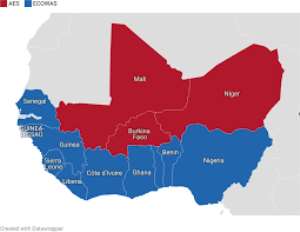
The renewed engagement between ECOWAS and the Sahel states is a welcome development. But if West Africa is to overcome its divisions, the meeting must mark the beginning of a new relationship built on mutual respect, regional solidarity and practical cooperation, not merely another diplomatic exercise.
A Welcome Change of Direction
For some time, the relationship between the Economic Community of West African States (ECOWAS) and the military-led governments of Mali, Burkina Faso and Niger has been characterized by mistrust, confrontation and diplomatic tension. What began as a disagreement over unconstitutional changes of government gradually developed into a wider political and strategic crisis, threatening to undermine decades of regional integration. Against this background, the recent engagement between ECOWAS and the Sahel states to explore cooperation agreements is a welcome development. It offers an opportunity to reconsider how West Africa manages political disagreements among its member states and neighbours.
Personally, I believe this is the direction we should have taken from the beginning. Rather than allowing threats, punitive sanctions and diplomatic isolation to dominate the relationship, ECOWAS could have pursued a more sustained policy of dialogue, negotiation and practical engagement. This does not mean that military coups should be celebrated or that constitutional government is unimportant. Far from it. Democratic accountability, respect for human rights and the peaceful transfer of political power remain essential to the long-term stability of our region.
However, there is a fundamental distinction between defending democracy and adopting measures that risk alienating entire populations, weakening regional economies and pushing neighbouring governments further apart. The real question is not whether ECOWAS should defend constitutional government. It is whether the methods employed to defend it will bring West Africans closer together or drive them further apart. The latest engagement offers an opportunity to answer that question through action rather than rhetoric.
How Did We Get Here?
To appreciate the importance of the renewed engagement, we must understand the events that brought West Africa to this point. Mali experienced military coups in August 2020 and May 2021. Burkina Faso followed with two coups in 2022, while Niger's military seized power in July 2023. These developments confronted ECOWAS with a serious institutional challenge. The organization had established protocols and principles against unconstitutional changes of government, including the 2001 Supplementary Protocol on Democracy and Good Governance.
ECOWAS had legitimate reasons to be concerned. Military takeovers can undermine democratic institutions, interrupt constitutional processes and create uncertainty about when civilian rule will return. Nevertheless, the response to the coups, particularly in Niger, exposed the limitations of a predominantly coercive approach.
Following the July 2023 coup in Niger, ECOWAS imposed sanctions and threatened possible military intervention to restore President Mohamed Bazoum. The prospect of armed intervention raised serious concerns about the possibility of a conflict that could destabilize not only Niger but the wider Sahel. Mali and Burkina Faso strongly opposed intervention. Together with Niger, they subsequently established the Alliance of Sahel States, commonly known by its French acronym, AES.
The three countries announced their withdrawal from ECOWAS in January 2024, and their withdrawal formally took effect on 29 January 2025. This was a major setback for regional integration. Countries that had long participated in common regional institutions were now moving towards a separate political and security arrangement. The division also raised concerns about trade, migration, border security and the movement of people across West Africa.
Could some of these consequences have been avoided? Perhaps. We cannot rewrite history, but we can learn from it. The experience demonstrates that political pressure, when not accompanied by credible diplomatic engagement, may produce unintended consequences. Governments under pressure can become more defensive, form alternative alliances and interpret external demands as threats to their national sovereignty. That is why diplomacy must remain central to regional policy, even when disagreements are serious.
Sanctions: A Necessary Instrument or a Costly Mistake?
Sanctions have a place in international relations. They may be justified when governments violate established regional principles, and they can provide leverage without immediately resorting to military force. But sanctions are not automatically effective simply because they are imposed. Their success depends on several factors: the objectives being pursued, the willingness of the targeted government to compromise, the availability of alternative economic partners, and the extent to which ordinary citizens bear the costs. In the case of the Sahel, one important question was whether economic pressure would persuade the military governments to restore constitutional rule within an acceptable period or instead deepen their determination to resist ECOWAS.
Another concern was the burden placed on ordinary people. When borders are closed, trade is disrupted or essential supplies become more expensive, it is frequently citizens, and not political leaders who suffer first. Traders lose income, transport costs rise, businesses face uncertainty and vulnerable households struggle to afford basic necessities. For countries whose economies depend heavily on regional trade, these consequences can be substantial. It is therefore reasonable to ask whether the intended political gains justified the wider economic and social costs.
A policy should not be judged only by the firmness of the statement announcing it. It should be judged by whether it achieves its objectives at an acceptable cost. Diplomacy is not weakness, and dialogue is not surrender. Sometimes, the most effective way to defend a principle is to persuade rather than punish. ECOWAS should retain the ability to respond to unconstitutional changes of government, but its approach must be strategic, proportionate and attentive to the welfare of ordinary West Africans.
The Sahel's Security Crisis Requires Regional Cooperation
Beyond the political disagreements lies a more urgent challenge: insecurity. Mali, Burkina Faso and Niger have suffered prolonged violence involving extremist armed groups, communal tensions, displacement and attacks on military and civilian targets. These problems do not stop at national borders. Insecurity in one country can affect neighbouring states through refugee movements, disrupted trade, illicit arms flows and the movement of armed groups.
Coastal West African countries, including Ghana, Côte d'Ivoire, Togo and Benin, have strong reasons to be concerned about the spread of insecurity from the Sahel. Ghana, in particular, cannot afford to view developments in Burkina Faso, its northern neighbour, as a distant political dispute. The safety of border communities, the livelihoods of traders, the movement of agricultural produce and the stability of northern Ghana are connected to what happens across the border.
This is why the separation between ECOWAS and the AES presents a practical problem. Whatever disagreements exist over democracy or the management of political transitions, the countries concerned cannot afford to abandon cooperation against threats that affect them all. An extremist group does not respect diplomatic boundaries. Criminal networks do not suspend their activities because governments disagree. Arms trafficking, human trafficking and illicit trade require coordinated responses.
If ECOWAS and the AES allow political disagreements to prevent intelligence-sharing, border coordination and joint efforts against violent extremism, the principal beneficiaries will be those who threaten the security of the entire region. Cooperation, therefore, is not simply a diplomatic courtesy. It is a security necessity.
What Should We Have Done Differently?
In my view, ECOWAS should have pursued a more balanced strategy from the outset. One that defended constitutional principles while keeping channels of communication open.
- First, it should have intensified direct engagement with the military authorities immediately after each takeover. Such engagement would not have required recognizing military rule as desirable or abandoning demands for a return to civilian government. Instead, it could have focused on negotiating credible, measurable and mutually understood transition arrangements.
- Second, ECOWAS should have distinguished between pressure on political leaders and measures that disproportionately harm ordinary citizens. Where sanctions were considered necessary, humanitarian supplies, essential medicines and arrangements for legitimate civilian trade should have received particular attention.
- Third, regional leaders should have acknowledged the historical and political factors shaping public attitudes in the Sahel. These include insecurity, dissatisfaction with existing political elites, concerns about external influence and resentment towards arrangements perceived as unequal. Acknowledging these concerns does not mean endorsing every claim made by military governments. It means understanding the environment in which regional diplomacy must operate.
- Fourth, ECOWAS should have maintained a standing mechanism for resolving disagreements with the AES countries, rather than allowing relations to deteriorate until the prospect of military confrontation became a central feature of the debate.
- Finally, the organization should have strengthened its credibility by applying its democratic principles consistently.
Citizens across West Africa have legitimate questions about the conduct of elected governments as well as military administrations. Corruption, restrictions on civil liberties, disputed elections and abuses of state power can undermine public confidence regardless of who occupies the presidential palace. A regional organization that insists on accountability must demonstrate that its principles are universal rather than selectively applied. The objective should be to protect constitutional government and human dignity, not merely to defend the interests of incumbent political leaders.
The Influence of France and the Question of Sovereignty
My optimism about the renewed engagement also reflects a broader conviction: West Africa needs a foreign policy that places African interests first. The three AES countries have increasingly rejected France's traditional military and political role in the Sahel. French forces have withdrawn from Mali, Burkina Faso and Niger amid deteriorating relations with the respective authorities.
These developments have reopened a debate about the nature of France's relationship with its former colonies and the extent to which African governments should determine their own security and economic policies. There is nothing inherently wrong with a sovereign country deciding to end a military agreement, renegotiate a partnership or diversify its international relationships. Indeed, African countries should have the freedom to review foreign military deployments, natural-resource arrangements and economic agreements in accordance with their national interests and applicable law.
However, we must be careful not to replace one form of dependency with another. Breaking away from France does not automatically guarantee economic independence, effective governance or national security. A country may reduce its reliance on one foreign power only to become increasingly dependent on another. The relevant question is not simply whether a country has expelled French troops. It is whether it has developed stronger institutions, greater economic resilience, better security outcomes and more accountable government.
The same standard should apply to partnerships with Russia, China, the United States, Turkey and every other external power. Africa's objective should not be to exchange one external master for another. It should be to build the capacity to negotiate with every external partner from a position of confidence and mutual benefit.
France has legitimate interests in international relations, just as other countries do. But those interests must not take precedence over the sovereignty and welfare of African peoples. Equally, opposition to French influence should not become an excuse for African governments to disregard civil liberties, suppress legitimate criticism or avoid accountability. True sovereignty includes the freedom of citizens to demand responsible government from their own leaders.
Should More African Countries Break Away from France?
I am sympathetic to the argument that African countries should reconsider relationships that do not serve their interests. However, I would frame the issue more broadly. Rather than urging countries simply to break away from France, we should encourage them to review all unequal or unproductive external relationships.
Every African government should ask some difficult questions.
- Do our agreements create jobs and transfer useful skills?
- Do they strengthen local industries?
- Are our mineral resources generating fair returns for our populations?
- Are foreign military arrangements improving security?
- Are the terms of our loans and commercial agreements transparent?
- Do our partnerships expand our choices or restrict them?
Where the answers are unsatisfactory, governments should renegotiate or terminate agreements through lawful and carefully planned processes. But where cooperation produces demonstrable benefits, there is no reason to reject it merely because the partner is French or Western.
The same scrutiny must apply to all other international partners. Africa needs diversified partnerships, not diplomatic isolation. It needs bargaining power, not symbolic gestures that may leave its economies weaker. For Ghana, this means pursuing relations with France and other European countries while deepening mutually beneficial cooperation with the Sahel states, the wider African continent and emerging economic powers. Our foreign policy should be guided by Ghanaian interests and African solidarity, not by the geopolitical preferences of external powers.
The Importance of Ghana's Leadership
Ghana is well placed to contribute to rebuilding trust between ECOWAS and the AES. Our country has historical connections with the wider West African region and a long tradition of advocating African cooperation. Ghana's geographical position also makes stable relations with Burkina Faso, Mali and Niger particularly important.
But Ghana's contribution must be practical.
- First, Accra should encourage regular political consultations between ECOWAS and the AES, including meetings that focus specifically on shared interests rather than the disagreements that divide them.
- Second, Ghana should champion stronger security cooperation with Burkina Faso and other Sahel neighbours. This should include intelligence-sharing, coordinated border management, efforts to prevent the financing of violent extremism, and support for communities vulnerable to recruitment by armed groups.
- Third, Ghana should explore opportunities to expand legitimate trade and transport links with the Sahel. The landlocked countries need reliable access to seaports, while Ghanaian businesses can benefit from wider regional markets. Such arrangements must be commercially viable, transparent and consistent with the security requirements of all participating countries.
- Fourth, Ghana should support humanitarian cooperation. Displacement, food insecurity and conflict affect families irrespective of their governments' political affiliations. Regional disagreements should not prevent assistance from reaching people in need.
- Finally, Ghana should use its diplomatic relationships to encourage the restoration of credible civilian governance wherever military rule has interrupted constitutional processes.
These objectives are not contradictory. Ghana can promote democratic accountability while maintaining friendly relations and cooperating on matters of mutual interest. Indeed, maintaining contact may offer greater opportunities to influence political developments than isolating governments and losing the ability to engage them.
What Should Happen After the Meeting?
The latest engagement will be meaningful only if it produces measurable results. Too often, African diplomacy has been characterized by impressive declarations, formal photographs and ambitious communiqués that receive little attention once the meetings end. This time, the priority should be implementation.
- Establish a permanent ECOWAS–AES dialogue mechanism --- The parties should agree on a regular schedule of meetings involving political leaders, foreign ministers, security officials and technical experts. This mechanism should not be confined to crises. Regular contact can prevent misunderstandings from escalating and allow disagreements to be addressed before they become diplomatic emergencies. A functioning dialogue mechanism should also include a procedure for resolving disputes and reviewing progress on agreed commitments.
- Agree on practical cooperation in security --- The parties should identify specific areas in which cooperation can resume immediately. These could include information-sharing on extremist groups, the prevention of arms trafficking, the protection of border communities and coordinated action against transnational criminal networks. Joint activities should have clear objectives, designated officials and measurable outcomes. Political disagreements should not be allowed to obstruct cooperation that directly protects human lives.
- Protect trade and the movement of people --- ECOWAS and the AES should work towards practical arrangements that minimize disruption to legitimate trade and movement. Traders, transport operators, farmers and small businesses should not become casualties of disputes among political leaders. Where formal regional arrangements have changed, the parties should negotiate clear rules governing customs, transit, transport documentation and the treatment of citizens crossing borders. Such agreements would provide certainty for businesses and reduce opportunities for corruption, harassment and arbitrary restrictions.
- Create a credible pathway towards constitutional governance --- Cooperation must not mean abandoning the question of military rule. The parties should maintain dialogue on credible political transitions, constitutional safeguards, participation of civilians and the protection of fundamental rights. Any commitments should be specific enough to be assessed publicly, rather than consisting of indefinite promises. At the same time, ECOWAS must be prepared to listen to concerns raised by the Sahel states and consider how its own institutions can become more responsive, credible and consistent.
- Revisit the costs of regional fragmentation --- ECOWAS and the AES should commission a practical assessment of the economic consequences of their separation. The assessment should consider trade, transport, migration, security, customs procedures and the implications for businesses and households. The findings should inform negotiations on how to preserve essential regional cooperation and reduce unnecessary costs.
- Put citizens at the center of regional diplomacy --- Regional cooperation should not be measured solely by the number of agreements signed or official meetings held. It should be measured by whether farmers can sell their produce, traders can cross borders safely, young people can find opportunities, communities feel more secure and families can maintain their livelihoods. Civil society organizations, business associations, traditional authorities, professional bodies and youth groups should have opportunities to contribute to this process.
The future of West Africa cannot be determined exclusively by political leaders meeting behind closed doors.
Can ECOWAS and the AES Rebuild Their Relationship?
The road ahead will not be easy. The AES has developed its own institutional arrangements, including a confederal framework, while ECOWAS continues to pursue its broader regional integration agenda. The political differences that contributed to the split have not automatically disappeared because the parties have resumed discussions. Nor should we assume that one meeting will lead to reconciliation, a return to ECOWAS membership or agreement on every disputed issue.
Nevertheless, cooperation does not have to wait for complete political agreement. Countries can disagree about governance while cooperating on public health, transport, trade, migration and security. They can maintain diplomatic relations while debating the legitimacy of political transitions. They can protect their national interests without treating their neighbours as enemies.
The immediate objective should therefore be to rebuild trust through practical agreements. Over time, successful cooperation may create conditions for a broader political understanding. Whether that ultimately leads to renewed membership, a new regional arrangement or a durable partnership between separate organizations will depend on the choices made by the parties themselves. What matters most is that the people of West Africa do not pay an unnecessary price for political disagreements that their leaders have the responsibility to manage.
A Word of Caution to the Sahel Governments
While welcoming the renewed engagement, we must also recognize that the military authorities in the AES countries have responsibilities of their own. Sovereignty is not merely the freedom to reject foreign influence. It is also the obligation to govern effectively, protect citizens and account for the exercise of state power. The fight against terrorism cannot become a permanent justification for postponing political accountability. Nor should national security be used to silence peaceful critics, journalists or civil society organizations.
The Sahel states must demonstrate that their political choices are producing tangible improvements in security, public services, livelihoods and institutional integrity. If military governments claim to represent a new path for Africa, they must show that the new path delivers better outcomes for ordinary people. Likewise, ECOWAS must demonstrate that its commitment to democracy extends beyond formal rules and political declarations. Both sides should be judged by what they do for their citizens. The people of West Africa deserve neither ineffective civilian governments nor unaccountable military administrations. They deserve security, freedom, justice, economic opportunity and responsible leadership.
My Thoughts: Cooperation Must Triumph Over Confrontation
The renewed engagement between ECOWAS and the Sahel states offers West Africa an opportunity to correct a costly mistake. In my view, dialogue should have received greater priority from the beginning. The threats of military intervention, the imposition of broad sanctions and the subsequent fragmentation of regional relations demonstrated the dangers of allowing political confrontation to overshadow shared interests.
This does not mean that ECOWAS was wrong to oppose unconstitutional changes of government. It means that the defense of constitutional principles must be accompanied by diplomacy that is intelligent, consistent and sensitive to the consequences for ordinary people. The Sahel states, for their part, must recognize that national sovereignty and regional cooperation are not mutually exclusive. They need their neighbours just as their neighbours need them.
Ghana and other coastal states cannot afford to ignore the security and economic implications of an increasingly fragmented West Africa. Neither can the AES countries afford to treat regional isolation as a substitute for effective governance and sustainable development. Our future depends on our ability to work together despite our differences. We should encourage African countries to reconsider external relationships that undermine their interests, including those involving former colonial powers. But we must do so with a clear objective: genuine independence, economic transformation, accountable government and mutually beneficial international cooperation.
The question is not whether France, Russia, China or any other external power should dictate Africa's future. None should. The question is whether African countries can build the institutions, productive economies and regional partnerships necessary to determine that future for themselves. That is the real test of African sovereignty.
ECOWAS must learn that unity cannot be sustained by threats alone. The AES must learn that sovereignty cannot flourish in isolation. Both must recognize that the security, prosperity and dignity of West Africans are greater than the political differences that divide their leaders. Let this renewed engagement be more than a diplomatic meeting. Let it be the beginning of a more mature regional relationship, one in which disagreements are resolved through dialogue, security is pursued through cooperation, and the welfare of our people takes precedence over political pride. West Africa has already lost valuable time to confrontation. We cannot afford to lose more.
FUSEINI ABDULAI BRAIMAH
+233208282575 / +233550558008
[email protected]


 Ridge Hospital seeks relatives of unidentified woman injured in accident
 Kasoa: Firefighters pelted with stones over faulty fire tenders, 15 shops destro...
 Obuasi SHTS headmaster arrested over sexual misconduct allegations – Muntaka
 GoldBod says 76% of gold exported since August refined locally
 15 errors out of 1,964 names of South Africa evacuees due to pressure, we deserv...
 'No disturbances again' — Asiedu Nketiah urges calm over late Ahafo Ano South-We...
 Govt to distribute first batch of 129 vehicles to MMDCEs in 12 regions
 UG Vice-Chancellor calls for oral exams, project-based assessment to deal with A...
 'I will use everything I have to clear my name' – Obuasi SHTS headmaster fights ...
 'It's a curse on you' – Water Minister badmouths 'malware' workers sabotaging Gh...


