




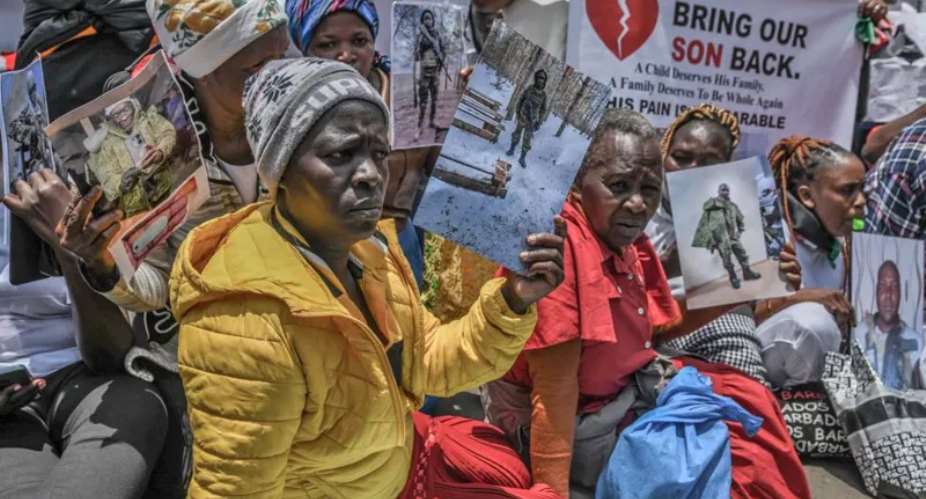
When African leaders meet Russia in Moscow on 28–29 October, the photographs will convey partnership. The harder test is what happens away from the cameras. Will governments whose citizens have been drawn into Russia’s war in Ukraine ask for names, access, investigations and a way home?
Or will deceptive recruitment remain a matter handled only when another family asks where its son or daughter has gone?
This is not a call for African governments to abandon relations with Moscow. Trade, education, energy and diplomatic cooperation do not disappear because a partner faces difficult questions. It is an argument that those relationships must be capable of carrying difficult questions and producing answers. A summit on the future of Africa–Russia cooperation should not leave the safety of African citizens on the margins.
The African Union–Russia joint statement issued in July sets out an expansive partnership, including political and security cooperation, trade, infrastructure and institutional dialogue. It does not, in its published text, settle what will be discussed in every bilateral meeting in Moscow. Nor would the absence of recruitment from a public summit statement prove that no government raised it privately. But secrecy cannot be the only measure of success. Families need to know what their governments requested and what Russia agreed to do.
The problem is often described as the recruitment of African “mercenaries”. That label is too blunt to do the work required of policy. Some foreign nationals may have understood that they were signing military contracts. Others say they were offered civilian employment or training and encountered a different proposition after arrival. Allegations concerning women recruited for industrial work raise another set of questions about what they were told they would manufacture and the conditions they faced. These cases must be investigated on their facts. A person who knowingly joined an army, a person deceived into signing a contract and a worker misled about a factory job cannot simply be placed in the same category.
The distinctions matter because the remedies differ. A government may have grounds to investigate a recruiter at home, challenge the validity of a contract abroad, seek consular access, or ask for information about a missing citizen. Calling every case trafficking before the evidence is tested risks weakening prosecutions. Calling every signed contract voluntary ignores how deception, language barriers, debt or pressure can shape the decision to sign.
What African governments have already done
There are precedents for raising the matter without suspending wider diplomacy. In March, Kenya’s foreign minister, Musalia Mudavadi, said after talks in Moscow that Russia had agreed Kenyans would no longer be enlisted through its defence ministry. Russia’s foreign minister, Sergei Lavrov, maintained that foreign fighters had joined voluntarily and in accordance with Russian law. Kenya’s account of the agreement was an important diplomatic step; its implementation is the next question. How is the restriction being enforced, and what happens to Kenyans already serving or seeking to leave? Reporting on the talks also described Kenya’s efforts to secure returns and account for missing citizens.
Ghana took the issue directly to Lavrov in August. Foreign Minister Samuel Okudzeto Ablakwa said 62 Ghanaians had been killed and 15 were missing, and that the ministers had agreed to work together against illegal recruitment. Lavrov described some enlistments as motivated by solidarity and others by money, and said Russian authorities had a mechanism to consider requests concerning foreign citizens. Those are different accounts of how people came to serve, but they need not prevent cooperation on identifying individuals and investigating deception. The immediate question is whether Ghana receives information and practical assistance that families can use, not merely an assurance of continued dialogue. Accounts of the meeting make clear both Ghana’s demand and Russia’s stated position.
South Africa offers a third lesson: diplomacy can help people return while a domestic investigation continues. In February, its cabinet said that 15 of 17 men who had sought help after being lured towards the Russian front line were back in the country; the remaining two were still in Russia at that point. Cabinet said all 17 had been released from contracts with military contractors, thanked Russia for cooperating and stated that investigations into their recruitment and possible breaches of South African law were continuing. Cooperation over repatriation did not settle responsibility for recruitment. Those are separate questions, and governments should pursue both.
Other countries may have different evidence, different laws and different numbers of affected citizens. They need not adopt a single continental accusation to establish a common minimum standard: requests for consular access should be answered; families should receive reliable information; credible allegations of deceptive recruitment should be investigated; and citizens who want to leave military service should have their cases reviewed through a defined process. These are practical tests of a partnership, not a demand that every African state conduct its foreign policy in the same way.
The route from an advert to a war
An investigation confined to the Russian military contract will miss much of the route by which a person arrived in Russia. The first contact may be a job advertisement, a social-media intermediary, an unregistered agent or an introduction from someone the applicant trusts. The journey may involve a third country. By the time an embassy learns of a case, the advertisement may have vanished and the recruiter may have moved on.
The issue also extends beyond front-line enlistment. Research by the Danish Institute for International Studies examines online campaigns directed at African workers and allegations that recruits to the Alabuga Start programme were misled about work connected to drone production. The researchers caution against reducing migration decisions to propaganda: unemployment, unequal wages and the scarcity of safe opportunities abroad also influence people’s choices. That is an important qualification. Protecting jobseekers cannot mean treating every person who considers work in Russia as naïve or suspect.
African governments should therefore address the point at which an offer reaches a worker. Labour authorities can provide a straightforward way to check whether an agent and employer are registered, preserve copies of suspicious advertisements and investigate fees or promises that change after payment. Foreign ministries need a route for escalating cases across borders. Platforms should be asked to preserve relevant records when a credible complaint is made, while respecting privacy and due process. A warning alone is useful, but it cannot substitute for a system that lets a prospective worker verify an offer before travelling.
A practical agenda for Moscow
The summit offers a chance to move from statements of concern to procedures that can be assessed afterwards. Governments with affected citizens should ask Russia for a named contact point to handle cases, a process for verifying the whereabouts and status of their nationals, and timely consular access where permitted. They should seek clarity on how a person may challenge a contract alleged to have been signed under deception, how an injured person can leave, and how deaths and missing-person cases are communicated to families.
They should also ask what Russia will do with evidence about recruiters operating across jurisdictions. Russia disputes accounts that suggest foreign enlistment is generally coerced; that position makes case-by-case scrutiny more, not less, important. If contracts were voluntary, the circumstances of recruitment and signing should be capable of examination. If intermediaries made false promises, governments need evidence that can support investigations on both sides of the journey.
For their part, African states must examine their own failures. A recruiter operating openly at home, an agency making unverifiable promises, or an official overlooking warning signs cannot be explained away as somebody else’s responsibility. Parliamentary scrutiny, functioning labour inspections and credible victim-reporting channels matter as much as a meeting with Lavrov. Governments should protect returnees’ ability to give evidence without presuming that everyone who travelled committed an offence.
There is also a danger in turning this into a contest over which outside power cares most about African lives. The same standards should apply to deceptive recruitment for any foreign conflict and to abusive overseas employment more broadly. Citizens are entitled to protection because they are citizens, not because their case is useful in an argument about Russia, Ukraine or African alignment.
Before departing for Moscow, foreign ministries could state whether they intend to raise recruitment, what information they are seeking and how affected families can report a case. After the summit, they should report what was discussed, what was agreed and when progress will be reviewed. Sensitive individual cases need not be disclosed publicly. The existence of a working process can be.
A summit communiqué may never mention a missing worker or a disputed military contract. That need not mean the trip failed. But a handshake, without a route for families to obtain answers and for governments to prevent the next deceptive offer, would be a poor definition of success. Africa’s relationships abroad are strongest when they can defend both national interests and the people in whose name those interests are pursued.
Wellington Muzengeza is an independent journalist and political-risk analyst specialising in African governance, strategic infrastructure, cross-border risk and sovereignty. He is the founder of BuiltAfrica and author of The Informal State.

 'There is no support’ – Prisons DG explains why ex-inmates are likely to return
 ECG announces nationwide meter audit to combat electricity theft
 Afenyo-Markin, NEIP CEO Eric Adjei settle defamation suit out of court over exto...
 GIS recovers GH¢124,552 in excess salary arrears paid to 23 officers
 Minerals Commission denies Alfred Mahama’s role in Narawa Licence revocation
 No more ‘No Bed’ excuse as Health Minister unveils real-time bed monitoring syst...
 NAGRAT alleges 38 Obuasi teachers targeted for transfers for speaking out agains...
 Immigration Service gives two officers November 7 deadline to refund GH¢57,006 u...
 'Every tonne of waste we dump is a job we bury' — Dr Siaw Agyepong
 GES directs Ashanti regional, Obuasi East educational directors to step aside ov...


