




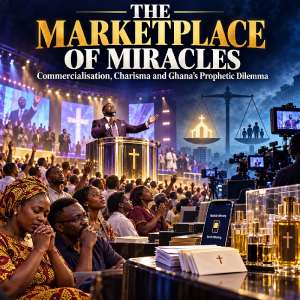
Ghana’s religious landscape has changed dramatically over recent decades. Although historic mission churches and classical Pentecostal denominations remain influential, a highly visible generation of independent prophets and charismatic preachers has transformed the practice and public presentation of Christianity.
Through private television stations, radio programmes, Facebook, YouTube and TikTok, these religious leaders have taken prophecy beyond the church auditorium and turned it into a powerful form of mass communication. Prayer sessions, healing services, deliverances and personal revelations are recorded, edited and broadcast to audiences far beyond the physical congregation.
This development reflects the vitality and adaptability of Ghanaian Christianity. It has also created a troubling marketplace in which faith, entertainment, personal branding and commerce increasingly overlap.
The term “neo-prophetic” is commonly used by researchers to describe ministries built around the personality and spiritual gifts of a leading prophet. Unlike churches governed by established denominational structures, many operate as independent organisations in which the founder exercises considerable theological, financial and administrative authority.
Their appeal is not difficult to understand. People approach prophetic ministries with genuine problems: illness, unemployment, business failure, infertility, marital difficulties, family conflict and uncertainty about the future. In an environment where public institutions may be slow, expensive or inaccessible, the church can become a place of emotional support, social belonging and renewed hope.
Prophetic ministries should therefore not be dismissed simply as products of ignorance. Many provide counselling, charity, community networks and psychological reassurance. They speak in cultural and spiritual terms that resonate with people’s understanding of misfortune, destiny and personal advancement.
The ethical difficulty arises when spiritual authority is converted into a commercial transaction. Academic studies of Ghanaian neo-prophetic Christianity have documented the sale of anointing oils, water, handkerchiefs and other religious objects presented as instruments of healing, protection or financial breakthrough.
Religious objects are not unique to modern charismatic Christianity. Oils, water, cloth and other physical symbols have appeared in Christian practice for centuries. The central concern is therefore not their mere existence but the conditions under which they are marketed.
When a desperate person is told that divine intervention depends on purchasing a particular item, paying for private access to a prophet or making a large financial “seed,” voluntary religious giving can become psychological pressure. The spiritual needs of vulnerable people are then converted into a source of private income.
The prosperity gospel intensifies this problem by presenting wealth as evidence of divine favour and poverty as a spiritual defect. Congregants may be encouraged to believe that financial hardship is caused mainly by curses, demons or insufficient giving rather than unemployment, limited education, poor economic policy or unequal access to opportunity.
The public display of luxury vehicles, expensive clothing and large homes can reinforce the prophet’s authority. Wealth becomes part of the religious message: the leader’s lifestyle is offered as evidence that the teaching works. Followers are then invited to demonstrate faith through repeated contributions in the expectation of receiving similar prosperity.
Media has greatly expanded this model. Research on Ghanaian neo-prophetic churches shows that television and social media are used not merely to transmit worship services but to build religious brands, attract followers and validate prophetic authority.
Broadcasts naturally emphasise dramatic moments—accurate personal details, emotional deliverances, healing claims and testimonies of financial success. Viewers rarely see unsuccessful prophecies, unanswered prayers or people whose conditions did not improve. The edited presentation can therefore create an impression of consistent supernatural success that is difficult for audiences to evaluate independently.
Prophetic declarations about death, disasters and public figures have created an additional controversy. Such pronouncements can cause fear, damage reputations and inflict distress on the individuals and families concerned. The Ghana Police Service has repeatedly stated that it is not opposed to prophecy but has warned against communicating claims in ways that cause fear, threaten lives or disturb public peace.
This is where Ghana faces a constitutional dilemma. Article 21(1)(c) of the 1992 Constitution guarantees every person the freedom to practise a religion and manifest that practice. The Constitution also protects freedom of thought, conscience, belief and expression.
These protections are fundamental to Ghana’s democracy. The state should not decide which religious doctrine is true, determine who has been called by God or require prophets to prove supernatural gifts to government officials. A licensing system that allows political authorities to approve or reject religious leaders could easily become an instrument of censorship.
Religious freedom, however, does not place every action performed in the name of faith beyond the law. A person does not acquire permission to commit fraud, threaten others, abuse children, practise medicine without authorisation or publish statements that unlawfully endanger the public merely by describing the conduct as religious.
The appropriate response is therefore not to regulate belief but to enforce laws governing conduct. Financial deception should be investigated as financial deception. Harmful medical instructions should be examined under health and professional regulations. Abusive broadcasting should attract the same scrutiny applied to comparable content outside religion. Churches, like other organisations, should meet legitimate requirements concerning registration, taxation, employment, public safety and financial accountability.
Enforcement must remain neutral. The same legal standards should apply to Christian, Muslim, traditional and non-religious organisations. Regulation aimed selectively at unpopular prophets would weaken religious freedom and invite political abuse.
Self-regulation must also become more credible. The Christian Council of Ghana and other established ecumenical and Pentecostal bodies can issue ethical standards, educate congregations and discipline their members. The Christian Council has itself called for responsible prophecy while recognising the constitutional protection of religious belief and practice.
The limitation is that many independent ministries do not belong to these organisations and cannot be sanctioned by them. Voluntary accreditation could help the public identify churches that follow agreed standards on financial transparency, safeguarding, counselling, prophecy and advertising. It would not prevent independent worship but would give citizens useful information when choosing a religious community.
Media organisations must accept responsibility as well. Television and radio stations should not present unverified healing claims, accusations of witchcraft or predictions of death as ordinary entertainment. Paid religious programmes should be clearly identified, and broadcasters should protect children and vulnerable adults from humiliation.
Public education is equally necessary. Citizens should be encouraged to ask questions without being portrayed as enemies of faith. Seeking medical treatment, demanding financial accountability or requesting evidence of a claim is not an act of unbelief. Religious commitment and critical thinking are not opposites.
Ghana must also address the conditions that make extravagant spiritual promises so attractive. When young people cannot find work, patients cannot afford treatment and families have no reliable social protection, the promise of an immediate miracle becomes especially powerful. Better institutions will not eliminate religious belief, nor should they, but they can reduce the desperation that enables exploitation.
Neo-prophetic Christianity is neither wholly fraudulent nor beyond criticism. It contains sincere religious conviction, cultural creativity, pastoral care and entrepreneurial energy. It also contains practices capable of exploiting fear, suffering and economic vulnerability.
Ghana’s task is not to suppress prophecy but to protect human dignity. The country can preserve freedom of worship while insisting that spiritual authority does not excuse deception, abuse or reckless public conduct. Faith deserves protection, but so do the people who place their trust—and sometimes their last resources—in those who claim to speak for God.


 'There is no support’ – Prisons DG explains why ex-inmates are likely to return
 ECG announces nationwide meter audit to combat electricity theft
 Afenyo-Markin, NEIP CEO Eric Adjei settle defamation suit out of court over exto...
 GIS recovers GH¢124,552 in excess salary arrears paid to 23 officers
 Minerals Commission denies Alfred Mahama’s role in Narawa Licence revocation
 No more ‘No Bed’ excuse as Health Minister unveils real-time bed monitoring syst...
 NAGRAT alleges 38 Obuasi teachers targeted for transfers for speaking out agains...
 Immigration Service gives two officers November 7 deadline to refund GH¢57,006 u...
 'Every tonne of waste we dump is a job we bury' — Dr Siaw Agyepong
 GES directs Ashanti regional, Obuasi East educational directors to step aside ov...


