




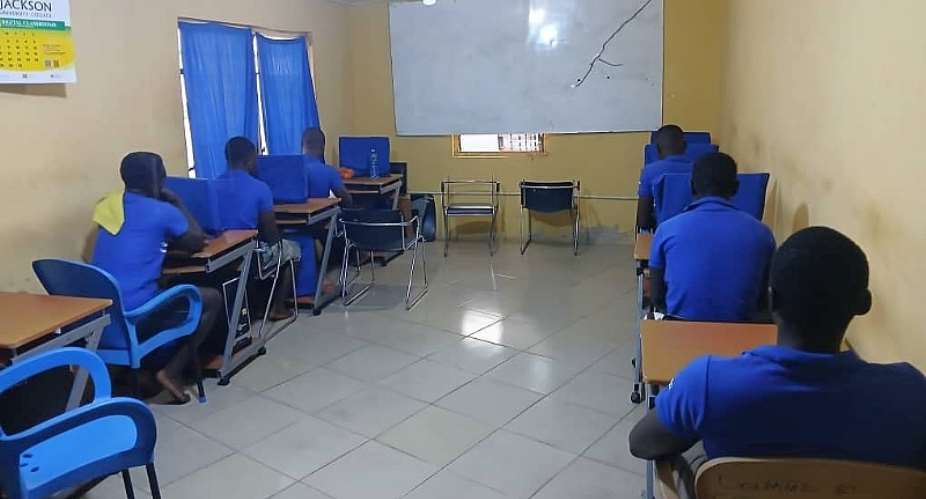
Every year, many students in Ghana celebrate gaining admission to senior high schools, technical institutions, colleges of education, and universities. For these students and their parents, admission brings hope for a better future.
But for many families, that joy quickly turns into worry. The cost of preparing a child for school can be overwhelming. Parents must find money for admission fees, uniforms, books, stationery, accommodation, food, transportation, and other school requirements. Some students also need special equipment for their courses.
For poor families, especially those in rural communities, meeting all these demands at once can be extremely difficult.
The problem is not only the cost of education. It is also the short time families are given to prepare.
Too little time to raise money
One major concern is that some students receive their admission letters very late and are given only a few days to pay their fees and report to school.
Many parents do not have large sums of money sitting in their bank accounts. Some depend on farming, petty trading, or daily wages. They may need time to sell farm produce, save money, borrow from relatives, or seek help from friends and community members.
When an institution gives a parent only a few days to pay, the family may be forced to borrow money, sell valuable belongings, or struggle to meet basic needs. In some cases, a student may lose the opportunity to attend school simply because the family cannot raise the money on time.
School administrators should understand that a delay in payment does not always mean that a parent is careless or unwilling to pay. Sometimes, the money is simply not available.
The cost of preparing a child for school
Admission fees are only the beginning. Parents must also buy the items their children need for school. These may include uniforms, books, bedding, toiletries, stationery, electronic devices, and equipment for practical training.
When all these expenses come together, the total cost can be far beyond what a family can afford. The situation becomes even harder for parents who have two or three children entering school in the same year.
Schools should provide parents with a clear list of required items and their expected costs as early as possible. They should also consider allowing some items to be purchased later when they are not immediately needed.
Where possible, institutions could provide used textbooks, equipment-sharing arrangements, and assistance for students whose families cannot afford essential materials.
The challenge of travelling to unfamiliar places
Many students gain admission to schools in towns and cities far from their homes. Some parents and students have never visited these places before.
They may not know how to get to the school, where to find affordable accommodation, or how much daily transport will cost. Travelling to the school to complete registration and find a place to stay creates another expense.
Schools should give students and parents clear information about the school's location, transport routes, reporting dates, accommodation, and important contact persons before they travel.
A little planning and good communication can save families money, time, and unnecessary stress.
Accommodation and feeding problems
Finding a safe and affordable place to stay is another major challenge. Some students arrive at school only to discover that hostel spaces are full. They must then search for private accommodation in unfamiliar areas, sometimes at high prices.
Parents may be forced to accept arrangements they cannot comfortably afford because their children need somewhere to sleep.
Feeding is equally important. After paying school fees and arranging accommodation, parents must still provide money for food, transport, learning materials, and other daily needs.
A hungry student or one who is worried about where to sleep cannot concentrate properly on learning. Schools and colleges should therefore give early information about accommodation and available meal options. They should also help students find out whether they qualify for scholarships, bursaries, or other forms of support.
Poor families need special consideration
A family with a regular salary may be able to plan for school expenses more easily than a farmer waiting for harvest or a trader whose daily income is uncertain.
Many parents in rural communities make enormous sacrifices to educate their children. Some sell their produce, borrow money, or depend on relatives to meet school expenses.
These parents should not be treated as if they do not care about their children's education simply because they cannot pay immediately.
If Ghana wants every child to have a fair chance to succeed, educational institutions must consider the different financial situations of families. A student's future should not be placed at risk because their parents cannot raise a large amount of money within a few days.
What should school administrators do?
I respectfully appeal to heads of schools, universities, technical institutions, colleges of education, and the authorities responsible for education in Ghana to consider the following changes:
- Release admission letters early so that parents have enough time to prepare.
- Give reasonable time to pay fees and report to school, especially when admission is announced late.
- Publish all expected costs clearly so parents know how much money they may need.
- Allow payment arrangements where possible, including instalments or extra time for students facing genuine financial difficulties.
- Provide early information about accommodation, transport, and feeding to help students prepare before leaving home.
- Support needy students through scholarships, bursaries, used books, shared equipment, and other practical assistance.
- Make communication easier so parents can get answers without making unnecessary trips to the school.
These suggestions do not mean that schools should abandon their financial responsibilities. They mean that school rules should be applied with proper planning, fairness, and consideration for families who are struggling.
Government, traditional leaders, churches, community associations, alumni groups, and businesses can also help by supporting needy students with scholarships, books, accommodation, and emergency funds.
Education should give hope, not create hardship
Ghana needs educated teachers, nurses, doctors, technicians, engineers, and other skilled people to develop the country. Every student who receives admission deserves a fair opportunity to take up that offer and complete their education.
We should not celebrate the number of students admitted while ignoring those who cannot report because their parents lack money or time to meet the requirements.
To our school heads, registrars, admissions officers, and education authorities, I make this respectful appeal: please remember that behind every admission letter is a student and a family with hopes, fears, and financial challenges.
Give families enough time to prepare. Make the costs clear. Help students find accommodation. Consider those facing genuine hardship. Small changes in the way admissions are managed can make a big difference in the lives of many young people.
Parents must do their part, but they cannot do everything alone. Educational institutions must also play their part.
An admission letter should open a door, not create a financial crisis for a poor family.
Let us work together to ensure that students are given a fair chance to continue their education, regardless of where they come from or how much money their parents have.
When we help our young people gain access to education and remain in school, we are investing in the future of Ghana.
About the Author
George Adusei-Bonsu is a Ghanaian-born former educator, healthcare professional, and community leader residing in Columbus, Ohio, USA. His professional experience spans education, healthcare, and community service. He maintains a keen interest in education, professional development, and Ghana's national progress.
 Never Again: Mahama Pushes for Local Vaccine Manufacturing After COVID‑19
 “Soldiers Will Stay There”—Mahama Declares Permanent Military Presence in Forest...
 Mahama Rolls Out US$10bn New Economy Policy—‘No Borrowing Involved’
 “Ask Jean Mensa to Resign First”—Tanko-Computer Fires Back
 Builsa South intensifies surveillance amid Yellow Fever outbreak in Upper West
 Two ganja farmers grabbed with firearms
 Appointment of Emelia Agbenyo as EC deputy chair was well calculated, reasoned –...
 Relief for students as GAUA and TUSAAG call off strike; declare return to work o...
 Who gave Cabinet authority to decide for Ghanaians to join BRICS without parliam...
 Mahama urges Ghanaian businesses to tap CSIR innovations


