




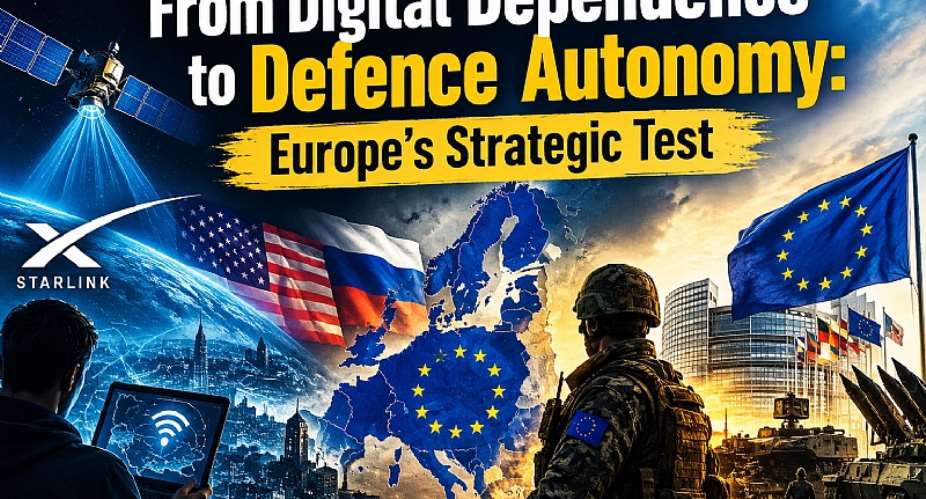
In a world deprived of durable political settlements, financial markets increasingly follow geopolitical signals and anticipated policy decisions to forecast the future. The United States and Ukraine appear trapped in a collision without an easy exit from the war, while the European Union (EU), standing firmly behind Kyiv, faces military pressure from Moscow and diplomatic uncertainty from Washington. Is the triangle of trust between the United States, Ukraine and Europe approaching its most serious test?
Washington’s Strategic Calculations
The first major player is Washington, where the Lindsey Graham-led sanctions initiative has highlighted the executive authority available to the US president to waive or modify sanctions. Such flexibility can create diplomatic openings, but it also raises questions about consistency, accountability and the economic consequences for countries purchasing Russian energy. China and India, among others, have already resisted external pressure over their energy choices.
For the Trump administration, the dilemma is not merely geopolitical. Rising oil prices and the approaching midterm elections make energy affordability a domestic political concern. No administration can easily sell an expensive energy market to voters while promising economic relief.
Reports of meetings involving Donald Trump’s son-in-law Jared Kushner, special envoy Steve Witkoff and Ukrainian officials have further highlighted the difficulty of securing a diplomatic breakthrough. Washington may seek concessions from Kyiv, but persuading Ukraine to accept a settlement involving Russian demands remains politically and strategically complicated. Diplomacy requires patience, not merely reactive pressure.
The proposed energy ceasefire remains another point of uncertainty, with implementation and compliance questions continuing to undermine confidence. The reported warning that Washington could withhold intelligence cooperation from Kyiv illustrates how security assistance can become an instrument of political leverage.
The Starlink–Starshield episode adds another dimension. Any reduction in connectivity can affect Ukrainian military operations, including the coordination of drone attacks and battlefield communications. Elon Musk has sought to distinguish Starlink from Starshield, while the precise operational circumstances and responsibility for particular connectivity restrictions require careful verification. Starshield is a separate, military-oriented satellite communications system associated with US government requirements, including those of the Pentagon.
If access to critical communications infrastructure can influence battlefield outcomes, can a privately operated technology ecosystem remain separate from the political calculations of the state that relies upon it? The episode reinforces a wider lesson: technological dependence can become a strategic vulnerability.
Europe’s Search for Independence
The European Union has repeatedly reaffirmed its support for Ukraine, including military assistance and efforts to strengthen Kyiv’s defensive capabilities. Meetings in Brussels have also served to reassure Ukrainian President Volodymyr Zelensky amid mounting diplomatic pressure.
Yet European solidarity carries an economic cost. Higher energy prices can weaken industrial competitiveness, burden households and deepen political divisions within member states. Europe must therefore confront an uncomfortable question: how long can it sustain its security commitments without a more independent defence and energy strategy?
The Starshield debate makes that challenge more urgent. Europe needs stronger domestic defence production, resilient satellite communications and independent intelligence capabilities. Strategic autonomy, however, does not mean abandoning NATO or confronting Washington. It means ensuring that European security does not depend entirely on decisions made elsewhere.
Zelensky’s criticism of those seeking to stand between the opposing sides reflects Kyiv’s frustration with diplomatic ambiguity. Nevertheless, neutrality, mediation and military support are distinct policy choices. Europe must determine whether it intends to remain a principal supporter of Ukraine, become a credible mediator, or attempt to combine both roles.
The broader contradiction is difficult to ignore: European governments have often defended sovereignty and international principles selectively when strategic interests are involved. Can Europe demand consistent respect for sovereignty globally while struggling to establish an independent position when its own security interests are at stake?
Russia’s Energy Leverage and Europe’s Dilemma
Moscow, meanwhile, can benefit from divisions between Washington and European capitals without necessarily winning a decisive military victory. Russian President Vladimir Putin has incentives to exploit diplomatic distance between the United States and Europe, particularly when energy policy creates opportunities to weaken sanctions pressure or influence global markets.
Discussions in Washington about increasing oil supplies and easing restrictions on Russian energy highlight the tension between containing Moscow and stabilising prices. However, claims concerning specific oil volumes, sanctions waivers and policy agreements must be distinguished from confirmed implementation.
Russia’s advantage is not simply its energy resources. It is the ability to turn energy dependence into diplomatic leverage. The wider consequences extend beyond Europe, affecting global prices, industrial costs and the strategic calculations of other energy-importing economies.
Will Macron Lead Europe or Leave It Strategically Exposed?
The fundamental distinction between Trump and Putin is not that either offers Europe an uncomplicated alternative. Their objectives differ, but both operate through national interests and strategic leverage. Ukraine’s war remains unresolved, and diplomatic deadlock continues to expose the limitations of military pressure without a credible political settlement.
Europe now faces a defining choice: strengthen its strategic autonomy or remain vulnerable to decisions made by competing powers. French President Emmanuel Macron has repeatedly advocated a stronger European defence capacity, but political declarations must translate into coordinated investment, technological resilience and a sustainable energy strategy.
The world’s problems are not automatically Europe’s problems, yet European vulnerabilities can quickly become global concerns through energy markets, security commitments and economic interdependence.
Will Macron turn strategic autonomy into a workable European policy, or will Europe search for another shelter beneath the shadow of global giants? From Starlink to Starshield, the real contest is no longer merely about satellite technology. It is about who controls the instruments of security, who bears the economic cost of confrontation, and whether Europe can shape its own future rather than simply react to Washington and Moscow.

 CDD‑Ghana: EC Deputy Chair Should Step Down Now
 Family Announces October 23 Memorial Mass for Nana Konadu Agyeman-Rawlings
 Eduwatch Urges Nationwide Audit of Sexual Misconduct in Secondary Schools
 Obuasi SHTS alleged sexual abuse: Kwasi Kwarteng criticises Education Minister o...
 ECOWAS’ $250,000 flood relief donation arrives in Ghana – Ablakwa
 Kennedy Agyapong has not resigned from NPP – Kwasi Kwarteng
 State failure, not GoldBod, driving galamsey – Daryl Bosu
 A Rocha Ghana raises alarm over human rights abuses in mining communities
 ECOWAS, AfDB discuss ways to advance West Africa’s development priorities
 October 16: Cedi gains against dollar, sells at GHS12.25 on forex market, GHS11....


