




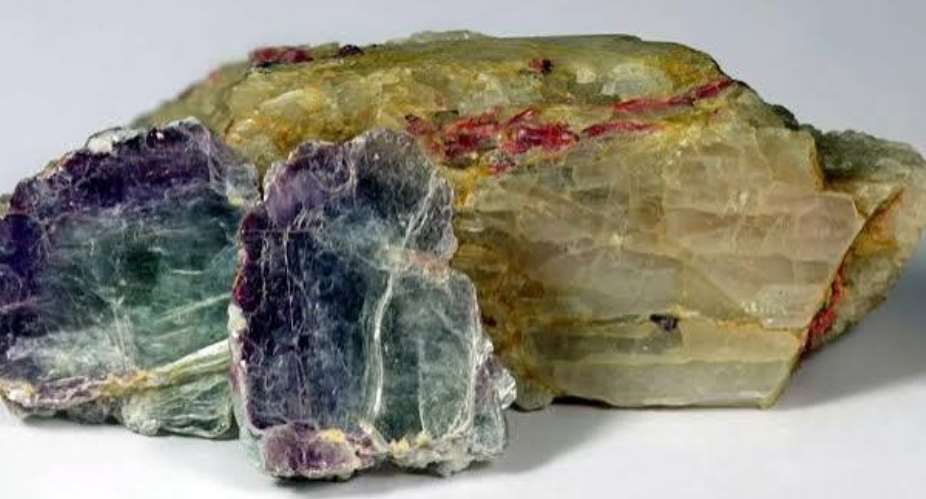
Ghana's discovery of lithium, often described as white gold, presented a historic opportunity to transform the country's economy through industrialisation, job creation and participation in the global electric vehicle and battery manufacturing industries. However, delays, falling international lithium prices and changing corporate ownership have raised concerns about whether Ghana will fully benefit from this valuable mineral resource.
The Ewoyaa Lithium Project in the Central Region, developed by Atlantic Lithium, has faced regulatory challenges and prolonged delays. Reports indicate that its mining lease received parliamentary ratification in March 2026, following nearly two years of uncertainty. Meanwhile, the sharp decline in global lithium prices reportedly prompted a review of the original 10 per cent royalty arrangement in favour of a sliding scale ranging from 5 to 12 per cent.
Another significant development is the reported US$210 million acquisition proposal by China's Zhejiang Huayou Cobalt for Atlantic Lithium. Although such an investment could provide financial resources, technical expertise and international market access, it also raises questions about Ghana's ability to retain greater value from its lithium resources.
The concern is that Ghana could once again become primarily an exporter of raw materials while other countries benefit from processing, manufacturing and technological innovation.
This would repeat the country's longstanding experience with gold, cocoa, bauxite and other natural resources, where substantial export earnings have not always translated into corresponding industrial development.
Regional competition is also increasing. Countries such as Mali have advanced their lithium mining activities, demonstrating that Ghana cannot rely solely on its mineral deposits to attract investment.
Equally troubling are concerns about delayed compensation for farmers and landowners affected by the Ewoyaa project. Mining development must not come at the expense of communities whose livelihoods depend on agricultural land. Fair compensation, employment opportunities and community development should remain essential conditions for successful mining operations.
Ghana must therefore move beyond simply extracting and exporting lithium. The country needs a deliberate strategy to promote local mineral processing, attract investment in battery-related industries, develop technical skills and encourage technology transfer.
Government should strengthen partnerships between mining companies, universities, research institutions and local manufacturers. It must also ensure transparent mining agreements, fair royalties, environmental protection and meaningful Ghanaian participation.
However, industrialisation must be commercially realistic. Establishing battery manufacturing facilities requires substantial investment, reliable electricity, specialised technology and access to international markets. Ghana should therefore pursue a gradual approach, beginning with commercially viable mineral processing and expanding into more advanced manufacturing as capacity develops.
Ultimately, Ghana's lithium opportunity is not lost, but its success will depend on sound policies, effective implementation and long-term national commitment.
The real danger is not that Ghana will fail to mine lithium, but that it will successfully extract and export the mineral while failing to build the industries capable of transforming its economy.
The true measure of success should not be the quantity of lithium exported, but the jobs created, technologies acquired, industries established and wealth retained within Ghana.
Ghana must ensure that its lithium discovery becomes a foundation for industrial transformation rather than another chapter in Africa's long history of exporting raw materials and importing finished products.


 CDD‑Ghana: EC Deputy Chair Should Step Down Now
 Family Announces October 23 Memorial Mass for Nana Konadu Agyeman-Rawlings
 Eduwatch Urges Nationwide Audit of Sexual Misconduct in Secondary Schools
 Obuasi SHTS alleged sexual abuse: Kwasi Kwarteng criticises Education Minister o...
 ECOWAS’ $250,000 flood relief donation arrives in Ghana – Ablakwa
 Kennedy Agyapong has not resigned from NPP – Kwasi Kwarteng
 State failure, not GoldBod, driving galamsey – Daryl Bosu
 A Rocha Ghana raises alarm over human rights abuses in mining communities
 ECOWAS, AfDB discuss ways to advance West Africa’s development priorities
 October 16: Cedi gains against dollar, sells at GHS12.25 on forex market, GHS11....


