




Some of us have spent decades criticising President Paul Kagame in published op-eds. That history need not make us incapable of recognising an achievement when we see one. Nor does recognising an achievement require us to surrender our judgement. A country’s orderliness and clean towns are not trivial accomplishments. They suggest a state able to set standards, organise public life and make those standards visible. It is fair to say that such things reflect something of the calibre of leadership.
The question is what they do not tell us.
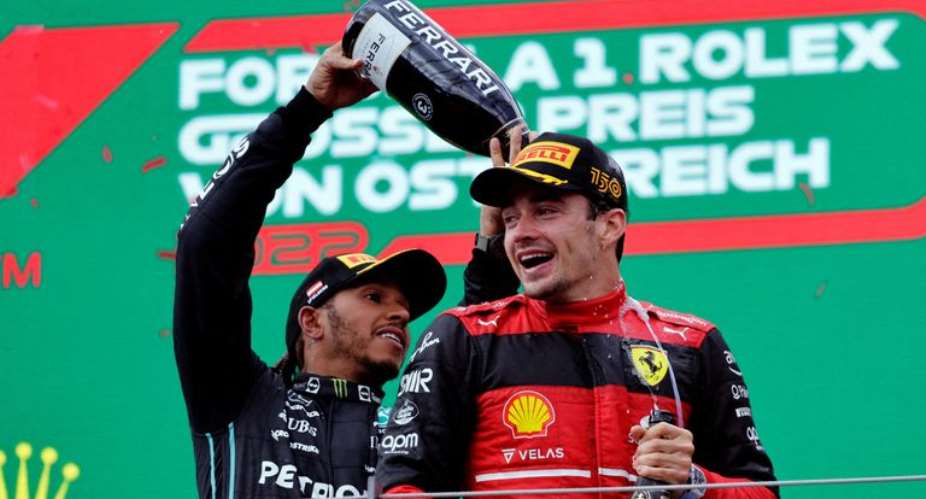
Formula 1 announced a ten-year agreement on 13 October to bring an African Grand Prix to Rwanda. The race is expected in the early 2030s, after a purpose-built circuit at Bugesera is completed. The project is an ambitious bid to place Rwanda on a global sporting stage and, in the organisers’ account, to connect sport with tourism, infrastructure and commercial development. The track, however, remains to be built. The race is a future prospect, not a present achievement.
That distinction matters because large projects invite us to confuse the promise of development with its delivery. A Grand Prix can bring visitors, attention and business. It may create jobs and skills. But those benefits are not delivered merely by signing an agreement or drawing a circuit on a plan. They depend on what is built, who does the work, who gains the skills, what local businesses can supply, and whether the public infrastructure serves people after the racing teams have left. The test is not whether the event looks impressive on television. It is whether its gains reach beyond the people who already have access to opportunity.
There is no need to sneer at ambition. Africa has too often been treated as a place to which global spectacles are denied, or from which its people are expected only to watch. A race in Rwanda could carry a different message: that African cities can host events of the highest international standard and that African audiences belong in the story of world sport. Pride in that possibility is entirely understandable.
But national pride is not the same thing as national unity. A clean street can show that public rules are enforced. It cannot, on its own, show whether people trust the institutions enforcing them, feel represented by them, or can disagree with those in power without fear. Order is a public good. It is not a complete account of a country’s political life.
That is why my hope for Rwanda is larger than a successful Grand Prix. President Kagame’s leadership deserves recognition for what it has built and organised. Yet a leader’s legacy cannot be measured only by the visible order of the present or the scale of the next development project. It must also be measured by the political inheritance left to the young: whether they inherit institutions that can hold disagreement, accommodate different voices and command trust beyond the person at the top.
A government of national unity, if it is to mean anything, cannot be a decorative arrangement or a demand that difference fall silent. Unity is not unanimity. It is the difficult work of making room for citizens who do not share one history, one interest or one view of their leaders, while still giving them a stake in a common future. That work asks more of leadership than efficiency. It asks for the confidence to let a nation’s many voices be heard and the patience to build institutions that do not depend on one individual’s lifetime.
Human life is fleeting. That is not a reason to rush history or to demand that complex wounds be healed by decree. It is a reason to ask what can be done while there is still time. The young people of Rwanda should not have to wait for a leader’s departure before being offered a politics capacious enough to include them all. If President Kagame can help bring about a genuine national settlement, that achievement would outlast any circuit and any race calendar.
The Bugesera project may yet become a source of pride and opportunity. Its success should be judged honestly, by the benefits it creates and the people who share them. But the more enduring measure of leadership will be whether Rwanda can turn order into trust, development into shared possibility, and a moment of international attention into a more inclusive national future. A Grand Prix can put a country before the world. Only political generosity can help its people feel that the country belongs to them all.

 Afenyo-Markin must clear his name over extortion allegation – Kwame Anthony
 Sports Minister, GTA CEO must step aside over World Cup visa scandal – NPP
 NPA secures specialised court to prosecute petroleum product diversion offenders
 Ghanaians have been paying 20% tax on Netflix, Spotify and others since 2022 – G...
 NPP’s position on Affi Agbenyo contradicts its past conduct – NDC's Dr Djokoto
 Extortionist allegations: Afenyo-Markin’s defamation suit was to save face – NDC...
 We must praises NDC for stabilising Ghana's economy – Stephen Amoah
 Chairman Wontumi returned to Nsawam as court adjourns bail ruling to November 4
 NDC can retain power in 2028 on Mahama’s records – Kwame Anthony
 October 15: Cedi sells at GHS12.30 on forex market, GHS11.68 on BoG interbank


