




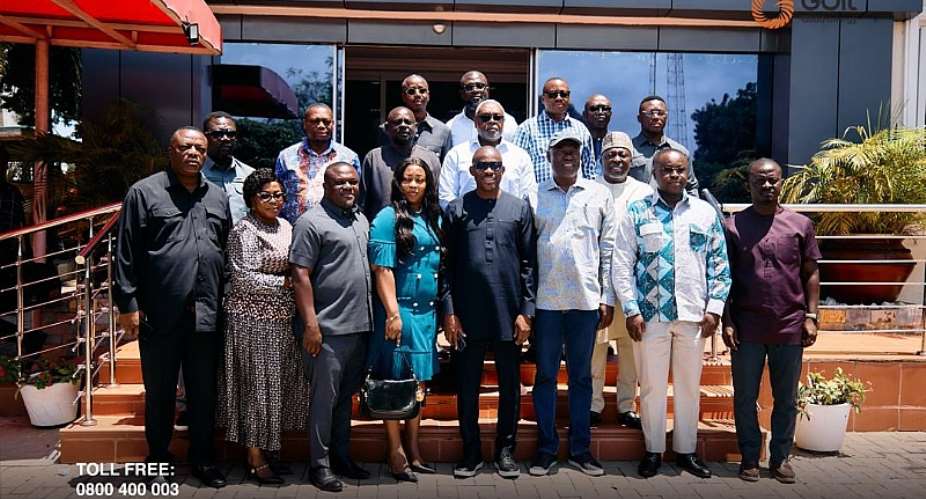
Ghana’s indigenous energy champion, GOIL PLC, has received a strong parliamentary endorsement for reclaiming its position as the market leader in Ghana’s downstream petroleum sector and for its strategic role in safeguarding national fuel security and economic stability.
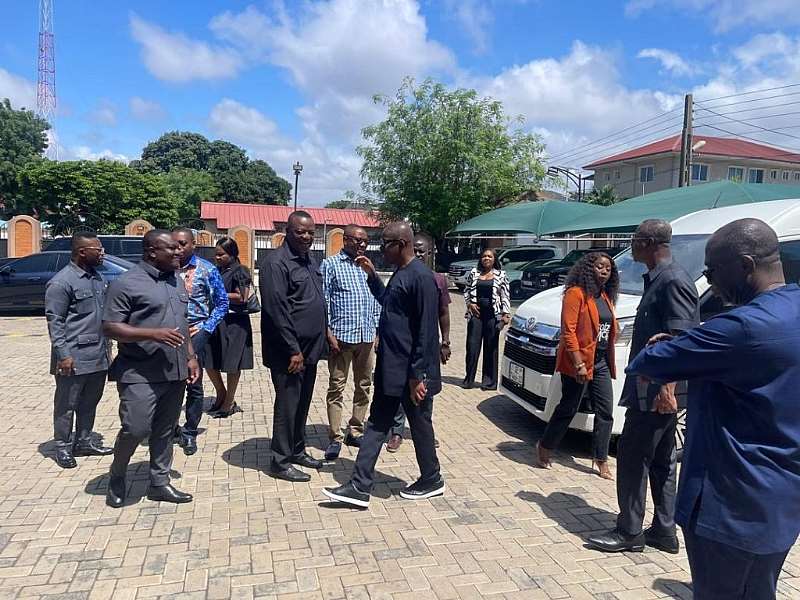
The commendation was delivered by the Parliamentary Select Committee on Energy during a high-level working visit to GOIL’s headquarters as part of its constitutional oversight responsibilities. The visit provided a platform for in-depth engagement between the legislature and management on GOIL’s operations, strategic investments, operational challenges, and long-term growth trajectory.
Speaking on behalf of the Committee, Dr. Albert Tetteh Nyakotey described GOIL as “Ghana’s pride,” emphasizing that the visit was intended to deepen Parliament’s understanding of the company’s operations and its critical contribution to ensuring an uninterrupted fuel supply across all regions of the country, including underserved communities.
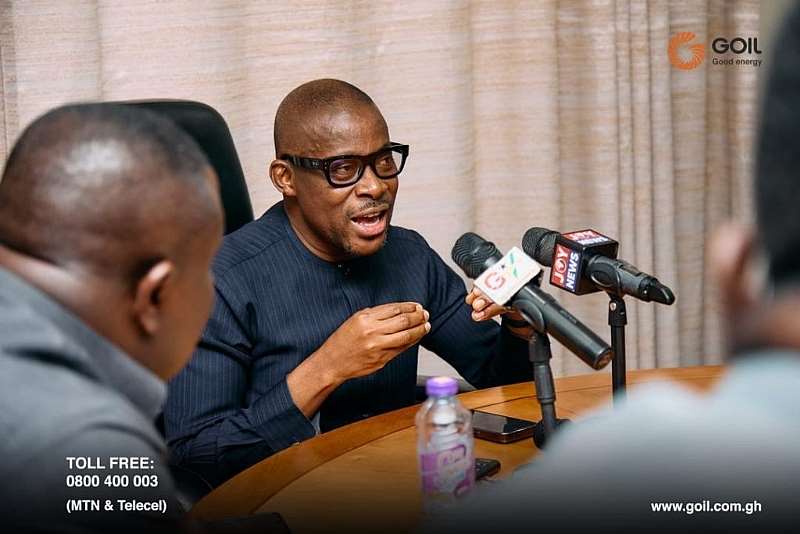
Welcoming the delegation, the Group Chief Executive Officer and Managing Director of GOIL PLC, Mr. Edward Abambire Bawa, provided a comprehensive briefing on GOIL’s integrated operations across the petroleum value chain and its strategic importance to Ghana’s economy.
According to a statement issued by the Public Affairs Unit and copied to Communication for Development and Advocacy Consult (CDA Consult) in Accra, Mr. Bawa explained that beyond purely commercial considerations, GOIL operates with a national service mandate.
He said the company continues to serve communities and routes where purely business and profitability considerations make operations unattractive to other oil marketing companies. This nationwide presence is fundamental to fuel security, price stability, and equitable access to energy for economic activity.
This dual mandate—delivering value to shareholders while serving the broader public interest—defines GOIL’s unique position in Ghana’s energy landscape. It is the only OMC that balances commercial competitiveness with a deliberate national development role.
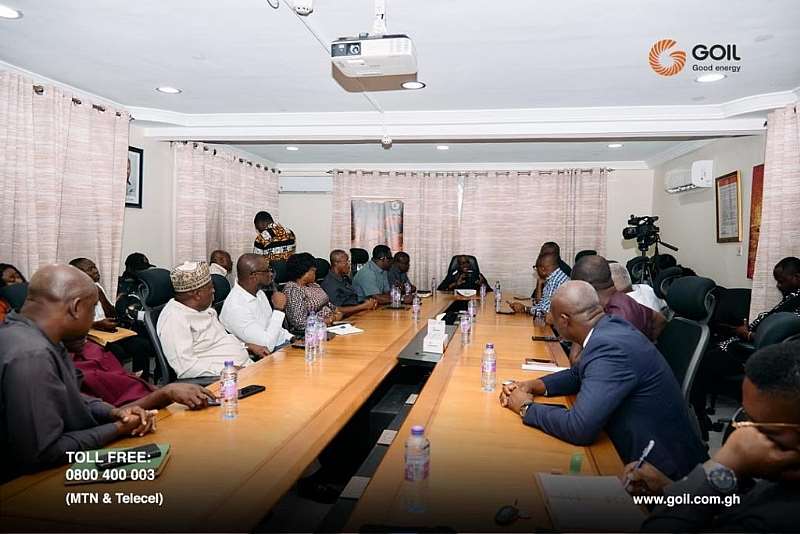
During a robust interactive session, members of the Committee sought clarification on a wide range of strategic issues, including GOIL’s downstream operations, the Cylinder Recirculation Model (CRM), GOBitumen operations, upstream activities, fuel pricing policy, local product sourcing, electric mobility transition, staff welfare, and growth strategy.
Mr. Bawa revealed that close to 90 percent of GOIL’s petroleum products are currently procured locally, following increased domestic refining capacity. This is a major shift that directly supports Ghana’s local content agenda, reduces pressure on foreign exchange, strengthens the cedi, and insulates the domestic market from global supply chain shocks.
He noted that the company continues to deploy a prudent pricing strategy that balances competitive pricing at the pump with profitability and sustainability, ensuring that Ghanaian consumers and businesses are protected from excessive price volatility.
The Committee was also briefed on strategic diversification through GOIL’s subsidiaries, particularly GOBitumen Limited.
Mr. Bawa disclosed that GOIL is investing approximately US$7 million to expand GOBitumen’s storage capacity by an additional 6,000 metric tonnes.
This expansion is economically strategic. GOBitumen’s state-of-the-art quality control laboratory guarantees the quality of bitumen supplied to road contractors and plays a critical national role in curbing the use of substandard products that have historically compromised road durability and wasted billions in public infrastructure investment.
He said ensuring quality bitumen for road construction, GOIL is directly supporting the government’s road infrastructure agenda, reducing maintenance costs, and extending the lifespan of Ghana’s road network—a key enabler of trade and economic growth.
On the Cylinder Recirculation Model, a key government policy to enhance LPG safety and access, Mr. Bawa said GOIL had already invested significantly in infrastructure to support the rollout, including modern cylinder-bottling plants in Tema and Kumasi.
The company is positioned to expand its CRM infrastructure and cylinder distribution network nationwide once the model is fully rolled out, aligning energy access with safety and job creation.
On the future of mobility, the GCEO revealed a forward-looking transition plan. GOIL plans to install electric vehicle (EV) charging points at 15 service stations currently undergoing refurbishment ahead of a pilot programme.
This positions GOIL as a future-ready integrated energy provider, ensuring Ghana is not left behind in the global e-mobility transition while leveraging its extensive retail network.
Mr. Bawa also outlined challenges confronting the downstream sector, including volatility in international petroleum markets, high financing and storage requirements, and outstanding receivables from petroleum products supplied to state institutions, which impact working capital and investment capacity.
At the end of the engagement, the Committee commended Management for its candid and comprehensive responses and formally acknowledged GOIL’s return to market leadership after intense competition in the liberalized market.
Members encouraged the company to build on its current momentum and challenged management to work towards attaining a minimum 25 percent market share, a target that would further consolidate indigenous control of Ghana’s strategic energy sector and enhance retention of petroleum revenues within the national economy.
Mr. Bawa thanked the Committee for the visit and welcomed continued engagement with Parliament, noting that such interactions deepen understanding of GOIL’s operations and its strategic role in Ghana’s energy security architecture.
The GOIL delegation included Mr. Joseph Adongo, Managing Director of GOBitumen; Mr. Robert Nii Lartey, Group Chief Finance Officer; Mr. Robert Kyere, Head of Corporate Affairs; Mr. Emmanuel Kwame Agyiri, Head of Fuels Marketing; and Ms. Millicent Ocquaye, Head of Human Resources and Administration, among other officials.
The visit reinforces a clear economic narrative: a strong, efficient, indigenous GOIL is not just a business success story but a pillar of Ghana’s fuel security, foreign exchange management, infrastructure quality, and inclusive economic growth.





 Bechem poultry factory 50% complete, to be ready in March 2027 – Kwakye Ofosu
 Can’t Ghana find non-partisan people for EC positions? – Kwesi Pratt on Affi Agb...
 Emelia Agbenyo’s alleged NDC ties will not affect EC work – Apanga
 Balancing the scale will dilute extreme partisanship – Hamza on new Deputy EC Ch...
 October 13: Cedi sells at GHS12.30 on forex market, GHS11.78 on BoG interbank
 ECOWAS begins implementation of 2026–2031 communication strategy
 IMF upgrades 2026 global growth forecast but war and debt threaten outlook
 Ghana needs comprehensive surrogacy law to address complex legal disputes — Afri...
 Value For Money: Govt to audit rural telephony project inherited from previous a...


