




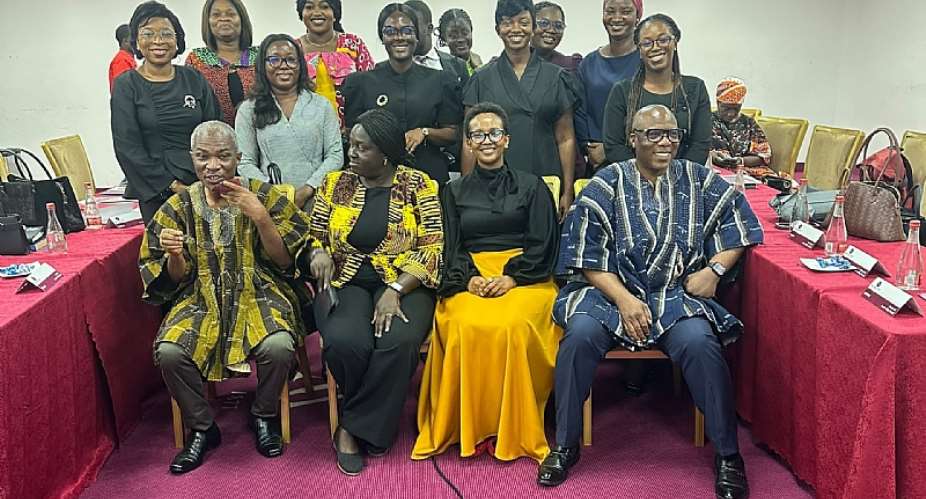
The Communication for Development and Advocacy Consult (CDA Consult) has urged the Attorney-General’s Department and the Commission on Human Rights and Administrative Justice (CHRAJ) to adopt structured media communication strategies to improve public understanding of court proceedings, judgments and the implementation of legal decisions.
Executive Director of CDA Consult, Francis Ameyibor, said the two institutions risk losing public confidence when they fail to explain complex legal matters and communicate key developments to the public in a timely manner.
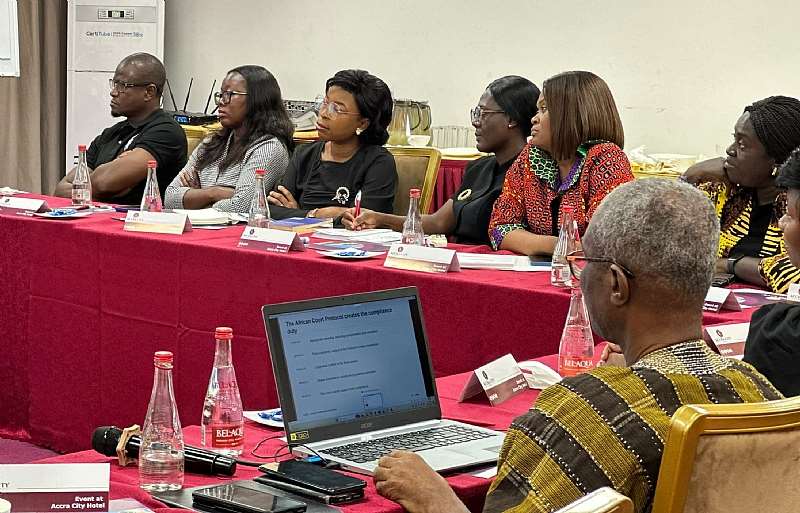
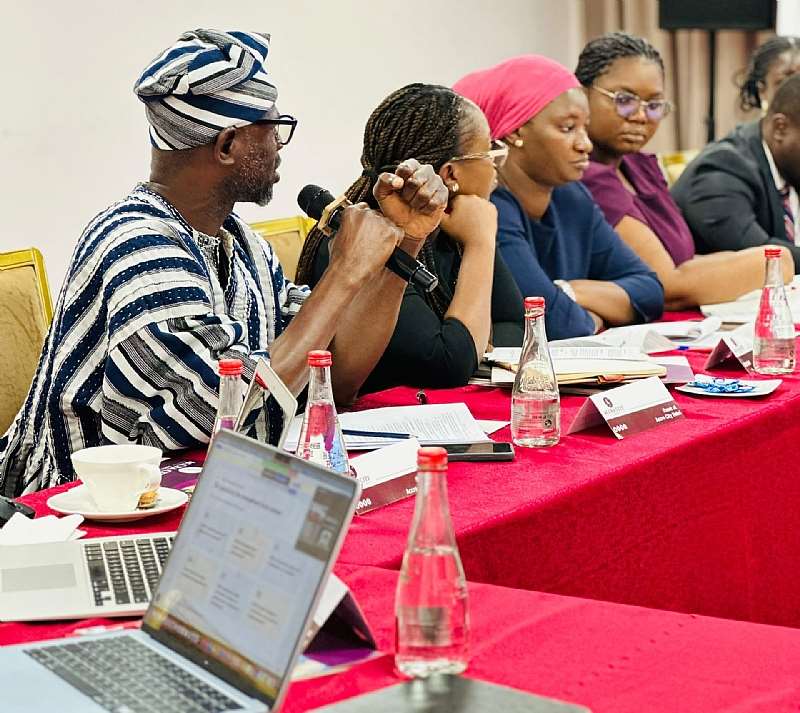
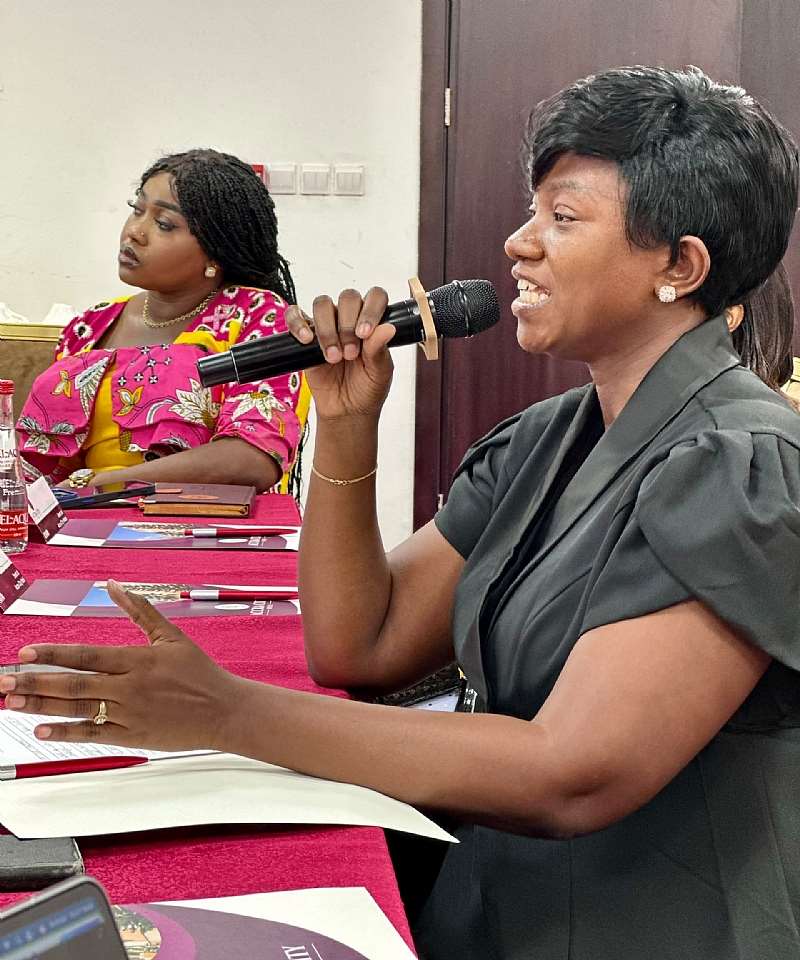
He made the remarks during a one-day workshop organised by the Coalition for an Effective African Court on Human and Peoples’ Rights (the African Court Coalition) for lawyers from the Attorney-General’s Department and officials of CHRAJ.
The workshop was held on the theme “Deepening Engagement with the Media for Effective Reportage on Legal Issues, Court Proceedings, Judgment, and Its Implementation in Ghana.”
Mr Ameyibor argued that although the Attorney-General’s Department handles complex constitutional cases and CHRAJ works to protect human rights, limited engagement with the media often leaves the public without adequate information about legal proceedings and their implications.
He said Ghana’s Constitution recognises that justice emanates from the people, but citizens must understand the justice system to meaningfully appreciate its work.
“for too long, the AG and CHRAJ have treated media engagement as an afterthought, hiding behind 'sub judice.' In modern Ghana, silence is no longer interpreted as professionalism. It is interpreted as guilt, arrogance, or concealment. The media is not your enemy. It is the amplifier for the 34 million Ghanaians the justice system serves.”
Mr Ameyibor said legal institutions needed to engage journalists throughout the life cycle of a case, rather than waiting until proceedings had concluded before providing explanations.
Four stages requiring effective communication
He identified four key stages in the legal process where proactive communication could improve public understanding: the filing of a case, court hearings, the delivery of judgments and the implementation of court orders.
At the filing stage, he said, journalists should be given basic explanations of the issues being challenged. He observed that responses such as "we are yet to be served" often leave the public hearing only the account provided by lawyers representing the opposing parties.
He therefore called for standard procedural responses that would allow institutions to acknowledge cases while providing appropriate information without prejudicing ongoing proceedings.
During hearings, Mr Ameyibor said, legal terminology such as certiorari, mandamus and estoppel could make proceedings difficult for ordinary citizens to understand.
He proposed that institutional press teams provide journalists with brief pre-hearing explanations outlining the issues before the court in accessible language.
He described the communication of judgments as another major weakness, particularly when lengthy Supreme Court decisions are published without summaries to help journalists and the public understand their implications.
To address this, he proposed a 90-minute rule under which institutions would release a three-part information package within 90 minutes of a judgment: a clear headline, five bullet points explaining the decision in plain English and local languages, and the full judgment.
According to him, such an approach would help ensure that accurate information is available to the media before speculation and conflicting interpretations dominate public discussion.
Mr Ameyibor also identified the implementation of judgments as a critical stage at which public trust could either be strengthened or undermined.
He said when the Supreme Court orders compensation or CHRAJ directs the reinstatement of an individual, a lack of communication about compliance can leave the media and the public to fill the information gap.
He urged the institutions to provide timely updates on the implementation of court orders and decisions.
Proposal for dedicated legal communications units
Mr Ameyibor argued that improving communication required permanent institutional structures rather than reliance on the goodwill of individual officials.
He proposed that the Attorney-General’s Department and CHRAJ establish Legal Communications Units (LCUs), each comprising a three-member press team.
The proposed team would include a Head of Legal Communications, preferably a Senior State Attorney, to vet official statements; a Judgment Simplifier responsible for translating legal decisions into accessible English, Twi, Ewe and Ga; and a Media Liaison and Digital Officer to manage verified social media accounts and a WhatsApp channel for court reporters.
He said the proposed units would help institutions provide consistent information, simplify complex legal decisions and maintain regular engagement with journalists.
The CDA Consult executive director also cautioned lawyers and state attorneys against using personal Facebook accounts to communicate on national legal matters, leaking draft charge sheets through WhatsApp and remaining silent after judgments.
He further advised officials against publicly confronting journalists over inaccurate reports, recommending instead that institutions provide verified information and issue clear corrections when necessary.
He outlined three communication principles for the institutions: maintaining a single source of truth through verified channels, providing information promptly and in a structured manner, and issuing corrections rather than deleting erroneous posts.
He argued that deleting inaccurate posts could be interpreted as an attempt to conceal information rather than correct the record.
“Ghana is celebrated as a beacon of democracy not just for winning cases, but because Ghanaians believed justice works. Belief requires understanding, and understanding requires communication.
“Legal excellence without media engagement is invisible, and invisible justice is no justice for the Ghanaian people. Justice needs a microphone. It is time for the Attorney-General and CHRAJ to hold it with professionalism, humility, and clarity,” Mr Ameyibor stated.
African Court Coalition advocates legal reforms
Coordinator of the African Court Coalition, Sophia Ebby, said the organisation had spent several years working with its Ghana National Focal Point to engage state institutions and other stakeholders on legislative reforms to facilitate the domestic implementation of regional human rights decisions, particularly those issued by the African Court on Human and Peoples’ Rights.
Ms Ebby expressed support for a proposed amendment to Part V of the Courts Act, 1993 (Act 459), which she said had implications for the administration of justice, legal processes and human rights protection.
The workshop also featured contributions from Sir Justice Dennis Dominic Adjei, a judge of the African Court and a Justice of the Supreme Court of Ghana, and Francis-Xavier Sosu, Member of Parliament.
Other resource persons included Agbenu Doe, Managing Partner of Jasford Legal Consulting and International Focal Point of the African Court Coalition for Ghana, alongside representatives of the coalition.
The discussions focused on improving media engagement by legal institutions, strengthening public understanding of court proceedings and judgments, and promoting the effective implementation of regional human rights decisions in Ghana.

 Balancing the scale will dilute extreme partisanship – Hamza on new Deputy EC Ch...
 October 13: Cedi sells at GHS12.30 on forex market, GHS11.78 on BoG interbank
 ECOWAS begins implementation of 2026–2031 communication strategy
 IMF upgrades 2026 global growth forecast but war and debt threaten outlook
 Education Minister proposes 5–10% annual rent increase cap for public universiti...
 Haruna Iddrisu assures teachers of salary adjustments by October 16
 Madina police sergeant arrested for injuring two in shooting incident at Adenta ...
 Ghana’s rape laws must protect male victims – Kasapa FM’s Akosua Gyambiby
 Ghana needs comprehensive surrogacy law to address complex legal disputes — Afri...
 Value For Money: Govt to audit rural telephony project inherited from previous a...


