




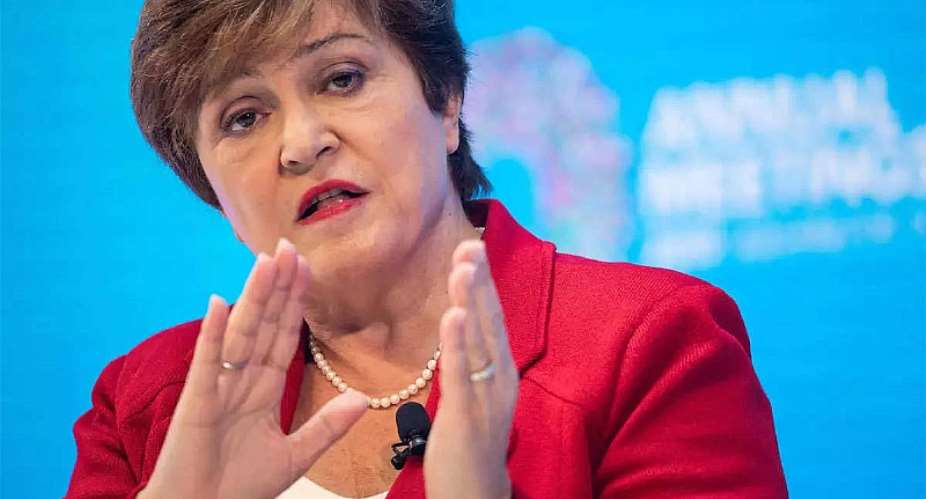
International Monetary Fund (IMF) Managing Director Kristalina Georgieva has cautioned that artificial intelligence (AI) could affect about 40 per cent of jobs worldwide, urging governments to prepare workers for the technology-driven changes ahead.
Speaking at a panel discussion on “Small Scale AI: More and Better Jobs” at the 2026 IMF/World Bank Annual Meetings in Bangkok, Thailand, on Monday, Ms Georgieva described AI’s impact on employment as a “slow-moving tsunami” that could transform existing roles, reduce their value or eliminate some jobs entirely.
She said IMF projections indicate that AI could affect 60 per cent of jobs in advanced economies, compared with 23 per cent in low-income countries. However, she explained that the difference largely reflects varying levels of AI adoption rather than a lower risk to workers in poorer economies.
Ms Georgieva noted that investment in data centres and the development of AI models were already driving economic activity and helping sustain global growth at about three per cent, despite disruptions to energy supplies.
She said the extent to which countries adopt the technology would determine how widely its economic benefits are shared.
For developing economies to benefit, she stressed the need for reliable electricity, robust digital infrastructure, relevant workforce skills and effective safeguards to ensure responsible AI use.
On employment trends, the IMF chief cited a study in the United States showing that about 10 per cent of jobs already required advanced AI skills, with such positions generally attracting higher wages.
At the same time, she said some routine jobs were disappearing, even as new employment opportunities emerged in areas such as data centre construction and related services. However, she noted that many of these emerging jobs offered lower pay.
Ms Georgieva expressed particular concern about young people entering the labour market, warning that pressure on traditional entry-level positions could limit opportunities for them to gain experience and advance their careers.
She called for closer monitoring of employment trends, education reforms that encourage lifelong learning and a review of tax systems to reflect changes in the relationship between labour and capital as AI becomes more widely adopted.
She warned that a shift away from labour could weaken government revenue and reduce the resources available to support workers affected by technological changes.
Despite the potential disruption, Ms Georgieva maintained that AI should ultimately be used to boost productivity and improve living standards.
“Get AI to do all the stuff we don't want to do and let us enjoy the things we love to do.”

 'Stop excessive financial demands before sharing information with us' — Interior...
 EC will serve national interest, not partisan politics – Deputy Chair Dr Kwaku A...
 I expect no preferential treatment from EC for myself as President, my party or ...
 Afenyo-Markin meets management, proposes reforms to turnaround struggling ECG
 ECG management commends Afenyo-Markin for reforms during short stay as Board Cha...
 Mahama tasks new EC deputy chairpersons to uphold impartiality
 Attorney-General urges court to reject Adu-Boahene’s no-case submission
 Nyaho Medical Centre ordered to report to CID over expired data protection certi...
 Mahama swears in new Electoral Commission deputy commissioners
 PTAAM-Africa calls for government probe into alleged World Cup visa fraud


