




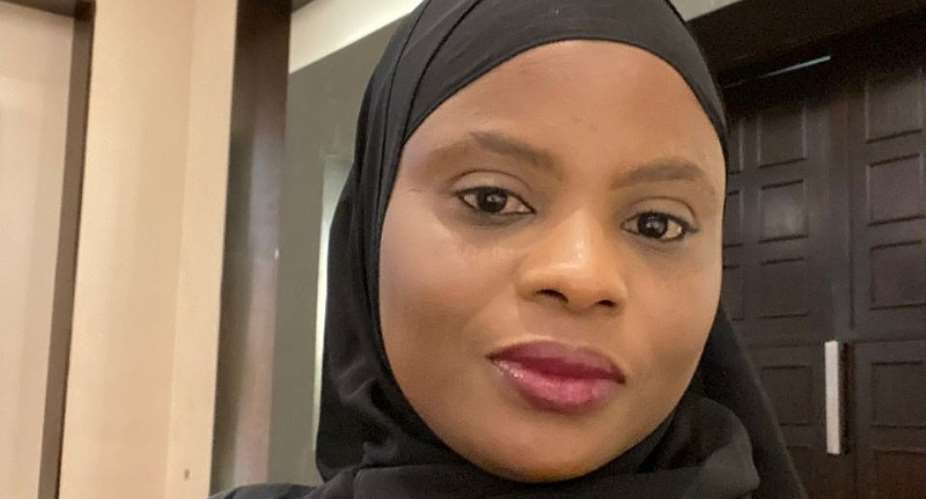
The Millennium Muslim Women of West Africa (MMWWA) has called for increased investment in technical and vocational education, values-based education and social support systems to promote the independence and economic empowerment of young women in Ghana and across West Africa.
The organisation, led by its President, Princess Hawawu Mohammed Osman, and Secretary, Miss Rashida Ibrahim, said young women facing economic difficulties in tertiary institutions needed practical opportunities to build sustainable livelihoods rather than sympathy alone.
In a statement copied to Modern Ghana News in Accra, the MMWWA reaffirmed its commitment to promoting the liberty, financial independence and self-determination of African women, stressing that targeted investment in their skills and personal development could help them contribute more effectively to national development.
The organisation said young women across West Africa had demonstrated resilience, creativity and a willingness to contribute to their communities but required access to practical skills and viable economic opportunities to realise their potential.
It therefore proposed a three-pronged approach focused on expanding technical and vocational education and training (TVET), integrating moral and civic education into academic and vocational programmes, and strengthening financial and social support for female students.
Expanding access to vocational skills
The MMWWA identified technical and vocational education as a key pathway to financial independence, urging the government and development partners to expand access to modern training programmes that respond to labour market demands.
It proposed training opportunities in digital technology and information and communications technology (ICT), sustainable agribusiness, fashion design, textile innovation, entrepreneurship, hospitality and industrial arts.
According to the organisation, equipping young women with these practical skills would improve their prospects of securing employment, establishing businesses and achieving economic self-reliance.
It argued that vocational training should be viewed not merely as an educational intervention but also as a means of enabling women to exercise greater control over their futures.
Combining skills development with values education
The organisation also advocated the integration of moral, civic and ethical education into vocational and academic curricula, arguing that economic empowerment should go hand in hand with personal responsibility and character development.
It said education that reinforces African cultural values, family systems, religious principles and community responsibility could help young women develop confidence, resilience and a strong sense of self-worth.
The MMWWA maintained that combining professional competence with values education would prepare young women not only to earn a living but also to assume leadership roles and contribute positively to society.
Strengthening support for female students
The third proposal centres on improving social protection for female students in tertiary institutions, particularly those struggling to meet basic living and educational expenses.
The organisation called for targeted bursaries, accommodation subsidies, feeding assistance and legitimate work-study programmes to help students manage financial pressures while pursuing their education.
It urged the Ministry of Education and tertiary institutions to work together to establish support systems that would enable female students to concentrate on their academic work and skills development without being overwhelmed by the cost of survival.
The MMWWA said such interventions would demonstrate a commitment to the welfare and future of young women while improving their chances of completing their education and becoming economically independent.
Call for collective action
Beyond government intervention, the organisation appealed to traditional rulers, religious leaders, parents, civil society groups and private-sector institutions to support efforts to expand opportunities for young women.
"The price of liberty should never be the forfeiture of our virtue," the statement notes but quickly adds its affirmative vision: "Let us build a West Africa where a young woman’s liberty is secured by her intellect, her skilled hands, and her unwavering moral character."
The MMWWA said providing young women with practical resources, including sewing machines, laptops, access to land and scholarships, could help them establish livelihoods, support their families and contribute to community development.
It maintained that a combination of vocational training, values education and targeted social support would help create a generation of financially independent women equipped to become entrepreneurs, professionals and community leaders.
The organisation said a coordinated commitment from government, educational institutions, development partners and communities could transform the economic challenges facing young women into opportunities for sustainable growth and empowerment.

 Gender Minister meets Nana Akua Addo’s husband after alleged domestic abuse inci...
 BoG Drafts New Directive to Regulate AI Use in Ghana’s Financial Sector
 Ghana Ready to Evacuate More Citizens from South Africa if Situation Worsens — A...
 SSNIT Moves to Reintegrate Labadi Beachfront Traders, Promises African Market Be...
 Kpebu Warns Newly Called Ministers and MPs to Put Legal Ethics Above Party Loyal...
 At least 109 migrants dead, more than 100 missing after boat capsizes off Djibou...
 India court orders release of 'cockroach' movement leaders after detention
 Riyadh airport strike kills 12, Saudi Arabia threatens 'decisive' response
 Trump, Zelensky clash over diesel deal as Russian strikes on Ukraine kill 21, in...
 Surrogacy: Supreme Court judge warns of citizenship and inheritance challenges f...


