




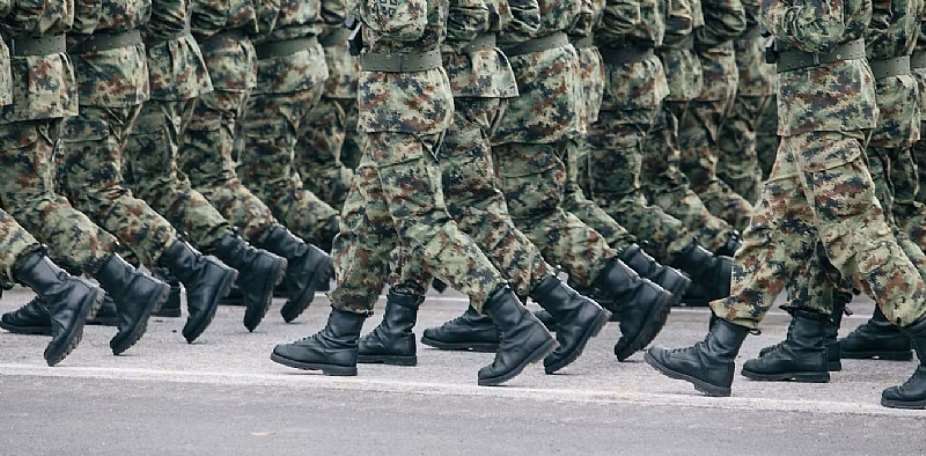
A military coup d'état is the ouster of an elected president or head of state, usually through the use or threat of force. Putschists (those who participate in a coup) often justify their actions by accusing the government of mismanaging the economy and lowering living standards. Political instability is another reason coup makers give for their actions.
A coup is not necessarily the most effective way to cure economic and political ills, however. Positive change comes instead through institutional reform, structural economic changes and engagement with civil society – including the people who create wealth and economic growth.
Military regimes are usually unable or unwilling to provide the necessary regulatory reforms. They don't provide the legal and institutional stability needed to fight poverty and improve living standards.
I'm an economist and legal scholar who studies political economy and human rights in Africa. My research includes military coups and how they affect states.
In my studies of military and constitutional takeovers in Egypt, Nigeria, Sierra Leone, The Gambia and Sudan, I have identified four major consequences of coups:
they worsen intergroup conflict and threaten peaceful coexistence
they undermine entrepreneurship and the creation of wealth needed to confront poverty and inequality
they encourage the abuse of vulnerable groups, such as women and children, and ethnic or religious minorities
they destroy efforts to deepen democracy and the rule of law.
1. Coups worsen intergroup conflict
Most African countries are diverse in ethnic and religious terms. Unfortunately, most post-independence governments have failed to provide an institutional environment that helps people to live together in peace.
This failure has enabled the majority faction to tyrannise minorities.
In most African countries, ethnicity influences political mobilisation, patronage and coalition building. Ruling elites use ethnic identity as a tool to build voting blocs and secure power.
Military elites fill top military and security positions with officers from their own ethnic group. This is known as ethnic stacking. It's happened in Kenya, Ethiopia and Nigeria.
When there is a coup, the concentration of power within a specific military faction can trigger intense security crises. Marginalised minorities may engage in violence to protect themselves, their resources and their political representation.
Coups can dismantle power-sharing arrangements or democratic frameworks that previously allowed people to live in peace and gave them a voice in governance.
2. Coups undermine wealth creation
A military coup tends to destabilise the legal system and make life less predictable. The uncertainty can discourage investment and entrepreneurship.
Investors want to know that tax rules, environmental standards and laws governing operations won't change overnight. Courts must be reliable, accessible and able to settle disputes. Clear, predictable and reliable legal frameworks mean long-term trade contracts can be enforced.
A 2026 International Monetary Fund report estimates that coups “can reduce GDP growth by around 2.3 percentage points in the same year”. The report says coups in Africa reduce investment by 14.3%. These economic effects can persist in the years that follow.
3. Coups spark human rights abuses
Recognising and protecting human rights is a foundation for economic and human development. Human rights enable peaceful coexistence, long-term economic growth and sustainable development.
Constitutional democracies protect human rights, respect the rule of law and put limits on government power.
A military coup usually creates an environment in which human rights are routinely violated. Leaders no longer account to either the constitution or the people. In 2023, Freedom House, an American non-governmental organisation that advocates for democracy, warned that a surge of coups in Africa was threatening human rights and the rule of law.
Coup leaders often suspend or discard the constitution and its bill of rights. Military regimes are also known for committing serious human rights abuses like arbitrary detentions and torture.
4. Coups weaken the rule of law
One of the first things coup leaders do is destroy constitutional order. They put executive, legislative and judiciary powers in military hands. This deprives the people of the right to choose their leaders through elections.
Coup leaders typically ban peaceful protests, censor media, and jail critics of the regime without trial. Post-coup military elites usually rule by decree and not through an elected legislature or independent judiciary.
Forceful regime changes often invite counter-coups, civil conflict, and more political violence and instability.
This has been seen in Egypt, Sudan and several Sahelian states.
Stopping the coup wave
African states need to develop a democratic culture, which is undergirded by the control of the military by elected civilian authorities. Citizens who believe a government has failed can have their say through regularly scheduled elections.
Armed forces should be professional. Troops should be accountable to the constitution and elected civilian leaders. Military education should include human rights law and the duty to defend the constitution.
Coup leaders should not be allowed to take part in elections held to restore democratic order. Neither should they hold positions of responsibility in the state's political institutions. The African Charter on Democracy, Elections and Governance provides for this, but the African Union has not made sure it happens.
In Egypt, for instance, Abdel Fattah el-Sisi overthrew the democratically elected president Mohamed Morsi in 2013. A year later, el-Sisi became the country's president. Similarly, Gen. Brice Oligui Nguema led the 2023 coup in Gabon. He then won the April 2025 presidential election and was then installed as Gabon's new president.
African states must also ban military coups and make it a crime to change the government unconstitutionally. There must be mechanisms for prosecuting perpetrators. Several African countries have developed strong democratic norms that reject military rule. Afrobarometer surveys, for example, show that respondents in Zambia (90%), Uganda (87%), Eswatini (85%) and Seychelles (85%) are highly opposed to military coups.
Countries that have avoided military coups have generally developed strong constitutions and institutions. They have credible elections and professional armed forces accountable to civilian authority.
In South Africa and Namibia, new governments brought armed forces together under civilian oversight. Botswana and Mauritius have combined good governance with economic development.
When political, military and economic institutions provide effective peaceful ways to resolve grievances, it's harder to stage a coup.
John Mukum Mbaku does not work for, consult, own shares in or receive funding from any company or organisation that would benefit from this article, and has disclosed no relevant affiliations beyond their academic appointment.
By John Mukum Mbaku, Professor, Weber State University

 Govt releases GH¢9.1 billion covering six quarters of DACF to MMDAs - Ayariga
 Manhyia South MP charged over alleged GH¢9.85m loss to SIC Life
 'I didn’t know the process would be that fast' – Nana B explains missing NPP swe...
 'Who is Karbo to defy my orders?' – Buttey fumes over NPP conference clash
 'Kojo Bamba can’t stop NDC' – Gbande warns NPP against shielding anyone from arr...
 Fire destroys property building in Koforidua
 Mahama pardons 863 convicted persons, 11 from death sentence
 National Cathedral site reverts to government as Attorney-General reviews audit
 NDC confirms Dzifa Gunu’s disqualification from La Dadekotopon constituency secr...
 Nigeria's Tinubu confirms 32 dead after military plane crash


