




The rural-urban migration rate in Nigeria has long been a structural leak in the nation’s socio-economic fabric, depriving villages of their most vibrant demographic, the young school leavers, while it balloons state capitals and major metropolitan centres like Owerri, Lagos, and Port Harcourt with unemployed job seekers. For decades, the narrative of economic survival has been synonymous with the physical displacement of youth, moving away from agrarian and communal roots in search of elusive white-collar employment in overcrowded cities. Yet, a quiet economic revolution is currently reshaping the landscape of a state like Imo, pointing unapologetically toward a future where prosperity is rooted locally. By examining two powerful, complementary economic frameworks—the top-down, state-and-local government-backed agricultural processing zone model and the bottom-up, kin-centric One Kindred, One Business Initiative (OKOBI)—observers can witness a blueprint for systemic rural revitalization. When analyzed independently, both frameworks offer distinct solutions to poverty and stagnation; when harmonized, they forge an unstoppable engine of grassroots industrialization, job creation, and urban decongestion.
To understand the mechanics of this potential transformation, one must first explore how each model operates on its own merits. The local government area-backed processing zone concept of Chief Sir Emeka Asinugo represents a macro-level, state-driven industrialization strategy. In this top-down framework, the state ministry of agriculture collaborates directly with local government agriculture authorities across the twenty-seven local government areas of Imo State. The government identifies and secures a macro-stretch of arable land spanning a mile or half a mile per local government area (LGA) and designates specific agricultural mandates based on comparative advantage and ecological suitability.
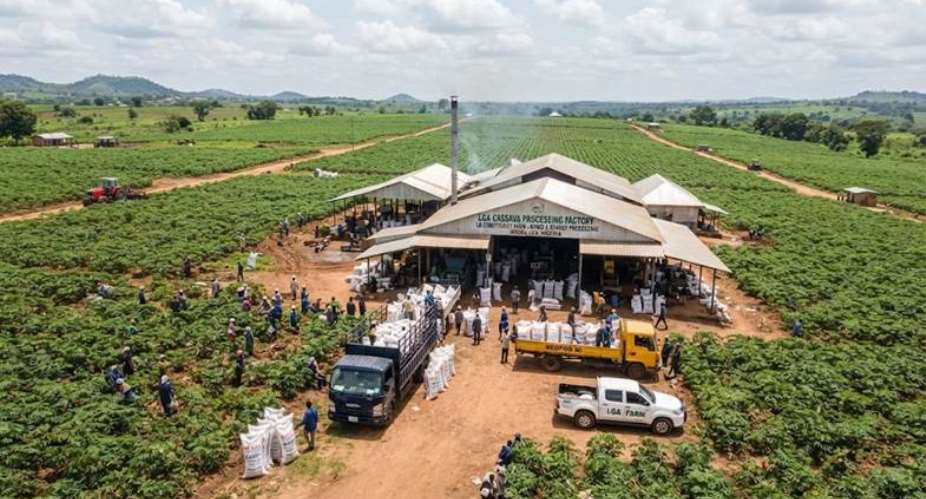
Rather than practise scattered, subsistence farming, each LGA focuses intensely on one or two core staple foods of the people, such as cassava, yam, maize, rice, or tomatoes. To bridge the historic gap between farming and industrial value, a dedicated processing factory is strategically integrated into the ecosystem, built either in the middle or at the extreme end of the farming corridor. For instance, an LGA mandated to cultivate cassava will have a localized processing plant equipped to transform raw tubers into high-grade garri, industrial starch, flour, and ethanol. Similarly, an LGA specializing in tomatoes will house a facility capable of converting fresh harvests into tomato paste, ketchup, and canned purees, tomato soup and much more. This model seeks to institutionalize large-scale productivity, eliminate post-harvest losses through immediate local processing, and anchor regional economies on solid industrial pillars.
Conversely, the One Kindred, One Business Initiative (OKOBI) operates from the opposite direction, utilizing a bottom-up, social cooperative framework that harnesses the deeply rooted cultural traditions of Igbo kinship and communal solidarity. Instead of waiting for government intervention or large-scale capital injection, OKOBI looks inward, mobilizing extended family units, known locally as kindreds, to pool their resources, financial savings, and collective intellect. These kindreds establish and co-own formal business entities ranging from modern poultry farms and micro-processing units to digital hubs, transport services, and retail networks. The philosophy behind OKOBI is rooted in shared risk and collective ownership, dismantling the fragility associated with isolated, one-man small businesses that frequently collapse due to undercapitalization or lack of support networks.
The state government acts primarily as a facilitator rather than an operator, providing structural legitimacy through formal business registration, specialized skills training, mentorship, and connections to seed grants or matching funds from institutional partners like the Bank of Industry. By leveraging existing social capital, OKOBI transforms traditional family bonds into corporate shareholding structures, generating sustainable wealth and dividends that flow directly back into the households of everyday citizens.
While both models possess unique structural integrity, they address economic challenges through vastly different lenses. The LGA-backed model offers scale, uniformity, and heavy industrial muscle, ensuring that raw material supply is guaranteed and standardized for commercial markets. However, top-down state initiatives historically grapple with bureaucratic red tape, political shifts, maintenance liabilities, and the risk of turning into abandoned white elephant projects if administrative priorities change. On the other hand, the OKOBI model thrives on agility, personal accountability, and emotional investment, as participants have their own hard-earned money tied directly to the success of the enterprise. Yet, OKOBI micro-enterprises can sometimes struggle to scale beyond immediate local consumption or acquire expensive heavy machinery without broader infrastructural backing. This divergence highlights why viewing them as competing ideologies is a mistake; rather, they are two halves of an economic puzzle. The LGA-backed processing zone concept actually aligns brilliantly with how OKOBI scales, creating a symbiotic ecosystem where macro-infrastructure meets micro-enterprise.
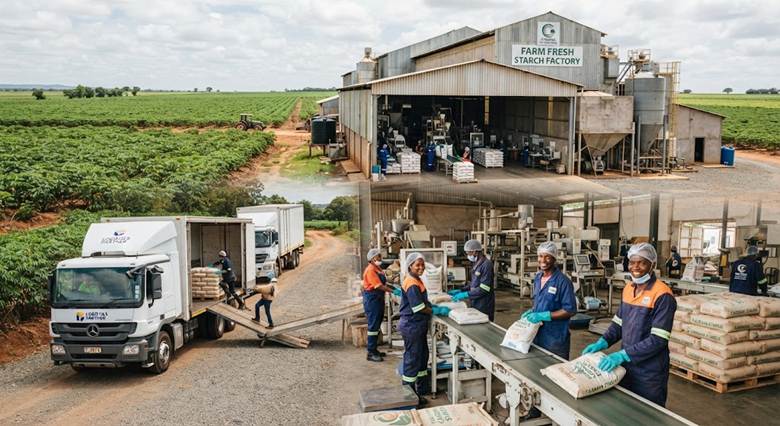
The point of convergence between these two models reveals immense potential for collaboration, leading to superior socio-economic outcomes. In a collaborative framework, the state and local governments can shoulder the heavy capital expenditure required for major macro-infrastructure—such as trunk-line power grids, access roads, and central agro-processing mills—while OKOBI kindred cooperatives act as the primary outgrowers, suppliers, and specialized micro-producers that feed those very factories. For example, rather than the government attempting to manage every single acre of a massive LGA farm—which often introduces inefficiencies and bureaucratic drag—individual OKOBI kindreds within that local government area can manage allocated portions of the half-mile or mile stretch as cooperative farming units. Each kindred brings its own labour, minor tools, and localized management, cultivating the designated staple crop with high efficiency and personal care. The centralized processing plant, built by the government, then serves as the reliable off taker for all these kindred-run farms. This eliminates the age-old dilemma of Nigerian farmers growing abundant crops only to watch them rot due to a lack of transport or buyers. The kindreds secure a guaranteed market for their raw produce, the factory operates at maximum capacity without starving for inputs, and the profits cascade down to individual family units, reinforcing both grassroots ownership and industrial productivity. Examining the employment landscape within the LGA-backed concept highlights why this collaborative alignment is so transformative.
A specialized agricultural and processing zone is not merely a farm; it is a multi-layered economic cluster that generates a diverse spectrum of job opportunities across various skill sets. At the primary production level, jobs are created for agronomists, farm managers, tractor operators, irrigation specialists, and field labourers who manage the cultivation cycles. Moving along the value chain, the processing component introduces technical roles such as quality control inspectors, mechanical and electrical engineers to maintain the processing machinery, factory line workers, packaging technicians, and warehouse logistics coordinators. Furthermore, secondary and tertiary support services emerge naturally around the zone. These include fleet managers and truck drivers for transporting raw materials and finished goods, administrative and accounting personnel to manage corporate books, digital inventory clerks, and local maintenance contractors. By embedding OKOBI kindreds directly into this architecture, young school leavers are not reduced to mere wage-earning employees who might still feel economically insecure; instead, they operate as co-owners and stakeholders in their kindred's farming or processing cooperative, reaping direct dividends alongside their salaries.
This structural integration directly addresses the crisis of urban influx by attacking its root cause: the absolute lack of viable, sustainable economic prospects in rural communities. For generations, young school leavers in Imo State have continued to pack their bags for Owerri, Lagos, or Abuja upon graduation, driven by the belief that rural areas offer nothing beyond subsistence farming and stagnation. When cities swell with desperate job seekers, it strains urban infrastructure, drives up crime rates, and creates pockets of severe urban poverty. Both the LGA-backed processing zone and OKOBI serve as powerful deterrents to this migration loop, but their combined impact is revolutionary. OKOBI provides the social security, immediate startup platform, and psychological anchor of family ownership, making rural life economically dignified and culturally engaging. Meanwhile, the LGA-backed agricultural and industrial zones provide the macro-economic proof that rural areas can be centres of high-tech production, manufacturing, and global export value chains. When a young graduate in a rural community realizes they can earn a professional salary or hold equity in an agricultural enterprise that utilizes advanced machinery and processes goods for international markets, the psychological pull toward overcrowded urban centres evaporates.
Ultimately, the revitalization of Imo State does not require waiting for massive external conglomerates to establish remote factories, nor does it require clinging to outdated subsistence farming techniques that trap generations in cycles of poverty. The path forward lies in harmonizing the institutional muscle of government with the resilient cultural architecture of the people. By anchoring economic development in localized agricultural processing zones and empowering extended family networks through the One Kindred, One Business Initiative, the state can bridge the gap between macro-industrialization and grassroots wealth creation. This dual approach ensures that wealth is not extracted from the soil and funnelled away to distant cities, but is instead retained where it is grown. As kindreds transform into corporate entities and government-backed processing hubs guarantee stable markets, Imo State can successfully reverse the tide of rural-urban migration, turning its villages and local government areas into thriving, self-sustaining beacons of modern economic prosperity.


 Gov’t renames 24-hour economy markets as District Economy Markets, targets 100% ...
 BoG, Police arrest 7 in Accra over alleged use of cedi notes for money bouquets,...
 SkyTrain trial: High Court adjourns case management conference to October 19
 Edudzi Tameklo recalls how Duffuor was slapped with GH¢100 million bail in 2020,...
 About 800 Director I and II applicants unreachable due to invalid contact number...
 'Boakye Agyarko was seen as anti-Bawumia' – Lecturer on John Boadu’s victory
 'NPP delegates made wrong choice electing John Boadu as chairman' — Political Sc...
 MTN Ghana secures new 5G spectrum in 700 MHz and 3 GHz bands
 Bawumia explains NPP hunt for winnable parliamentary candidates, not deep-pocket...
 Ghana to tap Egypt’s expertise for new capital city, housing projects – Mahama


