




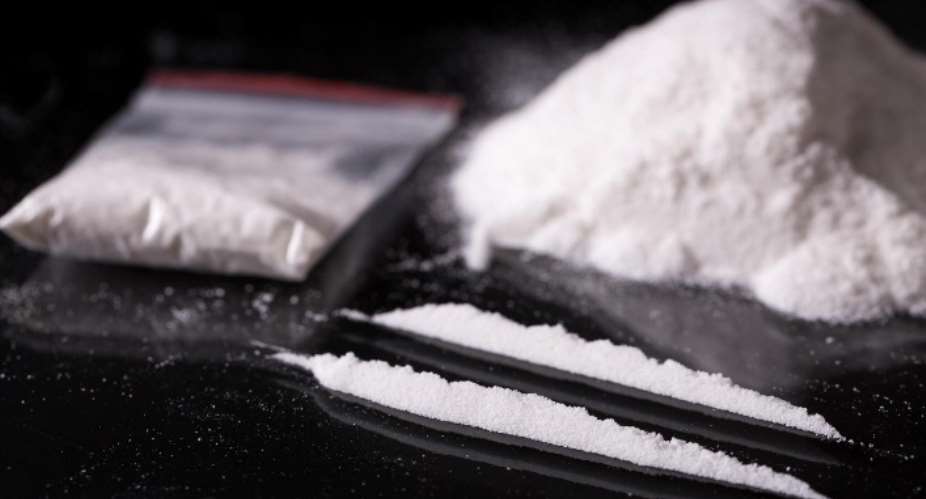
There is a point at which statistics cease to be mere numbers and become a national warning. On cocaine, Ghana passed that point long ago. The only question is whether those who govern us have noticed.
The recent seizure of nearly 3.9 tonnes of cocaine in Dunkirk, France, reportedly worth about US$261 million, has been greeted in some official quarters as though the country had stumbled upon a fresh discovery. It is nothing of the sort. Dunkirk is simply the latest entry in a long and humiliating record of enormous cocaine consignments traced back to Ghana.
In June 2025, almost 4.5 tonnes of cocaine hidden in timber shipped from Ghana were seized in Amsterdam. In November, Belgian authorities found 2,829 kg concealed in cassava flour shipped from Tema. In December, another 1,158 kg from Ghana was intercepted in Antwerp. Together, these three major Ghana linked seizures amounted to roughly 8.5 tonnes of cocaine, with a combined estimated street value of about US$894 million.
If you have any doubt about the scale of Ghana’s cocaine trade, set that US$894 million beside the Ghana Statistical Service's 2025 merchandise export figures. Cocaine would rank among Ghana’s top four export categories. It would be worth more than our aluminium, rubber and ceramics exports combined and even cashew exports. A country that once took pride in being called the Gateway to Africa must now ask, honestly, what kind of gateway it has become and how it has come to find itself among an unenviable list of five countries notoriously associated with narcotics trafficking.
This is not something to celebrate. It is something that should keep every Ghanaian, and every official sworn to protect us, awake at night.
Regrettably, the government continues to behave as though the problem has only now come to light, as though a gap at our ports has just been discovered. It has not. The cocaine problem was in plain sight throughout 2025. What has been missing is leadership: steady, committed and willing to go after the powerful, rather than the familiar theatrics staged for cameras after each seizure.
Many of the largest consignments were intercepted only after they had left Ghana, by police and customs officers in Europe. A seizure in Amsterdam or Antwerp is welcome news because it keeps tonnes of poison off the streets. But it is also an indictment. If drugs worth more than a billion dollars could enter this country between March 2025 and September 22, 2026, and a significant share could leave again undetected, what else is passing through the blind side of our security agencies? Weapons? Dirty money? People? And we are entitled to ask the harder question plainly: is this incompetence, or is it complicity?
The government cannot present every foreign interception as evidence that Ghana's security system is working. If the system were working, the cocaine should not have been in Ghana in the first place or, at worst, would have been stopped here at the point of exit, and the people behind it would be standing in our courts.
Instead, very little has been heard about the prosecution of those who transport, finance and organise this trade. Arresting the person caught with the drugs is not the same as dismantling the organisation behind the shipment. Couriers are cheap and replaceable. The networks that hire them are not, and those networks, it appears, remain largely untouched.
Contrast the government's silence on the drug menace with the energy it has shown suppressing speech. Ghanaians have watched the swift arrest and prosecution of citizens for what they post on social media, for dissent and for insults. Somehow the state finds the officers, the urgency and the resources to pursue a critic with a smartphone. But it lacks the zeal to pursue the men moving tonnes of cocaine worth hundreds of millions of dollars through our ports. A government that hunts its critics more vigorously than it hunts drug barons has turned its priorities upside down, and it is our young people and our national reputation that pay the price.
The 2025 Global Organized Crime Index should end any temptation to dismiss these concerns as alarmist. It identifies cocaine trafficking as a significant organised crime problem in Ghana and gives the cocaine trade a criminality score of 6.5. More worrying still, it scores criminal networks at 7.0 and state embedded actors at 7.5. In plain language, the Index is describing a country where the danger comes not only from criminals outside the system, but from people within the state itself, potentially including those in politics and in our security architecture.
That finding demands far more than maintaining the status quo of a press statement after every seizure. It demands independent investigations, financial tracing of who profits, and prosecutions that reach beyond the warehouse and the dockside to the offices where protection is bought and sold.
Cocaine trafficking is a national security problem, a governance problem, a financial crime problem and a public health problem. Drugs that pass through a country rarely pass through cleanly. They leave behind addiction, violence, corrupted institutions and laundered money that distorts the economy for everyone else. Tackling this requires more than occasional arrests and seizures. It requires a massive shakeup of our security services, stronger intelligence and coordination, and a serious reckoning with the weaknesses that allow these networks to operate. Unfortunately, so far, it has largely been business as usual.
The Dunkirk seizure did not create Ghana's cocaine problem. It merely exposed, once again, a problem that was already staring us in the face. Ghana may survive another embarrassing headline from a European port. What it cannot afford is political self congratulation while the networks behind these shipments remain intact, protected and in business.
The question is no longer whether Ghana has a cocaine problem. The question is who is protecting the people behind it, and how long will we allow them to remain beyond the reach of the law?

 Govt releases GH¢9.1 billion covering six quarters of DACF to MMDAs - Ayariga
 Manhyia South MP charged over alleged GH¢9.85m loss to SIC Life
 'I didn’t know the process would be that fast' – Nana B explains missing NPP swe...
 'Who is Karbo to defy my orders?' – Buttey fumes over NPP conference clash
 'Kojo Bamba can’t stop NDC' – Gbande warns NPP against shielding anyone from arr...
 Fire destroys property building in Koforidua
 Mahama pardons 863 convicted persons, 11 from death sentence
 National Cathedral site reverts to government as Attorney-General reviews audit
 NDC confirms Dzifa Gunu’s disqualification from La Dadekotopon constituency secr...
 Nigeria's Tinubu confirms 32 dead after military plane crash


