




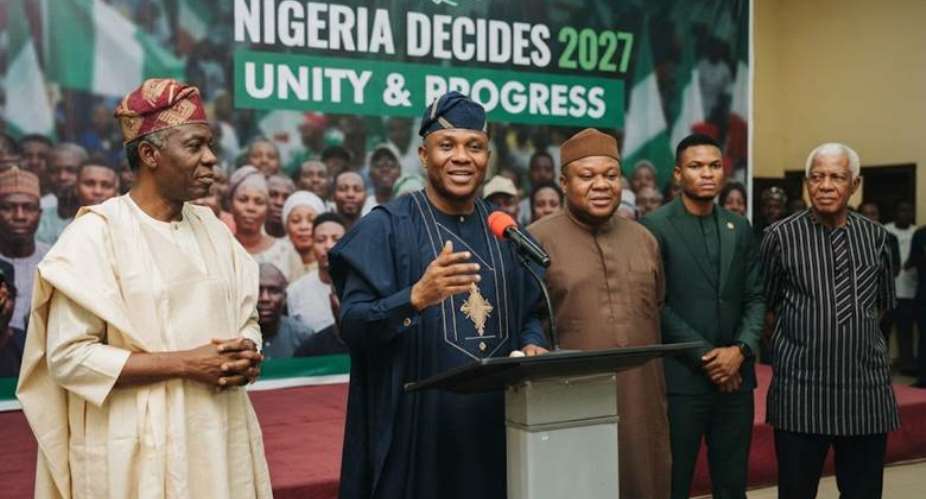
Nigeria has lived with the consequences of ethnic politics for so long that many Nigerians have come to regard it as an unavoidable feature of national life. Elections arrive, political alliances are formed, candidates campaign across the country, and yet beneath the language of democracy there is often another calculation: which ethnic group is behind this candidate? Which region will benefit if he wins? Whose turn is it? Who will control the political machinery? Who will get the appointments, contracts and opportunities?
This is one of the great contradictions of Nigeria. A country that has existed as one political entity for more than six decades still struggles to create a sufficiently strong sense of common national belonging. Nigeria is enormously diverse, but diversity itself is not the problem. The problem arises when political competition repeatedly converts diversity into suspicion, rivalry and fear.
There is substantial academic evidence that Nigerian political elites have consistently used ethnic identity as a political instrument. Research published in 2025 argues that political elites strategically mobilize ethnic identity during elections to polarize voters and consolidate political control, with consequences that include weakened institutions, social insecurity, declining trust among ethnicities and stalled nation-building. Earlier scholarship likewise identified the persistence of ethnic politics as closely connected to political institutions, elite interests and the unequal distribution of power.
This does not mean that every Nigerian politician is deliberately promoting tribal hatred, nor does it mean that ordinary Nigerians are innocent observers. Ethnic identity exists independently of politics, and Nigerians have legitimate cultural, historical and communal attachments. The problem is what happens when politicians discover that those attachments can be converted into political currency.
Tribalization becomes politically useful when a candidate can persuade voters that an election is not really about policies, competence, accountability or the quality of government, but about the survival or advancement of their group. Once politics is presented as a contest between "our people" and "their people", citizens can be persuaded to overlook failures committed by their own representatives while they regard criticism of those representatives as an attack on the entire community.
This is how the political game changes the social trajectory. The politician no longer has to convince citizens that he can govern well. He only has to convince them that he belongs to them. The incentive is obvious. A politician who campaigns on education, healthcare, industrialization, security, infrastructure and employment has to be judged against measurable results. A politician who presents himself as the defender of an ethnic or regional interest has a much easier political argument: support me because I am one of you, and because the other group may take everything from us. In that way, ethnic mobilization can become a shortcut to political loyalty.
Research on Nigeria's Fourth Republic described ethnicity as retaining a significant role in political mobilization despite attempts at political reconstruction and "detribalization". Other scholarship has found that the prevalence of ethnic politics is connected to the weakness of alternative national identities and to citizens' perceptions that the state does not consistently deliver distributive justice. The consequences are enormous.
The first is the erosion of trust. When citizens begin to believe that government institutions serve ethnic, regional or religious interests rather than citizens equally, confidence in those institutions declines. A person who believes that the law is applied differently depending on who owns a business, where someone comes from or which political faction they belong to will naturally become less willing to regard the state as neutral. This is why controversies surrounding government actions affecting businesses, land, appointments or development projects can rapidly acquire ethnic dimensions. A government may offer a legal, regulatory or administrative justification for a particular action, but citizens will inevitably ask whether the same standard is being applied to everyone. That question is legitimate.
If a business violates a planning regulation, the appropriate question should be whether the regulation was violated and whether the law is being enforced consistently against comparable businesses. The ethnic identity of the owner should have no bearing on the answer. Once Nigerians begin to believe that comparable cases are treated differently because of ethnicity, the issue ceases to be merely administrative. It becomes a question of citizenship and equality before the law.
The second danger is political impunity. When politicians can rely on ethnic loyalty to survive political controversy, accountability becomes weaker. Supporters may defend wrongdoing simply because the accused is regarded as "their own". Opponents may condemn exactly the same conduct because the accused belongs to another group. In such an environment, principles become secondary to identity. That is disastrous for democracy.
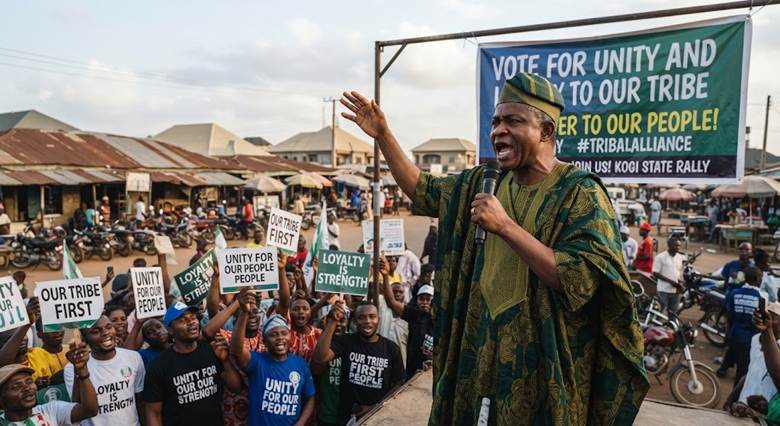
Democracy depends upon citizens being able to say that something is wrong even when the person responsible belongs to their own political, ethnic or religious community. A healthy political culture requires a Nigerian in the Southeast to be able to criticize an Igbo politician, a Yoruba citizen to criticize a Yoruba politician, an Hausa citizen to criticize an Hausa politician, and every Nigerian to demand accountability from political leaders without being accused of betraying their people.
The third danger is instability. When political competition becomes an ethnic contest, losing an election can begin to feel like losing access to the country itself. Elections become existential battles. Political rhetoric becomes more aggressive. Rumours spread more easily. Social media becomes a weapon for amplifying stereotypes. Ordinary disagreements are interpreted through ethnic lenses.
Recent research has connected elite manipulation of ethnic and religious identities with insecurity, separatist agitation, weakened institutions and difficulties in nation-building. It argues that when political and economic opportunities are perceived as being distributed according to identity, citizens have greater incentives to retreat into sub-national loyalties.
The fourth danger is economic. Nigeria's economy does not recognize the ethnic boundaries that politicians sometimes encourage citizens to obsess over. A trader from Anambra can build a business in Lagos. A Lagosian can invest in Abuja. A Kano businessman can operate in Onitsha. A Rivers professional can work in Kaduna. Nigerians move, trade, invest, marry, study and work across the country every day.
Commerce is constantly demonstrating something that politics sometimes forgets: Nigerians need one another.
A country cannot become economically competitive when citizens spend more energy deciding who belongs where than creating the conditions for enterprise, investment and productivity. Investors, whether Nigerian or foreign, require predictable institutions, security, enforceable contracts and confidence that government decisions are based on transparent rules. Ethicized politics works in the opposite direction. It creates uncertainty about who will be protected, who will be excluded and whether political connections are more important than merit or law.
The fifth danger may be the most profound: tribal politics prevents Nigerians from developing the psychological foundations of nationalism. Nationalism, in its constructive civic sense, does not require Nigerians to abandon their ethnic cultures. A Nigerian can be proudly Igbo, Yoruba, Hausa, Ijaw, Efik, Tiv, Kanuri or any of the country's many other identities while simultaneously being deeply committed to Nigeria. The problem arises when the smaller identity becomes politically more important than nationalism and citizenship.
Nigeria has struggled with this partly because its history did not begin with the development of a single, organically formed national community. Colonial administration reinforced regional and local divisions, and post-independence political competition inherited many of those structures. Research on Nigerian ethnic mobilization points to colonial governance, regional political structures, uneven development and subsequent political incentives as important elements in the persistence of identity-based politics. But history alone cannot explain why the problem persists.
The political class continues to operate within incentives that can reward ethnic mobilization. If politicians discover that ethnic solidarity is an effective route to votes, patronage or political protection, there is little reason for them to abandon it voluntarily. This creates a vicious cycle. Politicians mobilize identity because it can deliver political support. Citizens become more dependent on ethnic networks because they distrust national institutions. Their dependence on those networks makes ethnic mobilization more effective. Politicians then have even greater incentives to exploit identity. And so the vicious circle continues.
The tragedy is that Nigeria has already demonstrated that its people can live beyond these divisions when there are practical reasons to do so. Nigerians work together in businesses, universities, professional associations, churches, mosques, markets, hospitals, sports teams and civil society organizations. Inter-ethnic friendships and marriages are commonplace. Nigerian culture itself is a mixture of influences that have crossed regional boundaries for generations. The national problem is therefore not that Nigerians are incapable of living together. It is that the political system has not consistently rewarded them for thinking nationally.
This contradiction becomes particularly embarrassing when Nigeria considers its place in Africa and the world. The country is routinely described as the "Giant of Africa" because of its considerable population, economic weight, cultural influence, entrepreneurial energy and geopolitical significance. But size alone does not make a country a giant. A genuinely influential nation requires institutions that are strong enough to command respect, citizens confident enough in their common identity to resist manipulation, and political leaders that are capable of placing national interests above narrow calculations.
A giant that continually quarrels over who owns which part of the house cannot fully exercise the influence its size suggests. Nigeria's aspiration to continental leadership therefore requires more than military strength, population or economic potential. It requires political maturity. A country that hopes to help resolve conflicts elsewhere in Africa must demonstrate that it can manage its own diversity through institutions, justice and citizenship.
This is why the words of Nigeria's national anthem carry much significance: "Though tribes and tongues may differ, in brotherhood we stand." Those words are not merely ceremonial poetry. They express an idea that Nigeria has repeatedly struggled to translate into political practice. Tribes and tongues may differ. That is a fact. Brotherhood is the political and civic choice. The responsibility for making that principle meaningful cannot rest entirely on ordinary citizens. Political leaders occupy positions of enormous influence. They determine the language of political campaigns, the tone of public debate and, to a considerable extent, the standards by which their supporters conduct themselves.
Instead of constantly asking Nigerians to identify with them through ethnicity, political leaders should give Nigerians reasons to identify with the country itself. They should compete over ideas and results. They should make national infrastructure, education, healthcare, employment, security, industrialization, technology and institutional reform the centre of political debate. They should appoint people because they are qualified and capable, while they respect constitutional and legitimate considerations of diversity, rather than turn appointments into rewards for political loyalty. They should enforce laws consistently, regardless of the ethnic, religious or political identity of those affected. They should condemn discrimination when it affects their opponents with the same clarity with which they condemn it when it affects their own supporters. They should also resist the temptation to weaponize historical grievances. Nigeria has accumulated enough painful memories. Political leaders should not repeatedly reopen wounds simply because those wounds can produce votes. Most importantly, political leaders should understand that national unity cannot be built through speeches alone. Nigerians will believe in Nigeria when Nigerian institutions demonstrate, repeatedly and visibly, that citizenship matters.
If an Igbo entrepreneur can build in Lagos without fear of discrimination, if a Yoruba professional can establish himself in Enugu without being treated as an outsider, if an Hausa trader can prosper in Aba without suspicion, and if every Nigerian can expect equal protection under the law wherever they live, national identity becomes tangible. Nationalism is not created by ordering citizens to love their country. It is created by giving citizens experiences that make that love rational.
People develop loyalty to institutions that protect them. They develop confidence in governments that treat them fairly. They develop patriotism when they believe that the country offers them a stake in its future. Nigeria therefore needs to move from a politics of ethnic arithmetic to a politics of citizenship. That transformation will not happen overnight. Nor should anyone imagine that ethnicity will disappear from Nigerian public life any time soon. It will not, and it does not need to. Cultural identities are part of Nigeria's richness.
What must change is the political use of those identities as instruments of division, exclusion and mobilization against fellow citizens. The question Nigerians should increasingly ask their political leaders is not "which tribe are you protecting?" but "what are you doing to make Nigeria work for everybody?" Not "whose turn is it?" but "what are you capable of delivering?" Not "who is our person?" but "who can serve the public interest?" And not "which group will control the country?" but "how can every Nigerian have an equal stake in the country?"
Nigeria has spent too many decades allowing political competition to turn neighbours into rivals and citizens into ethnic constituencies. The cost can be seen in mistrust, insecurity, political instability, weakened institutions and the persistent difficulty of building a common national purpose. Scholarly research increasingly identifies elite manipulation of identity as one part of this wider problem, alongside historical legacies, institutional weakness, economic inequality and governance failures.
The country does not need politicians to erase its tribes and tongues. It needs them to stop treating those differences as political weapons. Nigeria already possesses the raw material for a powerful national identity: a common state, a shared history, enormous cultural exchange, a national economy, a young population and generations of Nigerians who have built lives far beyond the boundaries of their ancestral homes. What has been missing is the consistent political leadership to turn these realities into a durable civic consciousness.
The words "in brotherhood we stand" should therefore be more than something Nigerians sing at official ceremonies. They should become a standard against which political conduct is measured. A politician who divides citizens for electoral advantage may win a political contest, but the country pays the price. A politician who treats every Nigerian as a citizen before treating them as a member of a tribe contributes to something much larger than an election: the unfinished work of building a united Nigeria.
After more than six decades, that work cannot continue to be postponed. Nigeria's tribes and tongues are not going away. They should not. But the country needs a political culture in which difference is not a reason for distrust, citizenship is not subordinate to ethnicity, and political leaders understand that the strength of Nigeria ultimately depends on the strength of the bond connecting all Nigerians. That is the promise contained in the national anthem. And it is a promise the political class, above all, should help the country fulfil.

 AMA directs closure of shops, markets for October 3 National Cleanup Day
 ‘We will resist it’ – NUGS kicks against proposed 26% UG accommodation hike
 ‘Fake’ – EOCO denies GH¢50m bail report on Baffour Awuah
 ‘The NPP I seek to lead will stand by every member’ – Boakye Agyarko
 ‘Keeping Baffour Awuah in custody serves no purpose’ – Boakye Agyarko tells EOCO
 GACL announces enhanced security screening at Accra International Airport
 Pursue drug kingpins, not political opponents — Afenyo-Markin tells EOCO
 Over 130 courts are without magistrates – JUSAG President
 We demand immediate, unconditional release of Baffour Awuah from EOCO custody – ...
 COMAC gives Finance Ministry 14-day ultimatum to suspend new fuel tax rule


