




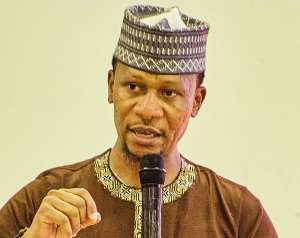
Tinubu’s Speech on Nigeria's 66th Independence anniversary was more than a defence of the economic reforms undertaken by his administration. It was an attempt to draw a line between the difficult years of adjustment and what the President says should now be an "age of prosperity." That promise raises the more important question: what should Nigerians expect to see, feel and experience as the country enters this next phase?
The President's message was clear. The painful medicine, as he described the reforms, was necessary to correct what he called deep economic distortions. Now, he says, the emergency treatment is over and the country's central economic task has changed from correcting its course to delivering "shared and widespread prosperity."
That is the most significant shift in Tinubu’s Speech and, arguably, the point at which the administration's economic argument becomes more demanding.
For the past three years, Nigerians have repeatedly been asked to endure the consequences of difficult reforms on the understanding that the sacrifices would eventually produce a stronger economy. In this latest address, the President effectively says that the period of waiting must now give way to visible results.
That is a reasonable expectation. But it is also where the grey areas begin.
The President points to economic growth of more than four per cent, lower inflation from its peak, rebuilt foreign reserves, improved foreign-exchange conditions and record non-oil export earnings as evidence that the country's economic outlook has improved.
These indicators matter. A country cannot build sustainable prosperity on economic instability, depleted reserves, distorted markets and weak productive capacity.
But macroeconomic improvement is not the same thing as household prosperity.
That distinction deserves greater attention than it received in Tinubu’s Speech.
A stronger economy ultimately has to translate into something Nigerians can recognise in their daily lives. The farmer must be able to produce at a lower cost. The trader must be able to move goods without transportation costs destroying margins. The manufacturer must have more reliable power. The young graduate must have a realistic route into productive employment. The ordinary family must be able to buy food, pay school fees and meet basic healthcare needs without constantly falling deeper into financial distress.
Indeed, the President himself defined prosperity in largely these terms. He spoke of farmers producing more cheaply, factories having reliable power, businesses accessing credit, young people finding productive work and families being able to look to the future with confidence.
That is an important standard because it moves the conversation away from economic statistics alone.
The first major test, therefore, is the cost of living.
The President says government will seek to reduce the cost of producing and moving goods by expanding irrigation and mechanised farming, improving access to agricultural inputs, investing in storage and transportation, and completing roads, railways and ports that connect farms and factories to markets.
The logic is sound: lower production and logistics costs should, in principle, create room for lower prices.
But there is a critical gap between reducing the cost of production and ensuring that the benefit reaches consumers.
Government therefore needs to make that transmission measurable.
A practical way forward would be to establish a publicly accessible cost-of-living dashboard tracking the prices of essential food items, transportation, electricity, education, healthcare and other major household expenses. The objective should not be to manipulate prices but to give Nigerians a clear picture of whether economic reforms are producing measurable improvements in household purchasing power.
If the administration says prosperity has begun, Nigerians should be able to see the evidence.
The second test is employment.
Tinubu’s Speech correctly recognises that Nigeria's young population can either become a powerful productive force or remain trapped by inadequate opportunities. The President consequently placed jobs, enterprise and industrial growth at the centre of his prosperity agenda.
He spoke of using gas to power industries, reviving factories, expanding digital connectivity, investing in skills and supporting Nigerian businesses with infrastructure and finance.
But job creation cannot simply be an expected consequence of economic growth. It needs to become a measurable policy objective.
Government should therefore publish sector-specific employment targets and report periodically on the number of jobs created, the quality of those jobs, the businesses supported and the geographical spread of the opportunities.
Nigeria needs jobs that produce income, build skills and create pathways into economic independence, not merely temporary engagements that disappear when a programme ends.
The third issue is social protection.
The President acknowledged an uncomfortable reality: millions of Nigerians cannot wait for tomorrow. Some families are struggling with their next meal, school fees, medical bills or transportation to work.
His administration points to direct support for poor households, improvements to the National Social Register, the Nigerian Education Loan Fund, CREDICORP and stronger basic public services as part of the response.
The President's own description of these interventions as a "bridge" to prosperity is important.
The bridge, however, must be reliable.
Social protection should be transparent, targeted and independently measurable. Nigerians should be able to know who is benefiting, how beneficiaries are identified, how payments are monitored and whether the programmes are actually helping vulnerable households withstand economic shocks while they move towards greater self-reliance.
The fourth test is implementation.
This may ultimately determine whether the prosperity promise succeeds or becomes another ambitious chapter in Nigeria's long history of development plans.
The speech contains commitments covering agriculture, infrastructure, industrialisation, digital connectivity, finance, education, healthcare and social protection.
The challenge is no longer simply announcing what government intends to do. It is demonstrating what has been delivered.
For every major prosperity initiative, government should publish a simple delivery scorecard: what was promised, what was budgeted, what was released, what was completed, how many people benefited and what measurable difference the intervention produced.
That would make public accountability less abstract.
It would also allow government to identify programmes that are working and redirect resources from those that are not.
There is another issue that cannot be separated from prosperity: security.
A farmer cannot produce confidently when accessing the farm is dangerous. A manufacturer cannot operate competitively when logistics corridors are insecure. Rural economies cannot flourish when communities are repeatedly disrupted by violence.
Economic policy and security policy must therefore work together. Protecting agricultural communities, major transport corridors and productive economic centres should be treated as an economic priority as much as a security responsibility.
The President's reference to Nigeria's young population also deserves to be taken seriously.
Nigeria cannot consume its way into prosperity. It has to produce its way there.
That means moving beyond an economy heavily dependent on the export of raw materials towards one that produces more food, manufactures more goods, processes more commodities and sells more value-added Nigerian products to the world.
The President's ambition to see more Nigerians "making things" is therefore one of the more consequential ideas in the address.
The question is how quickly policy can create the conditions for that ambition to become reality.
Reliable electricity, affordable credit, efficient ports, functional roads, predictable taxation, access to technology and a stable regulatory environment will matter far more to the entrepreneur than another policy declaration.
This is why Tinubu’s Speech should ultimately be judged not by the strength of its rhetoric but by the strength of the implementation that follows it.
The President says Nigeria has corrected its course and that the country has passed through its own Red Sea. He urges Nigerians not to look back but to move forward towards a promised land of abundance and opportunity.
It is a powerful political and national metaphor.
But a promised land is meaningful only when people can actually enter it.
The next phase therefore requires a different kind of presidential communication. Nigerians no longer need only to be told that the reforms were necessary. They need regular evidence of what those reforms are producing.
They need to know whether food is becoming more affordable, whether incomes are improving, whether businesses are expanding, whether jobs are being created, whether electricity is becoming more reliable, whether insecurity is retreating and whether vulnerable families are receiving effective support.
That is the real prosperity test.
The administration may reasonably argue that it inherited serious economic problems and that many of today's challenges accumulated over decades. The President makes that argument explicitly in his Independence Day address.
But history can explain a problem without permanently excusing its continuation.
At this stage of the administration, the burden is shifting. The argument for reform has been made. The argument for patience has been made. The argument that the foundations are now stronger has also been made.
What Nigerians will increasingly demand is evidence.
And that may be the most important message to take from Tinubu’s Speech: the conversation is moving from whether Nigeria needed reform to whether reform can deliver the prosperity Nigerians were promised.
The President has declared that the age of reform has done its work and that the age of prosperity has begun.
Now the hard part begins.
Prosperity must move from the presidential address into the marketplace, the farm, the factory, the classroom, the hospital, the workplace and the Nigerian home.
That is where the next chapter of the reform story will truly be written.

 AMA directs closure of shops, markets for October 3 National Cleanup Day
 ‘We will resist it’ – NUGS kicks against proposed 26% UG accommodation hike
 ‘Fake’ – EOCO denies GH¢50m bail report on Baffour Awuah
 ‘The NPP I seek to lead will stand by every member’ – Boakye Agyarko
 ‘Keeping Baffour Awuah in custody serves no purpose’ – Boakye Agyarko tells EOCO
 GACL announces enhanced security screening at Accra International Airport
 Pursue drug kingpins, not political opponents — Afenyo-Markin tells EOCO
 Over 130 courts are without magistrates – JUSAG President
 We demand immediate, unconditional release of Baffour Awuah from EOCO custody – ...
 COMAC gives Finance Ministry 14-day ultimatum to suspend new fuel tax rule


