




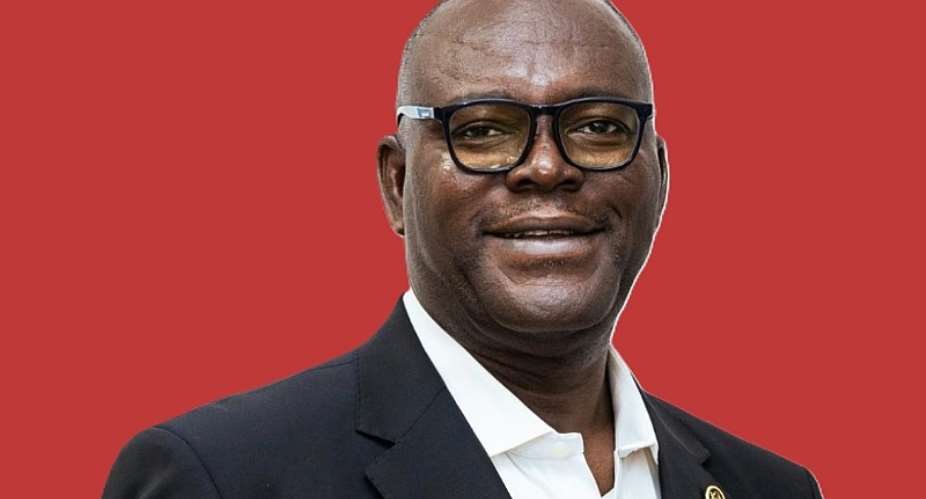
Professor Abdallah Ali-Nakyea, Professor of Tax Law and Policy, University of Ghana School of Law, has disclosed that despite improvement in Ghana’s tax-to-GDP ratio from 12.3 percent in 2013 to about 15 percent in 2025, the country continues to lag behind Africa's average of 16.1 percent.
Ghana is also far behind top performers like Tunisia at 34 percent and Burkina Faso at 19.5 percent, according to Prof. Abdallah Ali-Nakyea.
He noted that available data indicates that Ghana's performance contrasts sharply with peers: Somalia at 2.9 percent, Nigeria at 7.9 percent in 2022, and Kenya at 16.9 percent.
He noted that Gabon, Equatorial Guinea, and Chad—three Central African oil economies—achieved their largest tax-to-GDP gains from non-oil revenue reforms through digitalization and simplification, offering a comparator for Ghana.
Prof. Ali-Nakyea, who was a guest speaker at the second Transparency International Ghana (TI Ghana), the local chapter of the global anti-corruption movement Integrity Dialogue Series, which was on the theme “Bridging Ghana’s Tax Revenue Gaps: A call for voluntary tax compliance, an accountable and fair tax system,” stated.
The TI Ghana’s new Governance and Integrity Policy Dialogue Series (GIPDS) aims to confront systemic corruption and strengthen public accountability across key sectors.
GIPDS is to serve as a holistic platform and calculated step in the nation’s collective journey to strengthen integrity, transparency, and accountability in Ghana’s governance systems.
Prof. Ali-Nakyea, who is also the Director of Ali-Nakyea & Associates PRUC, stressed that "Ghana's default response to revenue shortfalls has often been to introduce new taxes rather than broaden compliance within existing systems."
He likened Ghana's 2026 approach to Nigeria's 2025 Tax Administration Act, which consolidated the Tertiary Education Tax, IT Levy, and Police Trust Fund into a single 4 percent Development Levy.
He identified three government reforms as transformative: VAT Threshold Increase from GH¢200,000 to GH¢750,000 to give small businesses room to grow, and the Modified Taxation App that is the simplifying informal sector taxation.
The other reform is the implementation of Mandatory Fiscal Electronic Devices, which enable real-time sales transmission to the GRA through point-of-sale systems and e-invoicing (E-VAT) to reduce cash-based leakage.
He recommended government "simplify before levying, scale technology responsibly, institutionalize fiscal transparency, and close compliance gaps at the top—corporate income under-declaration and cross-border digital transactions—rather than concentrating pressure on small businesses."
Mrs. Mary Awelana Addah, Executive Director of TI-Ghana, said GIPDS is a further demonstration of the commitment of anti-corruption bodies to promote integrity and accountability.
“TI-Ghana recognizes the critical role of sustained civic engagement and informed policy dialogue in advancing anti-corruption reforms,” Mrs. Addah stated.
She stressed that corruption, procurement fraud, and weak enforcement continue to cost the state billions in lost revenue each year, eroding public trust and undermining voluntary tax compliance and development financing.
“Therefore, the dialogue series is designed to move from diagnosis to action,” she emphasized.
According to the Executive Director, the GIPDS serves as a platform for rigorous, evidence-based discussions to translate governance research, policy ideas, and analysis into actionable reform proposals.
The Dialogue Series has been designed to provide a structured, evidence-based forum where diverse perspectives converge to generate practical policy solutions.
Mrs. Addah explained that expected outcomes include a more informed membership, stronger interaction with governance experts, and evidence-based contributions that will enhance the credibility and influence of TI Ghana’s advocacy in national reform processes.
“We invite you to engage fully, share your insights, and contribute to shaping actionable proposals that will strengthen Ghana’s governance landscape,” she told participants.
“Together, let us make this maiden dialogue series a catalyst for reforms that uphold transparency, accountability, and integrity in public life,” she stated.
She disclosed that the year-long programme will combine both routine policy roundtables and virtual meetings, each focused on a high-risk sector—including taxation, public procurement, natural resource governance, and public financial management.
TI-Ghana members, along with civil society organizations dedicated to combating corruption, governance institutions, faith-based organizations, and distinguished individuals, are forming a broad coalition to promote integrity reform.
The initiative aligns with current national conversations on bridging Ghana’s tax revenue gap, where experts have linked low tax morale to perceived corruption and weak accountability, and the government's own commitment in the 2026 budget to simplification over new levies.
By institutionalizing the GIPDS, TI-Ghana aims to sustain social auditing, support civic tax education, and facilitate multi-stakeholder dialogue that co-designs reforms perceived as procedurally fair—a critical condition experts say is needed to rebuild trust that makes citizens willing to pay taxes already on the books.







 Ethiopia's new rebel war redraws alliances across the Horn of Africa
 Netanyahu warns of 'very heavy price' if any country found to be behind FlyDubai...
 EU approves tougher migration rules in latest push to tighten borders
 EU ‘fully rejects’ US threat to ban diesel exports unless bloc releases more fue...
 AU urges Ethiopia, Eritrea and Egypt to exercise restraint amid rising diplomati...
 I consulted Akufo-Addo, Kufuor, NPP stalwarts before entering chairmanship race ...
 Strong partnerships key to advancing decentralisation – Mahama Ayariga
 AMA directs closure of shops, markets for October 3 National Cleanup Day
 ‘Fake’ – EOCO denies GH¢50m bail report on Baffour Awuah
 COMAC gives Finance Ministry 14-day ultimatum to suspend new fuel tax rule


