




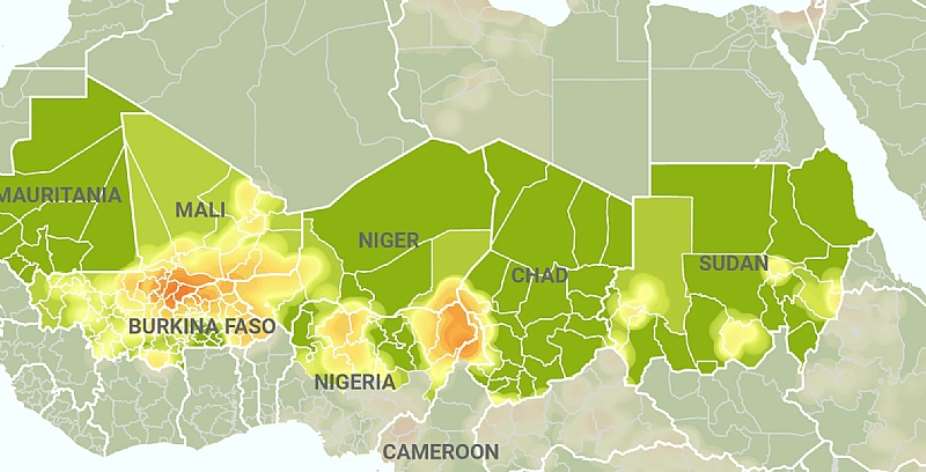
Ghana has been identified as a major source of commercial explosives used in conflicts in Mali and Burkina Faso, according to the 2025 Global Organised Crime Index.
The report describes arms trafficking in Ghana as a “notable and growing problem”, identifying Accra and Kumasi as important markets for illicit firearms.
It notes that Kumasi has established local gun-manufacturing centres where skilled craftsmen produce firearms, supported by access to relatively inexpensive raw materials and favourable retail prices.
“The availability of affordable raw materials and attractive retail prices make gun manufacturing a highly profitable venture,” the report says.
The report further indicates that demand for illegal firearms is no longer limited to communities traditionally associated with hunting and poaching.
According to the findings, the market has expanded into both urban and rural communities amid rising crime levels and concerns over threats to livelihoods and public safety.
Criminal networks are also said to facilitate the trading of firearms within Ghana and across its borders, connecting international arms traders with local buyers.
Beyond firearms, the report identifies Ghana as a “principal source” of commercial explosives used in conflicts elsewhere in the sub-region, particularly in Mali and Burkina Faso.
The findings point to the cross-border character of Ghana’s illicit arms trade, with criminal networks reportedly facilitating the movement of firearms and explosives to neighbouring countries.
Counterfeit goods trade
The report also identifies Ghana as a significant market for counterfeit products, with electrical goods among the commodities of concern.
It estimates that a large proportion of electrical products sold in Accra are counterfeit and do not meet required safety standards.
Counterfeit medicines, the report notes, remain a longstanding challenge, while markets such as Makola and Abossey Okai are identified as major trading locations for counterfeit textiles and vehicle spare parts respectively.
According to the report, many of the counterfeit products originate from China before being transported into West Africa through the Port of Tema.
Border smuggling
Ghana’s border vulnerabilities also feature in the report, particularly along the country’s frontiers with Togo and Burkina Faso.
The report says these porous borders facilitate the smuggling of products including tobacco and alcohol.
It identifies high excise taxes as one of the factors contributing to incentives for the illicit movement of such products across Ghana’s borders.

 Credit Godfred Dame for Ghana's US$393 million tax arbitration victory against T...
 How can EOCO be accused of wanting to kidnap Baffour Awuah in full glare of the ...
 'She is not party operative' – Kwakye Ofosu defends EOCO officer
 Baffour Awuah wanted over alleged financial loss, dissipation of public funds an...
 Brazil is the main source of cocaine in Ghana by sea concealed in sugar containe...
 'The cacophony of noises surrounding my comments were pure mischief' — Chief Jus...
 ‘Judges must not abandon their humanity because of their judicial office’ – Chie...
 GTEC flags over 100 tertiary institutions as unrecognised
 Political protection may be behind decline in visible cocaine trafficking in Gha...
 Ghana identified as source of explosives used in Sahel conflicts — Crime Index r...


