




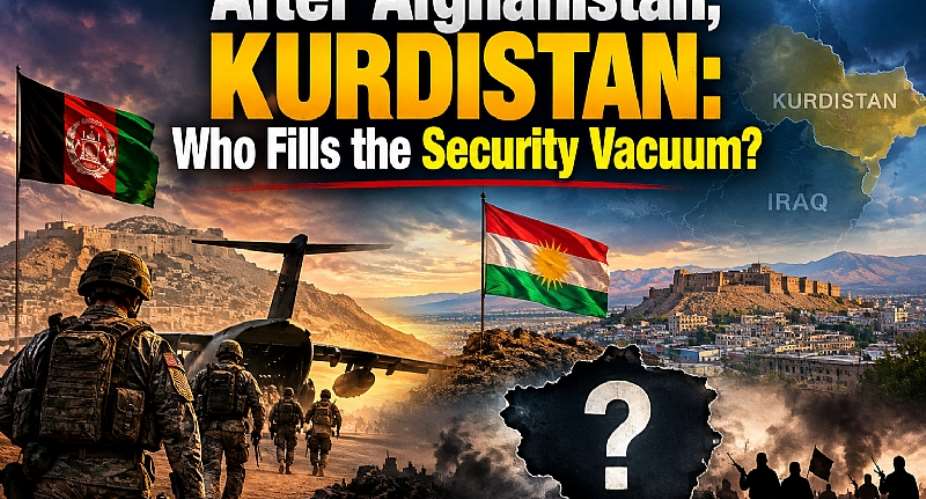
The more force is applied, the greater the reaction it can produce. The control of an absolute authority for a certain period can itself create a power vacuum, because such concentrated power cannot always be transferred or diluted in time. The same geopolitical metaphor may now be applied to Iraq as the United States completes its military withdrawal on September 30, 2026. The departure marks the end of the US-led military mission in Iraq and shifts the primary security responsibility to Iraqi institutions.
This creates ripples in the Middle East security equation: is Iraq capable of preventive action against Daesh and other armed groups, or is another Afghanistan-like dilemma waiting to emerge?
What happened to Afghanistan after the withdrawal of US forces back in 2021?
The Taliban completed five years of rule after the US withdrawal, but the central question remained whether they could genuinely fill the vacuum left by the departure of a technologically superior military structure.
The transition itself was comparatively swift, with the Taliban taking control without a prolonged conventional resistance campaign. Yet controlling territory and controlling the entire security framework are two different challenges. Pakistan has experienced the consequences through cross-border insecurity, while Afghanistan's economic and transit potential remains closely connected to its security environment.
The Taliban-led government has repeatedly assured neighbouring states that Afghan territory will not be used against them. Yet concerns over the presence and activities of the TTP and other armed groups have continued to complicate Pakistan-Afghanistan relations. The broader lesson is important: political control does not automatically translate into complete security control.
Diplomatically, the Taliban have expanded their engagement with regional powers, but bringing competing security actors to a durable negotiating table remains difficult. The same question now confronts Iraq. The departure of US forces may have been welcomed by those seeking greater Iraqi sovereignty, but sovereignty becomes meaningful only when the state possesses the capability to enforce security across its territory.
Is Kurdistan the next Afghanistan after the USA exits?
Iraq and Afghanistan have different political, military and institutional structures, so the comparison cannot be treated as identical. Yet there are similarities in the security challenge: militant remnants, difficult terrain, competing armed groups and dependence on external intelligence, surveillance and air capabilities.
Iraq insists that its forces are capable of confronting Daesh and other militias. But the question is whether capability on paper is sufficient when surveillance, air defence, intelligence and rapid-response capacity are tested simultaneously.
The Kurdish region is particularly sensitive. Kurdish authorities have warned that the US withdrawal is occurring without an alternative air-defence system, despite the region having faced substantial drone and missile threats during the wider US-Israel-Iran conflict.
The problem is therefore not simply whether Iraqi forces can fight Daesh. It is whether Baghdad can establish one coherent security architecture in which the Iraqi Army, Peshmerga and other armed formations operate under genuine state authority. The continuing resistance of powerful Iran-aligned militias to disarmament demonstrates how difficult that objective remains.
How does the ongoing conflict between Iran and the USA affect this equation?
The wider Iran-US confrontation makes Iraq's transition considerably more complicated. Iraqi territory has repeatedly been caught between competing regional security calculations, while drone and missile attacks have demonstrated the vulnerability of military and strategic infrastructure.
During the recent conflict, the importance of air defence, early-warning systems and surveillance became particularly visible. If such capabilities are reduced before an equally effective Iraqi system is established, the vulnerable space could widen.
This does not necessarily mean that the US withdrawal itself is wrong. Washington has argued that Iraqi security forces have developed sufficient capabilities for a new phase of bilateral security cooperation. But withdrawal becomes a strategic test when the institutions replacing the departing force must confront terrorism, militias, foreign influence and regional escalation simultaneously.
How is the GCC not worried about it?
The Gulf states cannot remain indifferent to instability emerging on their doorstep. Iraq is connected to the Gulf through geography, energy markets, trade routes and the broader regional balance between Iran and the Arab states.
The GCC's diplomatic engagement with Iraq and Syria therefore becomes increasingly significant. Turkey's experience of dealing with insurgency, meanwhile, demonstrates that regional security cannot depend indefinitely on one external military power.
Pakistan could also become part of a wider regional security conversation because of its military experience, counterterrorism capabilities and diplomatic relationships with Saudi Arabia, Turkey and other regional actors. But replacing one external security architecture with another would not solve the fundamental problem.
The real test for Iraq begins after the American departure. If Baghdad can establish a monopoly over legitimate force, integrate security institutions, protect Kurdistan, contain Daesh and manage militia power, the withdrawal could become a transition toward genuine sovereignty. If it cannot, the vacuum will not remain empty for long.
That is the critical lesson from Afghanistan: when a powerful external force leaves, the vacuum is not automatically filled by the state—it is filled by whoever possesses the organisation, weapons, legitimacy or foreign backing to occupy it.
Iraq therefore faces a choice between institutional consolidation and fragmented security. The United States may have left the battlefield, but the security equation it leaves behind has not disappeared. The real question is no longer who controls Iraq with American support; it is whether Iraq can control Iraq without it.

 Credit Godfred Dame for Ghana's US$393 million tax arbitration victory against T...
 How can EOCO be accused of wanting to kidnap Baffour Awuah in full glare of the ...
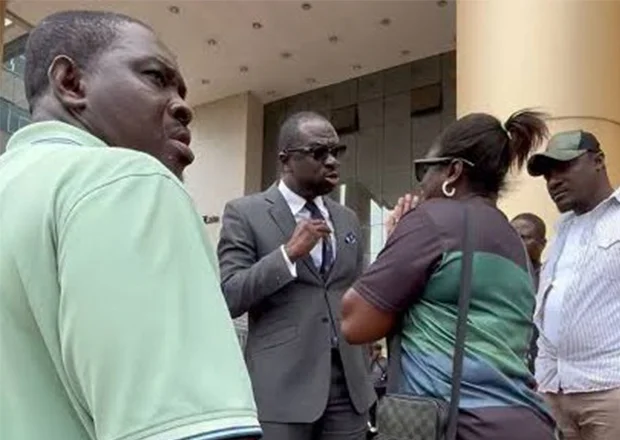 'She is not party operative' – Kwakye Ofosu defends EOCO officer
 Baffour Awuah wanted over alleged financial loss, dissipation of public funds an...
 Brazil is the main source of cocaine in Ghana by sea concealed in sugar containe...
 'The cacophony of noises surrounding my comments were pure mischief' — Chief Jus...
 ‘Judges must not abandon their humanity because of their judicial office’ – Chie...
 GTEC flags over 100 tertiary institutions as unrecognised
 Political protection may be behind decline in visible cocaine trafficking in Gha...
 Ghana identified as source of explosives used in Sahel conflicts — Crime Index r...


