




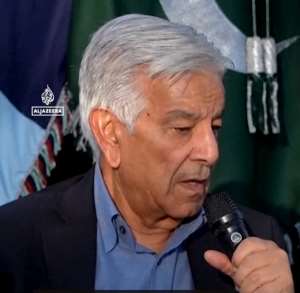
Speaking in Rome on Tuesday, Pakistan's defence minister said his government would use whatever means are available to defend Saudi Arabia against Iran-backed Houthi rebels, one of Islamabad's clearest signals yet that it could become directly involved in the widening regional conflict. Khawaja Muhammad Asif put it bluntly: "Any enemy of Saudi Arabia is enemy of Pakistan."
A pact still taking shape
The pledge rests on a new trilateral arrangement. The agreement brings together oil-rich Saudi Arabia, NATO member Turkey and nuclear-armed Pakistan. It builds on the bilateral Strategic Mutual Defence Agreement, signed on 17 September 2025 and since replaced by the Mecca Joint Defence Agreement. Yet much remains unclear. The pact's full text has not been released, and its command and operational structures are still being developed.
Asif did not mention nuclear weapons this time. He did not suggest they were part of Pakistan's commitment to Saudi Arabia. That is notable, because last year he said Pakistan's capabilities would be available under the earlier pact, before backtracking and denying a nuclear sharing scope.
The Houthi front
Asif said the Houthis had intensified missile and drone attacks on Saudi Arabia and expanded their control along Yemen's Red Sea coast. He also said senior diplomats from the three countries met on the sidelines of the UN General Assembly to discuss implementing the pact and coordinating a response to attacks targeting Mecca and other sites in Saudi Arabia. Asked whether Pakistani forces had already joined airstrikes, he declined to say.
Balancing Tehran
Pakistan is not abandoning its diplomacy with Iran. Asif told the Express Tribune that Islamabad has discussed the Houthi attacks on Saudi Arabia with Iran. He also suggested that the Houthis and some Iraqi militias might now act with substantial independence from Iran, which would leave Tehran a way out of responsibility. Iran has long supplied the Houthis with weapons and other assistance, though Tehran denies directing their military operations.
This balancing act has a history. During the earlier 2026 Iran war, Pakistan's foreign minister reminded Iranian leaders of Pakistan's defence obligations to Saudi Arabia and assured them that Saudi soil would not be used to attack Iran, and no Iranian attack on Saudi Arabia followed.
Why it matters beyond the Gulf
Three things stand out for readers across Africa and the Muslim world:
Middle-power alignment is hardening. A bloc of Riyadh, Ankara and Islamabad is a new security architecture that doesn't depend on Washington or Moscow.
The Red Sea is the pressure point. Houthi gains along Yemen's coast threaten shipping lanes that carry African trade, including Gulf of Guinea and East African cargo routed through Suez.
Ambiguity is the strategy. Declining to confirm strikes, withholding the treaty text and keeping channels open to Tehran let Islamabad deter without formally escalating. That is also the risk, since ambiguity fails when a real crisis tests it.
Whether "whatever means" means intelligence, air defence, training or troops will determine how far Pakistan is drawn in.
Mustapha Bature Sallama
Medical/ Science Communicator,
Private Investigator, Criminal Investigation and Intelligence Analysis,
International Conflict Management and Peacebuilding. (USIP)
[email protected]
+233555275880
Sources: Al Jazeera NewsFeed, 30 Sept 2026; AP via Beaumont Enterprise and Korea Times, 29–30 Sept 2026; Siasat Daily, 29 Sept 2026; The Express Tribune, "Defence pact binds Pakistan, Saudi Arabia"; Wikipedia, "Strategic Mutual Defence Agreement" and "Pakistan in the 2026 Iran war."


 Baffour Awuah wanted over alleged financial loss, dissipation of public funds an...
 Brazil is the main source of cocaine in Ghana by sea concealed in sugar containe...
 'The cacophony of noises surrounding my comments were pure mischief' — Chief Jus...
 ‘Judges must not abandon their humanity because of their judicial office’ – Chie...
 BoG personnel costs more than double to GH¢3.29bn in three years as staff number...
 GTEC flags over 100 tertiary institutions as unrecognised
 Political protection may be behind decline in visible cocaine trafficking in Gha...
 Ghana identified as source of explosives used in Sahel conflicts — Crime Index r...
 EOCO could have written to Speaker Bagbin instead of seeking arrest warrant for ...
 Reduce unnecessary remands, utilise Community Service Act – Chief of Staff urges...


