




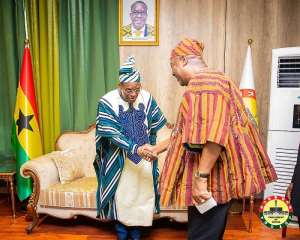
Speaker of Parliament Alban Sumana Kingsford Bagbin has thrown his support behind President John Dramani Mahama’s call for a national stakeholder dialogue on hate speech and abusive content, particularly on social media and other digital platforms.
Mr Bagbin described the initiative as timely and necessary, urging institutions and individuals committed to Ghana’s democracy to support efforts to address the growing use of insulting, threatening and hateful language in public discourse.
President Mahama last week directed the Ghana Journalists Association (GJA) and the Media Foundation for West Africa (MFWA) to convene stakeholders to deliberate on hate speech, abusive online content and responsible digital communication.
The engagement is expected to produce a national roadmap for addressing harmful online content while protecting the constitutional right to freedom of expression.
Addressing Parliament in Accra on Tuesday, September 29, the Speaker said he had taken note of the President’s proposal and the support it had received both in Ghana and beyond.
“I believe that the call is timely and deserves the support of all persons and institutions committed to the preservation of our democracy,” he said.
Protecting free speech
Mr Bagbin said the changing nature of public discourse should be a concern to all Ghanaians, particularly because social media had significantly widened the democratic space.
He acknowledged the role of digital platforms in allowing citizens to express their views, scrutinise public officials, expose wrongdoing and demand accountability.
“These are gains which must be protected,” he said, stressing that freedom of speech and expression, including freedom of the press and other media, was guaranteed under the Constitution.
The Speaker, however, cautioned that constitutional protection for free expression should not be treated as permission to degrade public discourse.
He said disagreement, satire, dissent and robust debate were important elements of democracy but expressed concern about the increasing use of insults, personal attacks, ethnic insinuations, threats and unverified allegations.
According to him, the speed and extensive reach of digital platforms had amplified such language and increased its potential impact on society.
“This should concern us all, irrespective of political affiliation,” he said.
Parliament urged to exercise oversight
Mr Bagbin said the proposed national dialogue must be broad, inclusive and measured, stressing that it should neither be used to suppress dissent nor shield public officials from legitimate criticism.
At the same time, he warned that concerns about freedom of expression should not be invoked to justify threats, incitement, deliberate falsehoods or reckless abuse.
He consequently directed the relevant parliamentary committees, particularly the Human Rights Committee, to take an active interest in the national discussion and exercise their oversight responsibilities.
“I therefore expect the appropriate committees of this House to take an active interest in the matters and to engage relevant constitutional, regulatory and civil society bodies on the stage of our public discourse,” he said.
The Speaker also called for an assessment of Ghana’s existing legal and institutional framework for dealing with harmful speech.
He said any measures adopted must remain constitutional and proportionate while protecting citizens from genuinely unlawful conduct.
“We must protect citizens against genuinely unlawful conduct without criminalising disagreement.
“We must protect public officials from threats without protecting them from criticism and we must preserve the freedom of expression upon which democratic accountability itself depends.”
MPs must lead by example
Mr Bagbin said Parliament itself must be willing to examine the conduct of its members before demanding higher standards from journalists, broadcasters, bloggers, content creators and other citizens.
“Parliament must be prepared to look inward,” he said, adding that “we cannot credibly demand higher standards of public discourse from society if we are unwilling to demand those standards of ourselves.”
He noted that parliamentary debates, committee proceedings, press conferences, interviews, public meetings and social media engagements involving MPs all contributed to shaping Ghana’s national conversation.
The Speaker expressed concern that some statements made by MPs, both within and outside Parliament, had fallen below the standards expected of elected representatives.
“Robust disagreement is legitimate. Strong criticism is legitimate. Holding government, the opposition, the Speaker, leadership and every institution or state to account is legitimate.
“But insult is not argument. Abuse is not scrutiny.”
Mr Bagbin also urged the leadership of Ghana’s two major political parties to discourage the promotion of individuals whose public recognition was primarily associated with abusive language.
“Our address to both political parties' leaders: Don't reward only bitter tongues,” he said, warning that rewarding such conduct could encourage others to adopt similar behaviour.
He said Ghana’s democratic stability should not be taken for granted, stressing that democracy depended not only on constitutions, elections, the courts and Parliament but also on discipline, decency and a political culture that allowed citizens to disagree without denying one another their humanity and equal citizenship.
According to him, public language could either unite citizens around a common national purpose or deepen divisions and inflame tensions.
“We must therefore be careful that through the cumulative effect of our language and conduct, we do not push our country towards the precipice from which it becomes increasingly difficult to retreat,” he said.
The Speaker’s intervention comes as the President’s proposed national engagement continues to attract attention, with the Presidency calling for participation from institutions and groups including the National Media Commission, religious bodies, security agencies, civil society organisations, traditional media organisations, bloggers, influencers and social media content creators.
Mr Bagbin concluded by urging MPs and political actors across the political divide to moderate their language and demonstrate that strong political convictions could be expressed without disrespect.
“This responsibility applies equally to the Majority and the Minority,” he said, adding that the same standards should apply whether political actors were speaking on the floor of Parliament, at committee meetings, press conferences, on radio and television or through social media.
“Members of Parliament must lead by example,” he said.
 September 29: Cedi finishes day selling at GHS12.20 on forex market, GHS11.67 on...
 ‘We’ll explore another constitutional option for narcotics probe’ – Minority on ...
 Speaker Bagbin adjourns Parliament indefinitely after rejecting narcotics probe ...
 Food Buffer Stock seeks stronger liquidity buffer despite record GH¢91.7 million...
 Ex NAFCO Boss trial: Court adjourns trial to hear application for return of seiz...
 Bagbin backs Mahama’s call for national dialogue on social media insults
 National conversation should not become an exercise in suppressing dissent — Bag...
 ‘Don’t reward only bitter tongues, it encourages others to copy’ – Bagbin tells ...
 We have cut cost of capital by more than half since Mahama took office – Ato For...


