




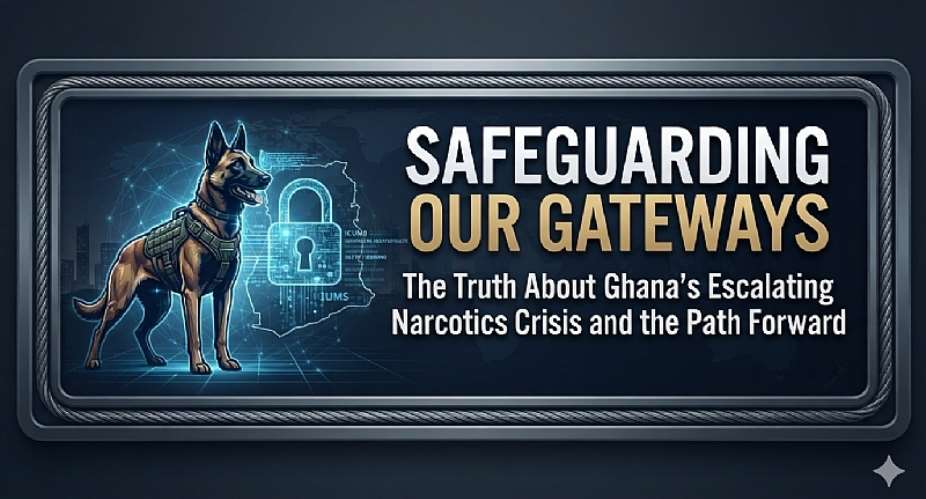
The vulnerability of K9 sniffer dog units at our major borders is a critical gap striking at the heart of physical law enforcement. While these dogs provide an unbeatable biological defense that cannot be hacked or fooled by paperwork, the system is entirely dependent on the integrity of their human handlers. Cartels heavily exploit this tactical loophole through bribery, compromised training schedules, or deliberate oversight—keeping the dogs away from high-risk cargo during critical loading windows. Securing our ports means looking beyond the animals and enforcing strict, independent audits on the personnel holding the leashes.
In recent months, Ghana has found itself thrust into an uncomfortable global spotlight. Once viewed strictly as a peaceful transit route for international transit goods, our beloved nation is facing a critical national security threat as transnational drug cartels increasingly exploit our air and sea infrastructure. The recent shocking interception of 3.9 tonnes of cocaine concealed inside plastic waste at the Port of Dunkirk in France—coupled with previous historic domestic seizures of over 3.3 tonnes of cocaine in Cape Coast—has shattered any illusions of safety.
This article moves past political finger-pointing to look directly at the hard facts, the systemic gaps in our ports, the ongoing court trials of state actors, and the necessary path to reclaiming Ghana’s territorial integrity.
The Facts, Figures, and Historic Catches
Ghana's transition into what the Narcotics Control Commission (NACOC) terms "The Industrial Phase" of trafficking represents an organized, high-volume logistics network.
- The Massive March 2025 Bust: Security agencies intercepted a truck on the Takoradi–Accra highway carrying 3.3 tonnes of cocaine hidden beneath a layer of sand, alongside a second interception of 120 slabs of cocaine valued at roughly $150 million.
- The Transatlantic Exploitation (September 2026): French customs seized 3.9 tonnes of cocaine (valued at €225 million) from a container shipped from Ghana's premier port facility.
- The Global Ranking: Data from the United Nations Office on Drugs and Crime (UNODC) currently places Ghana as the second-largest transit point for cocaine trafficking in Africa and 14th globally for high-volume transit trends.
- The Camouflage Tactics: Cartels no longer rely solely on simple airport mules. They are heavily contaminating legitimate Ghanaian exports, hiding industrial quantities of illicit narcotics inside bulk goods like charcoal, scrap plastics, and agricultural products like gari.
Interrogating Port Security: Technological and K9 Vulnerabilities
The burning question on the mind of every citizen is simple: How did nearly four tonnes of cocaine bypass our heavy security structures? The answer lies in a mix of technological limitations, internal systemic gaps, and compromised physical defenses.
- Scanning Loopholes & ICUMS: The multi-tonne shipment intercepted in France passed cleanly through the Integrated Customs Management System (ICUMS) and port scanners at the Tema Port. The prosecution's case in ongoing investigations reveals that scan-image analysis did detect abnormalities in the cargo, but those automated red flags were critically ignored or bypassed by human handlers.
- The K9 Unit Blindspot: While massive investments are made in digital scanning, the frontline biological defense—our K9 Sniffer Dog Units—faces severe questions regarding operational integrity. Security experts warn that specialized drug-sniffing dogs are only as clean as the personnel holding their leashes. Cartels actively manipulate these units by bribing handlers to bypass specific shipping containers, keeping dogs away from designated export zones during high-risk loading times, or neglecting the continuous retraining required to keep the animals sharp.
- The Absence of Physical Interdiction: Following older port reforms intended to speed up trade, NACOC was temporarily removed from routine, everyday physical container inspections. This structural separation created blind spots that international cartels quickly weaponized.
- The Deployment of AI Enforcement: To combat this, the Ghana Revenue Authority (GRA) is actively rushing the implementation of Artificial Intelligence (AI)-powered digital inspection systems alongside the existing ICUMS platform. These systems aim to automate valuation and risk profiling, stripping away human discretion to ensure that every flagged cargo is physically inspected before a ship leaves the dock.
Accountability: State Officials in the Dock
A critical step in restoring international confidence is ensuring that internal complicity is met with swift, transparent justice. The state is demonstrating that no one is above the law.
- High-Profile Arrests: Following an emergency national security directive issued on September 17, 2026, ten individuals were arrested in connection with the Dunkirk port security breach.
- GRA Customs Officers Held: Significantly, four active officers from the Customs Division of the GRA are currently among those remanded in custody without bail by the Kwabenya Circuit Court. They face grave charges of conspiracy and the unauthorized exportation of narcotic drugs.
- Scrutiny of the Evidence: Justice Prince Osei Owusu denied the suspects bail on the grounds that their release posed a risk to the integrity of the ongoing, sensitive international investigation. The trial highlights a firm push to root out insider threats within Ghana’s border enforcement agencies.
Actionable Recommendations and Suggestions
Fixing Ghana's narcotic vulnerabilities requires structural reforms that look past short-term fixes:
- Insulate and Audit the K9 Sniffer Units: Protect our canine defenses by enforcing strict rotation schedules for K9 handlers to prevent long-term fraternization with port syndicates. Introduce independent, unannounced "blind tests" where dummy narcotics are planted by external intelligence agencies to audit whether both the dogs and their handlers are performing honestly.
- Mandatory Multi-Agency Port Presence: Return NACOC and National Security to a mandatory, permanent, and unified physical screening front at both the Tema and Takoradi ports to double-check all high-risk containerized exports.
- Sanitize Legitimate Export Supply Chains: Establish stricter compliance checks, continuous monitoring, and mandatory registration protocols for local companies exporting high-risk concealment commodities such as charcoal, plastics, and dense agricultural goods.
- Dismantle Financial Ecosystems over Couriers: Pivot state drug policies toward aggressively tracing and seizing cartel assets—such as real estate, gold, and local bank holdings—to financially bankrupt syndicates rather than simply arresting low-level truck drivers or warehouse handlers.
- Full Transparency in Records: Accede to growing parliamentary and civic calls to publish real-time, verifiable domestic data on drug seizures, arrests, and the ultimate destruction of seized evidence to build unwavering public trust.
The current drug enforcement crisis is not a political football to be passed back and forth; it is a profound moral and national security emergency that impacts the very soul of Ghana. Every major shipment that escapes our shores undetected chips away at our international reputation, threatening the ease of doing business for honest Ghanaian exporters. While the recent swift arrests of complicit customs officials, the scrutiny of K9 integrity, and the deployment of advanced AI cargo screening represent positive steps forward, the state must remain relentless. Ghana must close its doors to transnational cartels permanently, ensuring that our ports remain conduits for legitimate economic prosperity, not illicit international trade.
✍️ Submitted by:
Retired Senior Citizen
For and on behalf of all Senior Citizens of the Republic of Ghana 🇬🇭
Teshie-Nungua
[email protected]


 September 29: Cedi finishes day selling at GHS12.20 on forex market, GHS11.67 on...
 ‘We’ll explore another constitutional option for narcotics probe’ – Minority on ...
 Speaker Bagbin adjourns Parliament indefinitely after rejecting narcotics probe ...
 Food Buffer Stock seeks stronger liquidity buffer despite record GH¢91.7 million...
 Ex NAFCO Boss trial: Court adjourns trial to hear application for return of seiz...
 Bagbin backs Mahama’s call for national dialogue on social media insults
 National conversation should not become an exercise in suppressing dissent — Bag...
 ‘Don’t reward only bitter tongues, it encourages others to copy’ – Bagbin tells ...
 We have cut cost of capital by more than half since Mahama took office – Ato For...


