




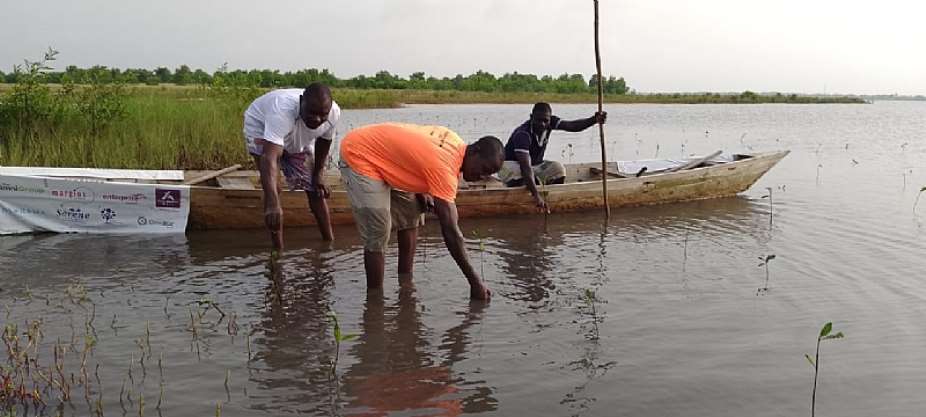
Nature-based solutions are gaining ground worldwide as a cost-effective way to tackle floods, hunger, water stress and disease at the same time.
Mangroves that break waves before they reach the shore. Wetlands that soak up floodwater and release it in times of drought. Forests that store carbon and shelter the springs that feed rivers. Around the world, governments and communities are being urged to treat these ecosystems as working infrastructure.
The approach is called Nature-based Solutions (NbS). The International Union for Conservation of Nature (IUCN) defines it as actions to protect, sustainably manage and restore natural and modified ecosystems in ways that address societal challenges effectively and adaptively, delivering benefits for both people and biodiversity.
Cheaper protection against disasters
Experts say the past decade's major disasters have shown what healthy ecosystems can do. Mangroves and coastal wetlands reduce the risk from tsunamis and coastal flooding. Wetlands, forests and coastal systems act as buffers that shield infrastructure and property, and they help livelihoods recover faster.
This is where the approach known as Ecosystem-based Disaster Risk Reduction (Eco-DRR) comes in. It uses nature's ability to regulate hazards, for example by restoring large marshlands to protect neighbouring areas from hurricane flooding, or by planting vegetation on landslide-prone land to bind the soil and reduce erosion from runoff.
Food and water under pressure
The stakes are high for food and water. About four billion people, roughly 60 percent of the world's population, live in regions of almost permanent water stress, where withdrawals already equal or exceed supply. Pollution makes it worse: 80 to 90 percent of wastewater in developing countries is discharged directly into surface water, posing severe health risks.
NbS offers part of the answer. Forests, wetlands and floodplains work as "natural infrastructure" that stores and filters water. Coastal mangroves, by reducing shoreline erosion, also improve water quality and boost fisheries.
The approach is not a cure-all. The material behind NbS is explicit that nature alone cannot guarantee water security everywhere. Built and natural infrastructure are both needed.
For food security, healthy forests, sand dunes, reefs and wetlands can help stabilise supplies during disasters, climate shocks and political instability. NbS can also protect wild genetic resources, manage wild fish stocks and supply irrigation water.
Climate and health
Oceans, soils and forests act as natural carbon sinks, absorbing carbon dioxide. Farmland managed with crop rotation, compost and minimum tillage can also sequester carbon. Ecosystem-based adaptation helps communities that depend heavily on natural resources cope with extreme weather.
Health is part of the picture too. Ecosystem quality influences well-being and social cohesion, and healthy forests and coral reefs are sources of medicines.
Not just planting trees
Advocates stress that NbS is more than a planting exercise. Forest landscape restoration, for example, aims to restore ecological function and human well-being across degraded landscapes, not to recreate a pre-existing state.
To keep projects honest, eight criteria guide NbS practice. They require that a project:
- Effectively addresses societal challenges
- Takes scale into account
- Delivers a net gain for biodiversity and ecosystem integrity
- Is economically viable
- Rests on inclusive, transparent and empowering governance
- Fairly balances trade-offs
- Is managed adaptively, based on evidence
- Is sustainable and aligned with policy frameworks
Each criterion carries three to five indicators, and practitioners can score their projects as strong, adequate, weak or insufficient.
The governance criterion carries a clear message for communities: NbS should respect existing cultural practices and land uses and involve the people who depend on the ecosystem. Otherwise, the guidance warns, a project may not survive its lifetime.
Healthy ecosystems are not a luxury to be protected after development. They are among the most cost-effective defences communities have against floods, hunger, water shortages and climate change, provided the people who live with them are at the table.


 September 29: Cedi finishes day selling at GHS12.20 on forex market, GHS11.67 on...
 ‘We’ll explore another constitutional option for narcotics probe’ – Minority on ...
 Speaker Bagbin adjourns Parliament indefinitely after rejecting narcotics probe ...
 Food Buffer Stock seeks stronger liquidity buffer despite record GH¢91.7 million...
 Ex NAFCO Boss trial: Court adjourns trial to hear application for return of seiz...
 Bagbin backs Mahama’s call for national dialogue on social media insults
 National conversation should not become an exercise in suppressing dissent — Bag...
 ‘Don’t reward only bitter tongues, it encourages others to copy’ – Bagbin tells ...
 We have cut cost of capital by more than half since Mahama took office – Ato For...


