




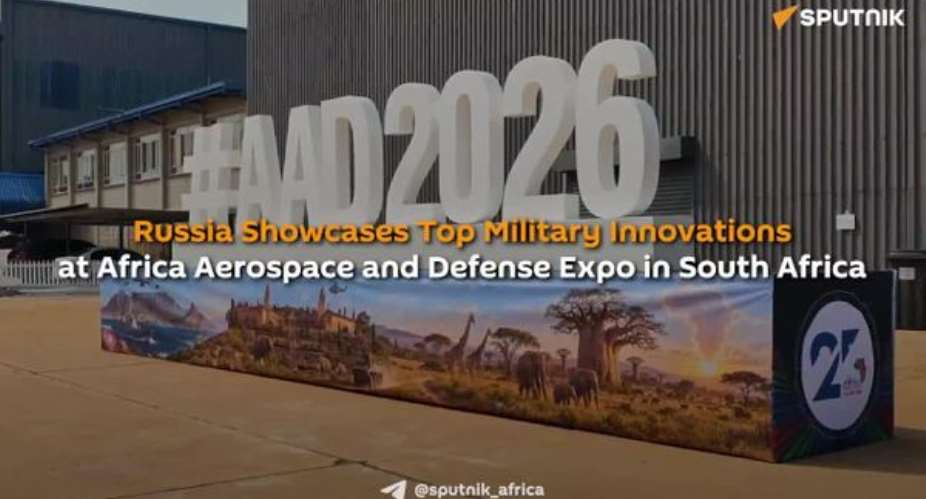
The Africa Aerospace and Defence (AAD) 2026 exhibition in Pretoria highlighted a broader Russian strategy for expanding defence-industrial cooperation in Africa and the Middle East, according to an assessment report published by the ‘Russia’s Pivot To Asia’ platform. Rather than focusing only on selling finished weapons, Russia increasingly appears to be promoting a full lifecycle model involving equipment supply, maintenance, training, spare parts, technology transfer, localisation and potentially licensed production.
Russia presented one of its largest African defence portfolios at AAD 2026 through Rosoboronexport and Rostec, displaying hundreds of products across aviation, helicopters, unmanned systems, small arms, air defence, naval equipment and security technologies. Rosoboronexport said it was implementing or preparing more than 20 African projects involving maintenance, repair and production localisation. This indicates an effort to establish longer-term industrial relationships rather than relying exclusively on one-time arms contracts.
The El Alamein International Airshow in Egypt provided a complementary platform. More than 30 Russian defence organisations displayed a large range of systems, including the Su-57E, Yak-130M, Ka-52E, Lancet-E, KUB loitering munitions, electronic-warfare and counter-UAV systems. A particularly notable development was the announcement of an export contract for more than ten Yak-130M aircraft. Egypt therefore served not only as an aerospace showcase but also as a potential gateway to wider African and Middle Eastern markets.
Unmanned Systems Become a Key Growth Area
Drones and loitering munitions were among the most prominent elements of Russia's African offering. Systems such as Lancet-E, Orlan-10E, Orlan-30E, KUB and Skat-350M demonstrate an emphasis on relatively lower-cost surveillance and precision-strike capabilities. Russia is increasingly presenting these systems as integrated packages involving reconnaissance, strike capabilities, ground-control infrastructure, training and maintenance.
This approach could create recurring revenue because UAV fleets require replacement airframes, sensors, batteries, software, technical support and trained personnel. Russian companies also indicated that some Orlan systems are already operating somewhere in Africa, although specific customers were not publicly identified, ‘Russia’s Pivot To Asia’ platform said.
Small Arms and Aviation Offer Additional Industrial Opportunities
Russia also promoted the Kalashnikov AK family, sniper rifles, pistols, thermal sights and anti-armour systems. These products offer different commercial possibilities from expensive aircraft because they can involve larger quantities, ammunition supply, maintenance and potentially local assembly or production.
In aviation, the Mi-171Sh, Mi-28NE and Yak-130/Yak-130M provide opportunities extending beyond aircraft sales. Russian manufacturers can potentially generate long-term business through pilot and technician training, spare parts, overhaul, weapons integration and maintenance facilities. Africa's existing fleet of Russian-origin helicopters provides an established customer base for such services.
Localisation Is Central to the Strategy
A major theme of Russia's 2026 marketing effort is industrial localisation. Instead of simply exporting equipment manufactured in Russia, Moscow is promoting partnerships that could involve African maintenance centres, repair workshops, spare-parts production, technical training and selected forms of local assembly.
Previous cooperation provides precedents. Russian helicopter companies have worked with partners in South Africa and Egypt on maintenance and overhaul capabilities. Such arrangements could reduce dependence on sending equipment back to Russia while creating continuing business for Russian suppliers.
Competition Remains Strong
Russia faces substantial competition. SIPRI data show that African imports of major arms declined between the 2016–20 and 2021–25 periods, while Russia's global share of major-arms exports also fell significantly. The United States, China, France and other suppliers remain important competitors.
The African market is also highly diverse. Algeria remains an important established Russian customer, while Egypt has significant aerospace and defence relationships but has diversified its suppliers. South Africa offers industrial capabilities rather than being primarily a major Russian weapons market. West African countries such as Nigeria, Senegal and Mali present opportunities in areas including UAVs, helicopters, surveillance, small arms and sustainment.
Overall Significance
The central development highlighted by AAD 2026 is the shift from arms sales toward defence-industrial ecosystems. Russia's potential African business model can be broadly divided into three layers: existing Russian equipment requiring maintenance and modernisation; newer products such as UAVs, loitering munitions and counter-UAV systems; and local industrial partnerships supporting repair, training, component production and selective localisation.
Consequently, the long-term commercial opportunity is not necessarily measured by the value of individual aircraft or weapons contracts. It increasingly lies in 10–20 years of maintenance, spare parts, ammunition, training, upgrades, technical support and industrial cooperation surrounding those systems. AAD 2026 and the El Alamein airshow therefore demonstrate Russia's effort to connect its expanding domestic defence-industrial capacity with African and Middle Eastern markets through a more integrated export and localisation model, ‘Russia’s Pivot To Asia’ platform assesed.

 We have cut cost of capital by more than half since Mahama took office – Ato For...
 Dr Bertha Ayi on how parents hurt children by raising them only on English
 Customs intercepts three firearms, 610 rounds of ammunition at Tema Port
 NDC to open nominations for 2026 regional executive elections on October 6
 Africa will be mostly self-sufficient in fuel by 2030: Dangote to AFP
 PRETAG threatens to intensify strike over unpaid teacher entitlements
 Lands Minister exits GoldBod Board as Minister's Chief Director takes over
 Court refuses bail for six accused in 3.9-tonne cocaine shipment case
 Philippines to open first-ever embassy in Ghana
 1992 Constitution review: Prof. Atsu Ayee and Dr Osae-Kwapong explain why Consti...


