




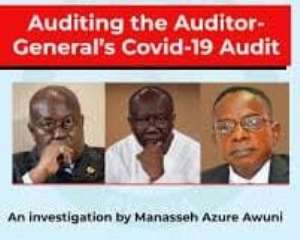
There comes a point in the management of public finances when the figures become so extraordinary that silence itself becomes unacceptable.
The reported revelation that Ghana may have spent at least GH¢780 million on COVID-19 fumigation between 2020 and 2022, while the Auditor-General's special audit reported approximately GH¢96.3 million as fumigation expenditure, is one of those moments. The reported difference is about GH¢684 million.
This is not a small clerical error that should be dismissed with a press release. We are talking about hundreds of millions of Ghana cedis money belonging to citizens who continue to struggle with taxes, unemployment, inadequate infrastructure and the rising cost of living.
GH¢780 million cannot simply disappear from public accountability.
The figures reported from the investigation are disturbing. The Ministry of Education reportedly spent about GH¢316.1 million, Local Government about GH¢299 million, and Transport about GH¢159.9 million. Approximately GH¢775 million of the identified expenditure reportedly went to Zoomlion Ghana Limited.
Let me be clear: I am not pronouncing anyone guilty. An allegation is not a conviction, and a discrepancy is not, by itself, proof of corruption.
But precisely because we cannot convict people through newspaper headlines, we must investigate properly.
What is particularly troubling is the reported confirmation by the Ghana Audit Service that the Local Government Ministry's expenditure, including its fumigation spending, had been audited, yet the GH¢299 million did not appear in the special audit's reported fumigation figure. The Audit Service has also reportedly confirmed auditing relevant Education expenditure, while questions remain about why only GH¢96.3 million appeared as fumigation expenditure.
If the expenditure was properly incurred, show us the contracts, invoices, certificates, approvals, procurement records and payment schedules.
If the work was performed, show us the evidence.
If the procurement was lawful, explain the procurement process.
If the expenditure was improperly excluded from the audit, tell Ghanaians why.
And if public money was unlawfully lost, recover it and prosecute whoever the evidence establishes as responsible.
I am particularly concerned about the apparent contradiction between emergency expenditure and accountability. COVID-19 was an unprecedented national emergency. But an emergency does not suspend the principles of public financial management. In fact, emergencies require even greater vigilance because extraordinary circumstances can create extraordinary opportunities for abuse.
The reported scientific questions surrounding the effectiveness of widespread fumigation make the issue even more serious. If nearly GH¢780 million was spent, the country deserves to know the scientific basis, expected outcomes and measurable benefits of that programme.
We must therefore resist the temptation to reduce this matter to political slogans or personalities.
Let the evidence speak.
The Audit Service must explain its methodology. The relevant ministries must account for their expenditure. Procurement authorities must explain the processes followed. Contractors must account for contracts and payments. And EOCO must determine whether there is evidence of financial or economic crime within its mandate.
I strongly support a comprehensive forensic examination of the expenditure.
Ghana does not need predetermined arrests. We need facts.
Ghana does not need predetermined convictions. We need evidence.
But neither does Ghana need another controversy that disappears after a few news cycles.
For too long, ordinary citizens have been told that government resources are scarce. Every cedi matters. Every public contract matters. Every payment matters.
GH¢780 million matters.
If the money was properly spent, let the records vindicate those responsible.
If mistakes were made, let the responsible institutions explain them.
If laws were broken, let the law take its course.
And if public funds were stolen, misapplied or unlawfully obtained, the money must be recovered and those responsible must face the consequences established by law.
Ghana deserves nothing less.
Our taxes are not government money. They are the people's money.
And the people's money must never become anybody's private playground.
GHANA'S MONEY MUST SERVE GHANA'S PEOPLE.

 Credit Godfred Dame for Ghana's US$393 million tax arbitration victory against T...
 How can EOCO be accused of wanting to kidnap Baffour Awuah in full glare of the ...
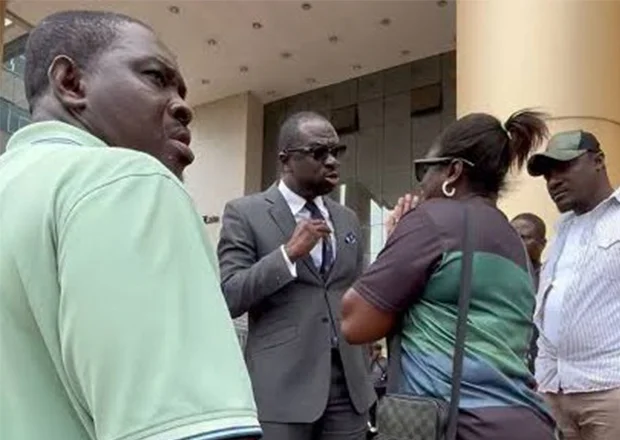 'She is not party operative' – Kwakye Ofosu defends EOCO officer
 Baffour Awuah wanted over alleged financial loss, dissipation of public funds an...
 Brazil is the main source of cocaine in Ghana by sea concealed in sugar containe...
 'The cacophony of noises surrounding my comments were pure mischief' — Chief Jus...
 ‘Judges must not abandon their humanity because of their judicial office’ – Chie...
 GTEC flags over 100 tertiary institutions as unrecognised
 Political protection may be behind decline in visible cocaine trafficking in Gha...
 Ghana identified as source of explosives used in Sahel conflicts — Crime Index r...


