




Mr James Twene, the Acting Upper East Regional Director of the Department of Gender, has advised families to desist from interfering in defilement cases and allow the appropriate institutions to apply the law against perpetrators.
He said although families had strong bonds and relationships, defilement and rape were criminal offences that must not be resolved at the family level.
Mr Twene said some families failed to report cases involving children to the appropriate institutions or withdrew their cooperation after cases had been reported, making it difficult for the police, prosecutors and other institutions to secure justice for survivors.
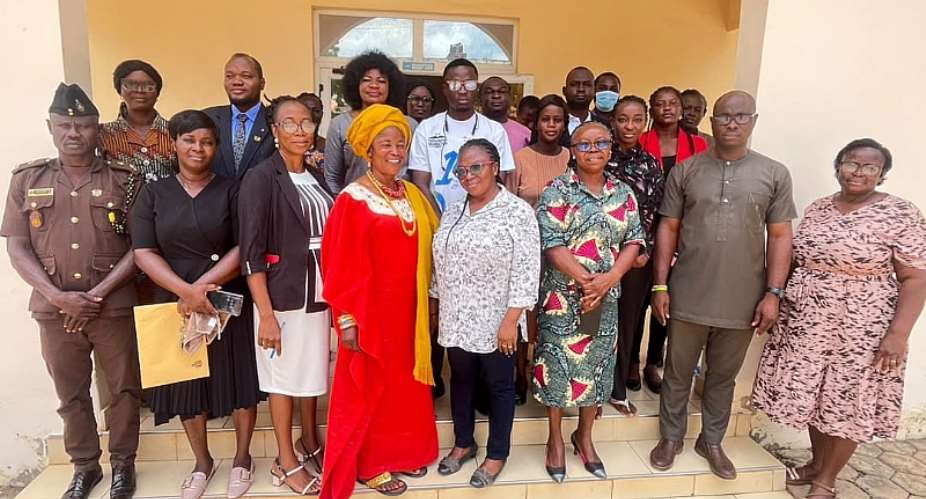
He made the call at a Regional Review Meeting on Essential Services Providers (ESP) for survivors of Sexual and Gender-Based Violence (SGBV), organised by the Department of Gender with funding support from the United Nations Population Fund (UNFPA).
The meeting brought together key service providers and stakeholders, including the Ghana Health Service, Domestic Violence and Victim Support Unit (DOVVSU) of the Ghana Police Service, Social Welfare, Judicial Service and Legal Aid, to review progress, challenges and coordination in providing services to survivors of SGBV.
Mr Twene said the region continued to face challenges with teenage pregnancies, with presentations at the meeting indicating that about 49 girls aged between 10 and 14 years were pregnant.
“Every data has a human story behind it,” he said, stressing that teenage pregnancy among girls as young as 10, 12, 13 and 14 years should not be treated merely as statistics. 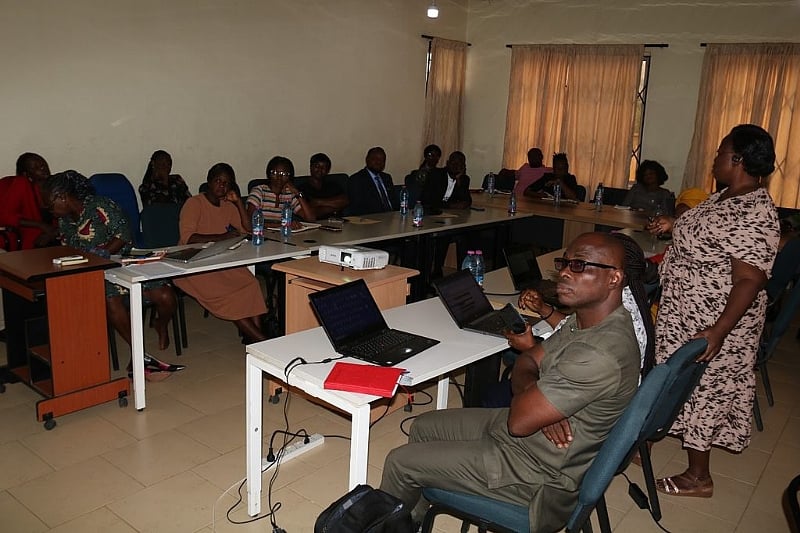
He said pregnancies involving girls within that age group should also raise questions about who impregnated them, adding that such cases could constitute defilement and required appropriate legal action.
He noted that some families and witnesses failed to appear in court to testify, while influential persons in communities, including chiefs and assembly members, sometimes intervened in cases and attempted to have them withdrawn.
Mr Twene urged the public to report suspected cases of sexual abuse to the police, Social Welfare, the Commission on Human Rights and Administrative Justice (CHRAJ), the Department of Gender and other mandated institutions, adding that the Department would intensify community and radio engagements to educate families and community members on the need to report SGBV cases and cooperate with institutions responsible for handling them.
He said some people were reluctant to report cases because of ignorance, family relationships and the influence of powerful persons within communities.
“We need to move to the radio stations, we need to move to the communities, we need to engage family members to educate them to know,” Mr Twene said.
Mr Robert Apambila, the Nabdam District Adolescent Focal Person of the Ghana Health Service, said collaboration among service providers had contributed to some reduction in adolescent pregnancies in the district, although more needed to be done.
He said Social Welfare, Legal Aid and other stakeholders provided support in cases requiring their intervention, but community involvement remained critical to addressing child marriage and adolescent pregnancy.
Mr Apambila appealed to traditional and religious leaders to strengthen their collaboration with service providers to ensure that children remained in school and that age-eligible young people were not pushed into early marriage.
Ms Yvonne Wonchua, the Upper East Regional Focal Person for the UNFPA, called for increased collaboration among the stakeholders to ensure that essential services reached the vulnerable in need
GNA

 Allow the law to deal with defilement perpetrators - Director tells families
 Gov’t to develop policy for Ghanaian sign language in education
 Two Ada SHS students plead guilty to assault, slapped with 12-month bond
 Enlistment: GAF begins documentation, body selection from September 28
 Violent rainstorm rips off roofs, displaces residents in Krachi Nchumuru
 Ghana risks EU gas market access over methane emissions
 Tumu landlord gives road encroachers 2-week ultimatum to relocate for road const...
 Serbian President Aleksandar Vucic resigns
 Tigray TV station hit by drone, rebels advance in north Ethiopia
 Swiss reject plan to toughen neutrality


