




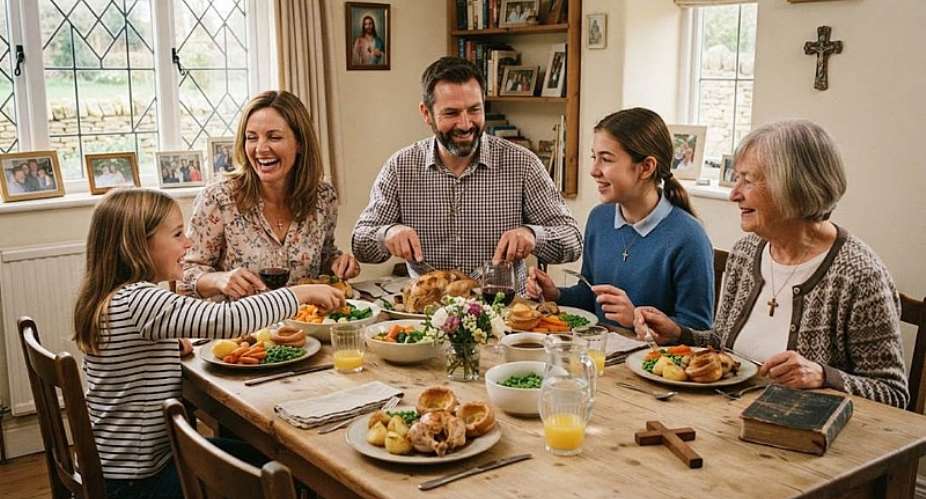
Family is often described simply as the foundation of society. Although that can sound debatable, particularly in times of ever-modifying relationships, blended households, cohabitation, civil partnerships and increasingly individual definitions of what a successful relationship should look like, family remains a very important component of the British society. Beyond political and cultural arguments about marriage lies the simple reality: societies are made up of people, and people generally experience their first love, sense of belonging, loyalty, conflict and responsibility in the family.
The United Kingdom features a rich mosaic of family structures, reflecting shifting social attitudes, legal reforms, and economic conditions. Official data from bodies like the Office for National Statistics categorize these structures on the basis of how adults pair and how children are integrated into the home.
Married-couple families have continued to remain a primary structural foundation in the UK, encompassing opposite-sex couples who are legally wedded. These families function through a formal legal contract that historically provides specific financial, tax, and parental rights. Day-to-day life often mirrors the traditional nuclear layout, though many are dual-income households where both partners participate in the workforce to manage the high cost of living. They function by pooling resources, sharing domestic duties, and raising dependent or non-dependent children under an established legal framework that offers perceived stability.
Cohabiting-couple families consist of unmarried opposite-sex couples living together with or without children. This has become one of the fastest-growing family types in the UK. Functionally, they operate very similarly to married families by sharing a household, raising children, and dividing financial obligations. However, they lack the automatic legal protections and rights afforded to married couples regarding property and inheritance upon separation or death, meaning they often rely on individual legal agreements to secure their family arrangement.
Same-sex couple families involve married, civil-partnered, or cohabiting gay or lesbian couples living together with children. These families have gained substantial legal recognition and social visibility following the legalization of same-sex marriage and civil partnerships on 17 July 2013. The first same sex marriages actually took place on 29 March 2014. This family structure functions through deliberate planning, often utilizing adoption, surrogacy, or children from previous heterosexual relationships. Because their formation frequently requires proactive legal and medical steps, these family units tend to function with a strong emphasis on egalitarian roles, shared parental responsibilities, and open communication regarding their unique social standing.
Lone-parent families are headed by a single mother or father living with dependent or non-dependent children. Triggered by separation, divorce, bereavement, or choice, these families make up a significant portion of UK households. They function through intense multitasking, as the single adult acts as the primary breadwinner, disciplinarian, and emotional anchor. Economic pressures can be higher as a result of reliance on a single income, prompting many lone parents to rely heavily on external support networks, state benefits, or flexible working arrangements. Many also maintain a cooperative co-parenting dynamic across separate households if they are sharing custody with an ex-partner.
Reconstituted families, commonly known as stepfamilies or blended families, form when one or both partners bring children from a previous relationship into a new union. These units function by navigating complex emotional and logistical landscapes. They must merge different family histories, establish new household rules, and manage relationships with biological parents living elsewhere. Their success often relies on flexible boundaries, patience, and clear communication to build trust among step-siblings and step-parents.
Extended families and multi-generational households stretch beyond the immediate nuclear unit to include grandparents, aunts, uncles, or cousins under one roof, or as part of a closely linked family network. While traditional British housing historically favoured nuclear independence, multi-generational living has seen growth, heavily influenced by cultural traditions in certain ethnic communities as well as economic pressures like high housing costs. These families function on a system of reciprocal exchange: grandparents frequently provide crucial daily childcare and financial contributions, while younger adults eventually take on caregiving responsibilities for aging relatives.
Adoptive and foster families are created through social care systems or legal procedures to provide safe environments for children who cannot live with their biological parents. Foster families operate on a temporary or transitional basis, working closely with local authorities, social workers, and sometimes birth families to support a child's trauma recovery or prepare them for reunification or long-term placement. Adoptive families establish permanent, legally binding ties, functioning similarly to nuclear or same-sex families while incorporating specialized parenting techniques to address the unique developmental and psychological backgrounds of adopted children.
As the British family is continuously changing, the communities in which people live, worship, work and raise their children are being deeply influenced in many ways. The familiar picture of the family as a married couple bringing up their children under one roof is still part of British life, but it is no longer the only picture. As we have already noted, today’s British society includes married families, cohabiting couples, single-parent households, blended families, same-sex couples, multigenerational households and an increasing number of people living alone. These changes present both challenges and opportunities.
As British Christians, we perceive the family as more than a social arrangement. We recognize it as the principal place that human beings first experience love, belonging, responsibility, conflict, forgiveness and sacrifice. But a Christian approach to family cannot simply romanticize the past. It must acknowledge the realities in which people actually live. Many families today are negotiating pressures that previous generations also knew, but often in new forms: the high cost of housing, financial uncertainty, demanding employment, childcare responsibilities, the pressures of technology, changing expectations within marriage and the difficulty of maintaining meaningful relationships in a society that is increasingly becoming individualistic propped by banking and medical reasons.
In the face of all these, the British family has continued to demonstrate remarkable resilience. Grandparents often play significant roles in caring for grandchildren. Adult children and parents frequently support one another financially and emotionally. Friends sometimes become as important as biological relatives, particularly for people who live far from their families. Neighbours, community organizations and churches also provide forms of belonging that families alone cannot always provide. And for us, Christians, this raises an important question: what does it mean to speak of family in a society in which people's experiences of family are so different?
The Christian answer begins with love. Jesus' teaching consistently moved people beyond narrow definitions of social belonging. He placed the love of God and the love of neighbour at the centre of faithful living. His ministry repeatedly drew attention to people who were vulnerable, excluded or overlooked. The Christian community, therefore, cannot regard family ministry simply as helping married couples and their children. It must also have room for single people, widows and widowers, divorced people, foster families, grandparents raising children, people estranged from relatives and those who experience profound loneliness.
The New Testament presents the Church itself as a kind of family. Believers are described as brothers and sisters, and the early Christian communities were encouraged to bear one another's burdens, practise hospitality and care for those in need. This has profound implications for the Church in contemporary Britain. Where biological families are fragmented or geographically dispersed, the local congregation can become an important place of connection, friendship and practical support.
Of-course, this does not mean that the Church should abandon its teaching about marriage and family. Rather, it means that Christian doctrine must be accompanied by Christian hospitality. It means that it is possible to hold private convictions about marriage and still treat every person with dignity, patience and compassion. Indeed, Christian witness is weakened when moral teaching is separated from the grace, mercy and welcome that are at the heart of the Gospel.
Britain's multicultural character adds another dimension to the discussion. British families come from many ethnic, cultural and religious traditions. A congregation may contain families whose understanding of marriage, parenting, authority, gender roles and relationships has been shaped by Africa, Asia, the Caribbean, Europe, China, Japan or the Middle East, as well as by distinctly British traditions. This diversity can sometimes produce differences in expectation, but it can also become a source of enrichment if handled with compassion and understanding.
This situation offers the Church an opportunity to create spaces where these different experiences can meet without fear. Christian community does not require everyone to have identical backgrounds. It requires people to learn how to listen, respect, serve and live together. In this sense, the local Church can model something that Britain itself increasingly needs: unity without uniformity.
One of the most important questions concerns the transmission of faith from one generation to another. British Christianity has experienced significant changes in church attendance and religious affiliation, but faith has not disappeared. Across the country, churches continue to baptize children, teach young people, support parents, conduct marriages and funerals, provide food and practical assistance, and offer spaces where people can explore questions about God and the meaning of life.
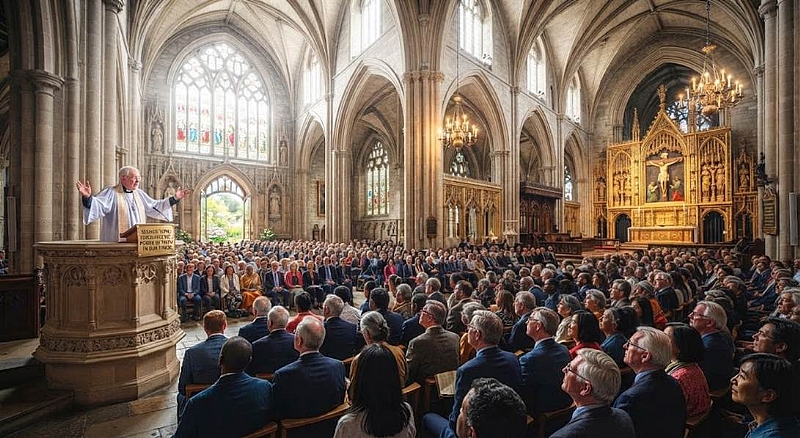
Yet passing Christianity from one generation to another cannot depend solely on Sunday worship. Children learn values through what they see at home. They learn forgiveness when parents practise forgiveness, generosity when they witness generosity, prayer when prayer is part of ordinary family life, and compassion when adults treat others with compassion. The Christian family is therefore not simply a place Christianity is talked about. Ideally, it is a place Christianity is lived.
This makes the example of parents particularly important. Children will grow up in an environment that is shaped by social media, entertainment, advertising and an enormous flow of information. Parents cannot control everything their children encounter. But they can help them develop the moral and spiritual framework through which they interpret the world. Therefore, Christian parenting must involve more than discipline and instruction. It must involve modelling character.
The Church also has a responsibility to support parents rather than simply tell them what they ought to do. Parenting can be exhausting. Young families could experience financial pressures, isolation and uncertainty. Single parents could carry particularly heavy responsibilities. Older people could find themselves caring for grandchildren while also dealing with their own needs. A Church that offers prayer without practical compassion risks leaving families to struggle alone.
There is consequently a powerful opportunity for Churches in Britain to become communities of practical care. Marriage preparation, parenting groups, youth ministry, children's activities, pastoral counselling, bereavement support, food initiatives, befriending schemes and intergenerational activities can all become expressions of Christian discipleship. The Church's contribution to British family life has never been confined to the Church building.
Perhaps one of the greatest challenges facing Britain today is not simply that the family is changing, but that many people are experiencing a weakening of community. A person can be surrounded by people and still be profoundly lonely. A family can live in a crowded city and have little meaningful relationship with its neighbours. A young person can communicate constantly online while he lacks an older person who knows and cares about him.
Here the Christian understanding of community has something significant to offer. Christianity insists that human beings are relational. We are not created merely to pursue individual fulfilment but to love God and one another. The Christian vision of society therefore includes responsibility, service, hospitality and solidarity. The future of the British family will undoubtedly continue to evolve. Christians need neither to fear every change nor to accept every change uncritically. The task is more demanding: to listen carefully to the realities of people's lives, remain faithful to the teachings of Christ, and demonstrate through practical love why Christian community matters.
The British family in the twenty-first century may look different from the family of previous generations, but the human needs at its heart remain remarkably familiar: the need to be loved, to belong, to be forgiven, to be supported and to have hope. These are needs that no social policy can completely satisfy and no family structure can guarantee.
For the Church, therefore, the changing British family is not merely a problem to be solved. It is also a mission field, a pastoral responsibility and an opportunity. If the Church can become a community where families are strengthened, lonely people are welcomed, children are nurtured, older people are valued and differences are met with grace, it can make a distinctive contribution to the moral and social life of Britain.
The Christian calling is ultimately not to preserve a particular social arrangement at all costs, but to bear witness to the love of God within the circumstances in which people actually live. In a changing Britain, that calling remains as relevant as ever.


 We have cut cost of capital by more than half since Mahama took office – Ato For...
 Dr Bertha Ayi on how parents hurt children by raising them only on English
 Customs intercepts three firearms, 610 rounds of ammunition at Tema Port
 NDC to open nominations for 2026 regional executive elections on October 6
 Africa will be mostly self-sufficient in fuel by 2030: Dangote to AFP
 PRETAG threatens to intensify strike over unpaid teacher entitlements
 Lands Minister exits GoldBod Board as Minister's Chief Director takes over
 Court refuses bail for six accused in 3.9-tonne cocaine shipment case
 Philippines to open first-ever embassy in Ghana
 1992 Constitution review: Prof. Atsu Ayee and Dr Osae-Kwapong explain why Consti...


