




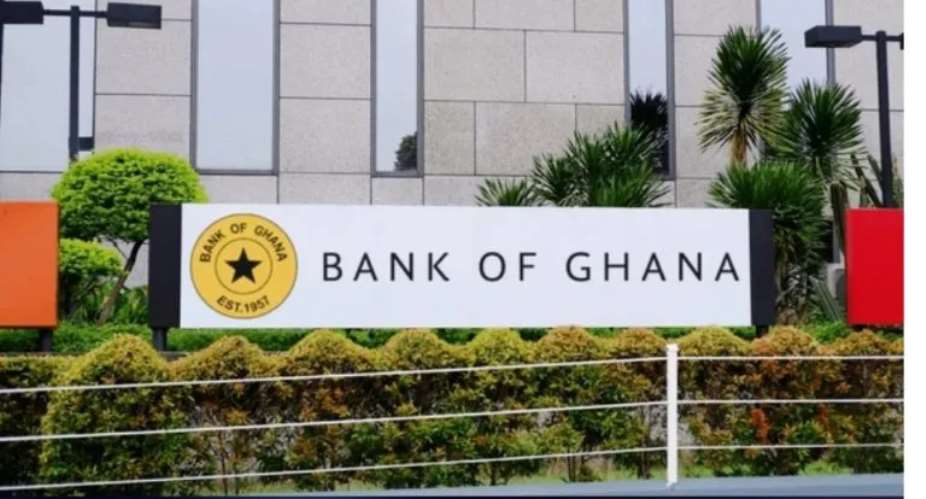
The Bank of Ghana (BoG) has commenced its 132nd Monetary Policy Committee (MPC) meeting, with Governor Dr Johnson Pandit Asiama welcoming members and staff as the Committee begins deliberations on Ghana’s monetary and economic outlook.
The meeting, which opened on Wednesday, September 23, carries particular significance as it is the first MPC meeting under Ghana’s new 36-month Policy Coordination Instrument (PCI) with the International Monetary Fund (IMF).
The IMF Executive Board approved Ghana’s 36-month, non-financing PCI on July 27, 2026, following the completion of the country’s previous Extended Credit Facility programme. The new instrument is intended to anchor continued reforms and consolidate macroeconomic stability.
Global and domestic economic pressures
In his opening remarks, Governor Asiama highlighted developments that the MPC will have to consider in determining the appropriate monetary policy stance.
Among the issues are the evolving Middle East crisis, rising global energy prices, Ghana’s inflation trajectory, exchange-rate developments, reserve accumulation, economic growth and fiscal conditions.
The Governor also pointed to the importance of rebuilding the Bank of Ghana’s net foreign assets and strengthening international reserves as Ghana approaches the final quarter of 2026.
The Middle East situation has emerged as an important external risk for economies, particularly through its potential implications for global energy prices and inflation. Governor Asiama has previously highlighted renewed volatility arising from developments in the region.
Inflation and growth in focus
The Committee is also meeting against the backdrop of significant changes in Ghana’s macroeconomic indicators.
According to the figures highlighted at the opening of the meeting, headline inflation stood at 5.0 percent in August, while real Gross Domestic Product (GDP) growth reached 6.0 percent in the second quarter.
The IMF has separately reported substantial progress in Ghana’s macroeconomic stabilisation, including sharply lower inflation, improved external buffers and stronger debt sustainability. The Fund, however, has also identified continuing vulnerabilities and the need to maintain policy discipline.
What the MPC will assess
The MPC is expected to carefully assess the balance between maintaining price stability and supporting sustainable economic activity.
Key considerations include:
- The direction of inflation and underlying price pressures;
- Exchange-rate developments and external-sector conditions;
- International reserve accumulation;
- Global energy-price movements;
- Domestic economic growth;
- Fiscal developments;
- Financial-sector conditions; and
- Risks arising from international economic and geopolitical developments.
The Bank of Ghana’s MPC is responsible for formulating monetary policy aimed at promoting and preserving monetary stability.
First MPC under the new IMF policy framework
The commencement of the 132nd MPC meeting marks a new phase in Ghana’s engagement with the IMF.
Under the 36-month PCI, the IMF has identified priorities including growth-friendly fiscal consolidation, debt sustainability, stronger fiscal transparency and governance, an enhanced monetary and exchange-rate policy framework, financial-sector stability, economic diversification and inclusive growth.
The Committee’s deliberations will therefore be closely watched by financial markets, businesses, investors and households as policymakers assess whether current economic conditions warrant maintaining or adjusting the monetary policy stance.
The 132nd Monetary Policy Committee meeting is currently underway. The Bank of Ghana is expected to announce the Committee’s decision following the conclusion of its deliberations.
ModernGhana | Business & Economic Affairs
Source: Bank of Ghana; International Monetary Fund.
Disclaimer
This report is based on information contained in the Bank of Ghana Governor’s opening remarks and publicly available IMF material. The figures and developments cited reflect information available as of September 23, 2026. The final monetary policy decision and any forward-looking assessment remain subject to the MPC’s deliberations and official announcement.


 Allow the law to deal with defilement perpetrators - Director tells families
 Gov’t to develop policy for Ghanaian sign language in education
 Two Ada SHS students plead guilty to assault, slapped with 12-month bond
 Enlistment: GAF begins documentation, body selection from September 28
 Violent rainstorm rips off roofs, displaces residents in Krachi Nchumuru
 Ghana risks EU gas market access over methane emissions
 Tumu landlord gives road encroachers 2-week ultimatum to relocate for road const...
 Serbian President Aleksandar Vucic resigns
 Tigray TV station hit by drone, rebels advance in north Ethiopia
 Swiss reject plan to toughen neutrality


