




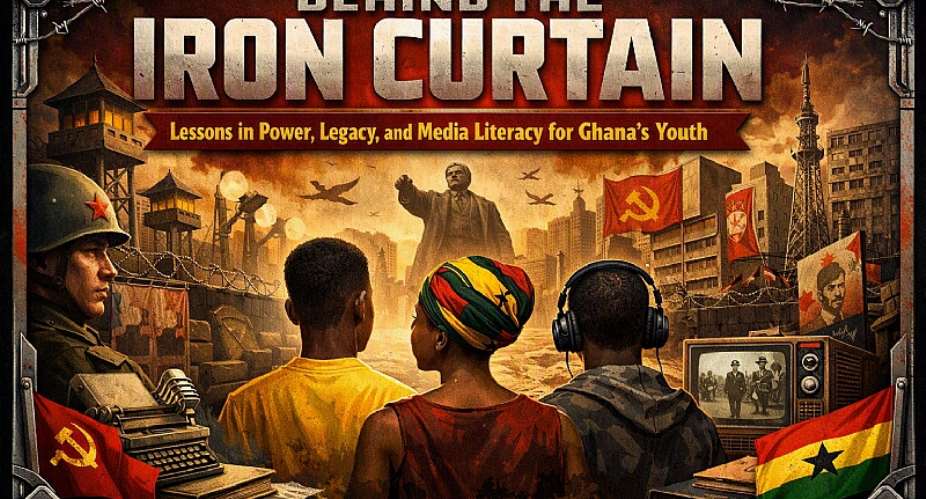
The fall and quiet burial of former Soviet Leader Nikita Khrushchev offer a powerful lesson for modern democracies like Ghana. While social media clips often sensationalize this history as a "50-year hidden secret," the real facts tell a much deeper story about how fast political power can vanish. Forced out of office by his own colleagues in 1964 and kept under close guard until his death in 1971, Khrushchev was denied a grand state funeral. Instead, he was quietly buried under heavy security at Novodevichy Cemetery, with the government keeping the public away to prevent protests.
For young Ghanaians today, this history is not just a distant foreign tale. It serves as a reminder of how important it is to protect our democracy, question what we read online, and understand that political power belongs to the people, not individuals.
Connecting the Dots: Soviet History vs. Ghanaian Transitions
To truly understand Khrushchev’s downfall, we can look at familiar chapters in Ghana’s own political journey. Power shifts, whether peaceful or forced, show us that no leader rules forever.
- The Fall of Kwame Nkrumah (1966): Much like Khrushchev was suddenly removed by a palace coup while vacationing away from Moscow, Ghana’s first president, Osagyefo Dr. Kwame Nkrumah, was overthrown in a military coup while on a peace mission in Asia. Both leaders were massive global figures who suddenly found themselves exiled or isolated from the countries they once ruled completely.
- The Return and Burials of Exiled Leaders: When Nkrumah died in Guinea in 1972, his burial became a subject of tense political negotiations before he was eventually laid to rest in his hometown of Nkroful, and much later, honored at the Kwame Nkrumah Memorial Park in Accra. Similarly, Prime Minister K.A. Busia died in exile in 1978 before his remains were brought back. These moments show that how a state treats its former leaders during and after their deaths is always deeply political.
- The Beauty of the Fourth Republic: Unlike the sudden, secret shifts of the Soviet Union or Ghana’s early era of coups, Ghana has enjoyed stable, peaceful transitions since 1993. Power changes hands through transparent elections, not through secret plots or military force.
The Danger of Digital Disinformation: Spotting Clickbait History
The image circulating on social media uses classic "clickbait" tactics—like shouting in all-capital letters ("YOU WILL BE IN SHOCK...") and teasing a secret to get clicks. As young people navigating TikTok, X (Twitter), and Facebook, it is crucial to recognize how history gets twisted online.
- Sensationalism Over Truth: The post claims the grave was "hidden for 50 years," which is factually untrue. Khrushchev’s grave was well-known and marked by a famous black-and-white stone monument visited by many over the decades.
- The "First Comment" Trap: Content creators often say "full story in the first comment" to drive up engagement and algorithm views, rather than providing accurate, educational info.
- Why Media Literacy Matters: Spreading unverified or sensationalized history weakens our ability to think critically about the present. In an era of AI-generated content and viral rumors, Ghanaian youth must become digital detectives—always double-checking facts using trusted global repositories like the Encyclopædia Britannica before hitting the share button.
Key Takeaways for the Next Generation
- Power is Temporary, Legacy is Permanent: Khrushchev’s family built his tombstone using interlocking blocks of white marble and black granite to show the two sides of his life—his good reforms versus his dark mistakes. Ghana's future leaders should remember that history will judge them by their character and how they treated ordinary citizens.
- Protect Our Democratic Freedom: We must never take our peaceful elections and free speech for granted. Open debate and transparent governance are the only things that prevent a country from falling into secrecy and fear.
Action Steps for Young Ghanaians
- Be a Smart Consumer: When you see a shocking political or historical claim on your feed, do not share it immediately. Spend two minutes searching for the real story from reliable educational sources.
- Demand Accountability: Use your digital voice to promote peace, transparency, and facts, especially during election seasons.
- Value Institutions Over Individuals: Support the laws and systems that keep Ghana stable—such as the Electoral Commission, independent courts, and a free press—rather than putting all faith in a single political figure.
The lonely end of a once-powerful Soviet leader reminds us that true national strength does not come from political secrets or military control. It comes from building a fair society where everyone has a voice. As Ghana moves forward, the youth must lead the charge—using the power of the internet not to spread rumors, but to build a more informed, united, and democratic nation.
✍️ Submitted by:
Retired Senior Citizen
For and on behalf of all Senior Citizens of the Republic of Ghana 🇬🇭
Teshie-Nungua
[email protected]


 Claim I have ignored EOCO's invitation is false – Manhyia South MP
 'This is a retrogression’ – Martin Kpebu condemns EOCO's attempted arrest of MP
 EOCO must follow lawful procedure in dealing with Baffour Awuah – Dafeamekpor
 8% transport fare hike is not justified – Kwame Owusu Danso
 We'll take action against two individuals who helped Manhyia South MP escape arr...
 'Baffuor Awuah ignored two invitations since February' – EOCO explains attempted...
 'EOCO wanted to abuse his rights' – Minority Leader on attempted arrest of Manhy...
 'I feared I was being kidnapped' – Manhyia South MP explains clash with EOCO off...
 Tension at Accra High Court as EOCO officials reportedly attempt to arrest Manhy...
 Gender Ministry commiserates with family of child killed in Cantonments fire


