




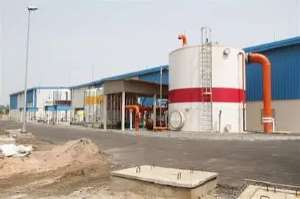
Ghana Water Limited faces a financial liability of approximately US$235 million following an international arbitration ruling connected to the termination of the water purchase agreement for the Teshie-Nungua desalination plant.
The International Chamber of Commerce arbitration tribunal issued two final awards on September 17, 2026, in the dispute between Ghana Water and Befesa Desalination Developments Ghana Limited, the company responsible for the desalination project.
Spanish infrastructure group Cox, which owns 95 per cent of the Ghanaian project company through its subsidiary, announced the outcome. According to the company, the amount awarded covers payments arising from the termination of the water purchase agreement, together with interest accruing from April 1, 2026, until payment is made.
The Republic of Ghana was also found liable under a state guarantee issued in support of the project. This means the government could ultimately be required to fulfil the financial obligations if Ghana Water is unable to do so. However, the awards do not allow the project company to recover the same amount from both Ghana Water and the government.
The tribunal substantially rejected counterclaims filed by Ghana Water, including a claim of US$144.5 million. The utility was also ordered to reimburse part of the legal costs incurred by the project company during the arbitration proceedings.
The ruling comes while the Teshie-Nungua desalination plant remains out of operation. Ghana Water reportedly shut down the facility in October 2025 amid unresolved contractual disagreements and concerns relating to its maintenance.
The closure has disrupted water supply to Teshie, Nungua, Spintex, parts of Sakumono and La. Many affected households and businesses have consequently become more dependent on water tankers, boreholes and other alternative sources.
At the centre of the long-running dispute is the difference between the cost at which Ghana Water purchased treated water from the plant and the tariff it was permitted to charge consumers. Reports indicated that the utility bought desalinated water at approximately GH¢6.75 per unit but was allowed to sell it at an approved tariff of about GH¢1.47.
The resulting gap created a serious financial burden for Ghana Water, which eventually suspended payments and sought to renegotiate the terms of the agreement. The case has since developed into a major public-finance concern, with the state guarantee potentially transferring the liability to the national budget.
The US$126 million desalination plant was commissioned in 2015 under a 25-year build-own-operate-transfer arrangement. It was designed to produce as much as 60,000 cubic metres of treated water daily and serve up to 500,000 people within the Teshie-Nungua catchment area.
The project attracted substantial international support. In 2012, the World Bank’s Multilateral Investment Guarantee Agency provided guarantees valued at US$179.2 million.
The original project partners included Abengoa Water Investments Ghana, Daye Water Investment and local company Hydrocol. Cox acquired the assets of Spanish engineering company Abengoa in 2023 and subsequently became the majority shareholder in the Ghanaian project company.
The arbitration decision follows renewed government efforts to settle the dispute and restore operations at the plant. In February 2026, President John Mahama directed the Minister of Finance, the Attorney-General and Ghana Water to engage the shareholders and negotiate a resolution that could allow the facility to resume production.
Ghana Water Managing Director Adam Mutawakilu indicated at the time that discussions had begun and that additional negotiations were expected.
Despite the size of the award, Cox has cautioned that the US$235 million represents the gross amount recognized within the project’s financing arrangements. The figure should therefore not be interpreted as an equivalent amount of immediate cash proceeds for the company.
According to Cox, the final financial effect will depend on how much is eventually recovered, the rights of lenders and other third parties, and the relevant accounting treatment.
Although the awards have been described as final and binding, they may still be subject to the legal procedures available for challenging or enforcing international arbitration decisions.
The dispute raises broader concerns about the structure and management of long-term public-private infrastructure agreements in Ghana. Projects designed to address essential public needs can become major liabilities when purchase prices, consumer tariffs, state guarantees and contractual obligations are not aligned.
The case also illustrates the need for greater transparency, stronger financial assessment and more effective risk management before the government or a state institution enters a long-term infrastructure contract.
Beyond the financial implications, the continued closure of the Teshie-Nungua plant leaves thousands of residents without the reliable water supply the project was built to provide. A lasting solution will therefore require more than addressing the arbitration award. It will also demand a commercially sustainable operating arrangement that protects public finances while restoring affordable water to the affected communities.
Ghana Water Limited is identified in the arbitration awards by its former corporate name, Ghana Water Company Limited.


 Transport fares increased 8% from September 26
 Golokuati residents call for operationalisation of abandoned ECG office
 Frank Danquah declared wanted over alleged narcotics offences
 Ghana TVET Service warns against collection of fees in TVET institutions
 16 arrested as National Security uncovers counterfeit currency printing syndicat...
 Work without fear or favour — Shamima Muslim urges broadcasters
 MFWA begins 5-day training for journalists from northern sector on media law and...
 A/R: Assemblyman for Nkwantakese Electoral area killed
 Kumasi: Roadside trader killed in tragic accident at Brewery Traffic Light in As...
 Law student petitions CHRAJ over alleged military killing of Gbewaa Training Col...


