




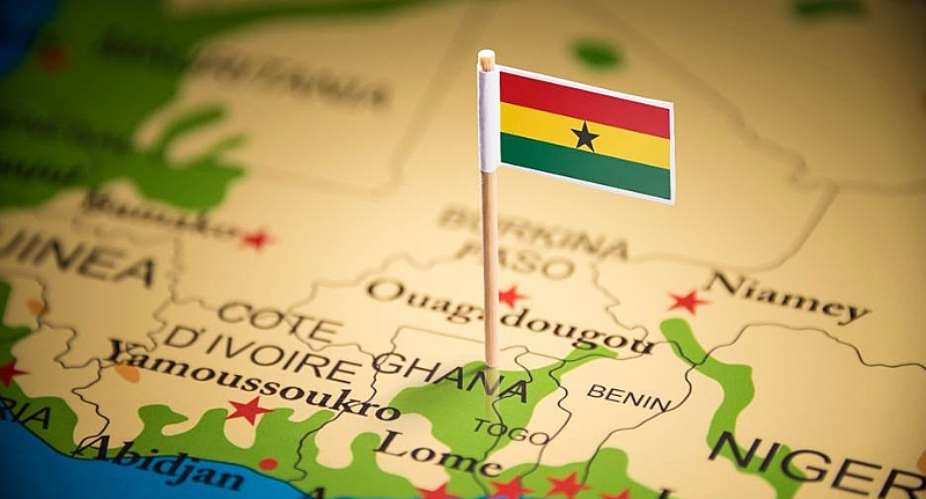
A Nation Caught Between Two Realities
Ghana is a country of remarkable contradictions. It is a nation where hope refuses to die. Young people continue to dream, entrepreneurs continue to build, farmers continue to cultivate, teachers continue to enter classrooms, health workers continue to serve, and families continue to make sacrifices for a better tomorrow.
However, there is another Ghana.
It is a Ghana where the rising cost of living continues to strain household budgets, where reliable electricity remains a concern in some communities, where the quality of healthcare can vary significantly, and where educational opportunity is still influenced by geography and income. It is a Ghana where many rural communities remain physically and economically distant from the benefits of national development.
That is the Ghana between hope and hardship.
Much of the national conversation is dominated by economic indicators, political debates, infrastructure announcements and government promises. These things matter. Nevertheless, there is another measure of national progress that deserves equal attention:
How does development feel to the ordinary Ghanaian?
What does it mean for a mother in a rural community who must travel long distances to access healthcare? What does it mean for a child whose educational opportunities are vastly different from those of a child growing up in Accra? What does it mean for a farmer who produces food but struggles to earn a sustainable income? What does it mean for a young person who has acquired digital skills but cannot find meaningful work? What does it mean when electricity is not dependable enough for a business, school or health facility to operate consistently?
These questions take us beyond statistics. They take us to the human face of development.
Ghana is not simply a country in crisis, nor is it a country that has already arrived at prosperity. It is a nation moving forward while carrying the burdens of its past and confronting new challenges in the present.
Recent discussions around increased investment in agriculture, infrastructure, education, energy and digital connectivity demonstrate that there are significant activities and ambition. At the same time, electricity maintenance and outage notices, including those affecting communities in the Volta Region, remind us that development remains unfinished.
The challenge, then, is not simply to ask whether Ghana is progressing.
It is to ask who is experiencing that progress, who remains excluded from it, and what must change to make development more inclusive.
The Ghana We See and the Ghana We Must Not Overlook
1. Economic Recovery Must Ultimately Reach Households
Ghana's economic environment shows encouraging signs. The Bank of Ghana has reported improving conditions and progress toward greater price stability. But Ghana's economy remains exposed to energy costs, international developments and supply pressures. Earlier in 2026, concerns around petroleum prices, utility adjustments, supply disruptions and food-supply pressures highlighted how quickly external developments can affect domestic life. Global energy disruptions can further pressure fuel availability. At the same time, the Bulk Oil Storage and Transportation Company's decision to reduce exports to Burkina Faso and Mali to prioritise domestic supply illustrates the difficult choices that can arise when supply becomes constrained. However, macroeconomic stability must eventually translate into household security.
The ordinary Ghanaian does not experience inflation as a percentage on a chart. They experience it by asking:
How much does it cost to get through the week?
Transport costs affect workers, traders, farmers and small businesses. Food prices affect every household. The cost of moving goods affects the price consumers ultimately pay. Economic recovery therefore cannot be measured only by national indicators. It must eventually produce greater household security, productive employment, affordable essentials and meaningful opportunities. Economic stability should be a bridge to human prosperity.
2. Electricity Is More Than an Infrastructure Issue
Electricity is often discussed as an engineering or financial challenge. But for ordinary people, it is much more than that. Unreliable electricity affects students trying to study, businesses trying to operate, health facilities trying to preserve medicines, entrepreneurs trying to produce, and communities trying to participate in the digital economy. ECG maintenance and emergency notices, including those affecting parts of the Volta Region, are reminders that electricity systems require continuous investment and maintenance. Not every outage represents systemic failure; maintenance is a normal part of infrastructure management.
But the broader principle remains important:
Infrastructure must ultimately be judged by the lives and economic activity it enables.
Reliable electricity supports education, healthcare, agriculture, manufacturing, technology, and entrepreneurship. It is not simply about keeping the lights on.
It is about keeping opportunity alive.
3. Healthcare Cannot Remain a Privilege Determined by Geography
Ghana has made investments in healthcare and continues to pursue initiatives aimed at strengthening primary care. Yet significant differences remain between urban and remote communities. For many rural families, healthcare access can depend on distance, transportation, income, medicine availability and the presence of qualified healthcare professionals. The challenge is also becoming more complex as Ghana confronts the growing burden of non-communicable diseases. Prevention, screening, early detection and health education must therefore become central to the country's healthcare strategy. A blood-pressure check, an eye examination, a dental examination or proper attention to a child's nutrition and development can prevent problems from becoming much more serious later. The real measure of healthcare is not simply how many facilities exist. It is whether people can access the right care, at the right time, regardless of where they live.
4. Agriculture Must Become a Pathway to Prosperity
Ghana's agricultural potential is enormous, but potential alone does not guarantee prosperity. Current efforts to expand commercial agriculture and local processing in areas such as cocoa, oil palm and poultry demonstrate an increasing recognition that Ghana must create more value domestically. The objective should not simply be to produce more food.
It should be to create more wealth and opportunity from what Ghana produces.
The farmer often carries some of the greatest risks while receiving one of the smallest shares of the final value. Processing, storage, transportation, financing, technology and market access all determine whether increased production actually produces increased prosperity. The government's reported target of 100,000 tonnes of tomatoes under a self-sufficiency initiative illustrates the scale of attention being placed on domestic production.
But the larger question is:
How do we ensure that increased production produces increased prosperity for farmers and communities?
That is the real test.
5. Young People Need More Than Encouragement
Ghana's young population represents one of its greatest sources of potential. However, potential without opportunity can become frustration. Young people need quality education, vocational training, technology, entrepreneurship opportunities, access to capital and employment. They need pathways - not merely speeches. A young Ghanaian may have the ability to become a software developer, accountant, healthcare professional, engineer, agricultural entrepreneur or business owner. However, ability must be connected to opportunity. A young person in Ho, Keta, Hohoe, or a rural community should not automatically be disadvantaged simply because another young person grew up in Accra. Moreover, Ghanaian youth are not competing only with one another. They are competing in an increasingly global economy alongside young people in Nairobi, London, Toronto, New York and elsewhere. The question, then, is not simply whether young people are willing to work hard. It is whether they have the tools, education, infrastructure, networks and opportunities required to compete.
Hope Is Not Naivety
It is easy to focus on hardship. Moreover, hardship is real. However, focusing exclusively on hardship creates an incomplete picture of Ghana. Ghana has an educated population, entrepreneurs, natural resources, agricultural potential, a growing technology ecosystem, a vibrant civil society and a diaspora with skills and resources. Evidence also shows investment and institutional activity. The Volta Regional House of Chiefs has pursued agreements to attract investment, while initiatives involving the European Union, the Netherlands, and Fidelity Bank Ghana have sought to support enterprises through green innovation financing. These developments matter because they show Ghana has potential. The challenge is converting potential into broad-based opportunity. That requires institutions that work, accountability, investment beyond major cities, and partnerships between government, business, civil society, communities and the diaspora. It also requires citizens who refuse to become indifferent. Hope is not the denial of hardship. Hope is the belief that hardship can be confronted and transformed through deliberate action.
The Responsibility of the Diaspora
Millions of people of Ghanaian heritage live outside the country while maintaining personal, financial and professional connections to Ghana. The diaspora already contributes through remittances, investment, knowledge transfer, mentorship and philanthropy. However, there is an opportunity to move beyond episodic assistance toward sustainable partnership.
The difference can be significant.
A donation can provide a computer laboratory.
A long-term partnership can build the capacity to maintain it.
A contribution can support a health screening exercise.
A sustainable healthcare partnership can strengthen primary care over many years.
A shipment of equipment can address an immediate need.
Capacity-building can help a community maintain and expand that capability itself.
The goal should not be dependency. It should be expanded capacity.
A Different Definition of Development
Development becomes meaningful when it changes people's daily lives.
A road is not simply a road.
It is a farmer's ability to reach a market.
A school is not simply a building.
It is a child's opportunity to gain knowledge, confidence and economic independence.
A hospital is not simply a facility.
It is a person's chance to receive treatment when they need it.
Electricity is not simply infrastructure.
It is an entrepreneur's ability to operate a reliable business.
Internet connectivity is not simply technology.
It is a young person's ability to learn, create, work and compete globally.
Development becomes real when infrastructure becomes opportunity, and opportunity becomes dignity.
Ghana Must Choose Hope and Build It
Ghana stands between two realities. Hardship exists, but so does resilience. Challenges exist, but so does capacity. Inequalities exist, but people work every day to close them. Frustrations remain, but so does hope.
The question facing Ghana is not whether the country has problems. Every developing nation does. The more important question is whether Ghana can transform its considerable resources, talent and human capital into a future in which prosperity is more widely shared.
Government alone will not create that future. It will not be created by the private sector alone. NGOs alone will not create it. The diaspora alone will not create it. It will require all of them - and, most importantly, communities themselves. The Ghana of tomorrow will be shaped by what the country chooses to do with the challenges it faces today.
We must therefore look beyond headlines and beyond political cycles. We must look into classrooms, clinics, farms, markets and rural communities. We must ask not only how Ghana is performing, but who is benefiting, who is still waiting, and what we can do differently.
A nation's greatest resource is not gold or oil, nor is it cocoa. It is not even technology. It is its people. Furthermore, if Ghana can ensure that its people - urban and rural, young and old, privileged and underserved - have meaningful access to health, education, opportunity, infrastructure and dignity, then hope will no longer be merely something we talk about.
Hope will become something people can experience.
That is the Ghana worth building.
That is the Ghana worth believing in.
Moreover, that is the Ghana that must emerge from between hope and hardship.


 Trump to meet Macron in New York before UN General Assembly
 Five takeaways from Germany's regional elections after far-right gains
 Putin party retains majority in first vote since 2022 invasion of Ukraine
 Third-country removals: Trump’s deportation policy by the numbers
 US, China discuss AI safety ahead of Trump-Xi summit
 Mysterious illness leaves children struggling to walk, hear in Mafi Kope
 ‘We’ve come back to make sure our father's ideas never die’ – Nkrumah family
 Ghana Jollof: Akosua Manu appeals to Naana Jane to use her influence to free Sal...
 Yellow fever confirmed in Sissala East after 21 mysterious deaths
 Kenyasi man allegedly attacked by prison officers and inmates over yam theft cla...


