





The journey to Warri was smooth. Surprisingly it was not raining and I was delighted running way from the ceaseless rains in Rivers state. As we drove along the lonely East West road, we crossed countless bridges and raced through historical cities of Ahoada, Mbiama and Kiama. I momentarily recalled the history behind the commencement of the road and the tragic death of the celebrated trumpeter and legendary musician Cardinal Jim Rex Lawson who died in 1971 in a tragic accident on Asaba Benin road. He was travelling to perform in Warri. I arrived Warri early enough that evening to take some rest before what turned out to be a hectic week.
I eagerly looked forward to our trip to Burutu, so I arrived our converging point at Warri Club earlier than the other members of our delegation. However, it didn't take long for the others to join. As soon as the leader of the delegation, Massimo de Luca, Head of Partnerships at the European Union Delegation to Nigeria and ECOWAS, arrived, we filed up to be fitted with our life jackets, preparing to take off. The boat was a moderate houseboat with an operator who seemed experienced and professional. I saw four individuals supporting the boat driver. I wasn't sure of their roles, but they stayed in constant communication with the boat driver as we sped off. The journey to the Burutu seaport took approximately forty-three minutes. The river was calm, with our boat bouncing up and down a few times, especially when another boat approached. The skilful operator slowed down each time he saw a boat approaching to minimize the waves' impact on us. As the boat manoeuvred through the creeks, we saw a magnificent array of mangroves stretching for kilometres along the way. It was such a beauty to behold. Other passenger boats occasionally passed by, carrying people and wares from the communities possibly to the market.
On arrival we saw that the historic port is currently now moribund, although skeletal activities are still on-going. We learnt that it was originally commissioned in 1887 as one of Nigeria's earliest seaports on the Forcados River in the Niger Delta and served as a vital colonial trading post and major export hub for agricultural produce, including palm oil, timber, and groundnuts. It also provided shipbuilding and repair services. We learnt that the Nigerian Civil War negatively impacted its operations, causing them to decline significantly. Apparently, the blockage imposed during the war targeted ports connected with the then secessionist region to cut off supplies. However, the facility was later concessioned in 2023 to Akewa Colmar Terminal Limited to drive infrastructure upgrades and operationalization.
Efforts are underway to revive it and make it a major terminal for solid minerals and regional trade. It is now part of the Sealink project, which seeks to connect coastal and inland waterways in Nigeria. Our visit to Burutu was part of the European Union's efforts to revive the port. Through the West African Sustainable Ocean Project (WASOP), the European Union is providing technical support to the Sealink project to ensure it presents a compelling, bankable business case that can attract investors. Sealink seeks to provide an opportunity to convey bulk cargo from Lagos through the coastal corridor to Burutu port, extending up the River Niger through Onitsha and onward to Ajaokuta
Through the European Gateway, the European Union seeks to mobilize investment finance and build sustainable infrastructure projects that connect Europe with the rest of the world. This deliberate symbiotic approach is to ensure a win-win by co-creating and executing projects to the highest standards while meeting local needs. These projects are often funded through a blended financing mechanism combining grants and commercial loans. Recently, the European Union mobilized 410 million Euros to finance (Omi Eko) an on-going urban mobility initiative targeted at transforming water transportation in Lagos state. This is part of a broader effort to boost sustainable infrastructure under the Abidjan-Lagos corridor.
The blue economy opportunities that will be triggered by the proposed rehabilitation and upgrade of the Burutu seaport are immense. It would easily impact into countries like Cameroun and Equatorial Guinea. A huge warehouse already exists at the dock to provide dockyard services for the repair and maintenance of light vessels. With its proximity to crude oil terminals in Forcados and Excravos, oil-bearing vessels and light barges can easily utilize the existing shipyard facility. There is an existing tank farm which was previously used for palm oil export now being proposed for petroleum storage for both coastal and inland vessel usage.
The port is also positioned to provide improved traffic by supporting enhanced coastal cargo distribution to various coastal and inland ports through its proximity to the waterways as well as a proposed 50 kilometer rail and road linkages to the existing road and rail network at steel company in Warri.
The delegation later visited the palace of the King at Ofoegbene community, where we enjoyed the warm hospitality of His Royal Majesty Pere Bosu Dio, Ayamabulou 1, The Pere of Iduwini Delta Kingdom. He hosted us alongside His Royal Highness I.B. Ojukosun of Aghoro 11 community in Bayelsa State. Several coastal communities surround the port area, stretching to River Ramos and looking over Bayelsa State, yet they share a collective heritage and claim a common ancestry. We later travelled to the Agge community at the bank of the Atlantic Ocean. The journey took us another forty minutes. The peculiar geography and scenic landscape in the Niger Delta left a lasting impression on me. The splendid shorelines of rivers, rivulets and swamps offer potential opportunities for eco-tourism. The extensive stretch of mangroves can be harnessed to generate carbon credits for projects in these coastal communities. Coastal communities in Kenya are already earning a living through similar initiatives. I was further struck by how the numerous fishing communities along the creeks set up ponds for fish farming.
The blue economy can provide an alternative revenue source to oil for the Niger Delta and Nigeria. As we began our journey back to Warri, I was quietly reflecting on what we need to do to – as a region and country, to build the relevant structures to harness the sector systematically in the coming years. It could start with the revamping and rehabilitation of the Burutu seaport.
Dr. Uche Igwe is a political economy analyst and blue economy enthusiast. He can be reached via [email protected]


 Mysterious illness leaves children struggling to walk, hear in Mafi Kope
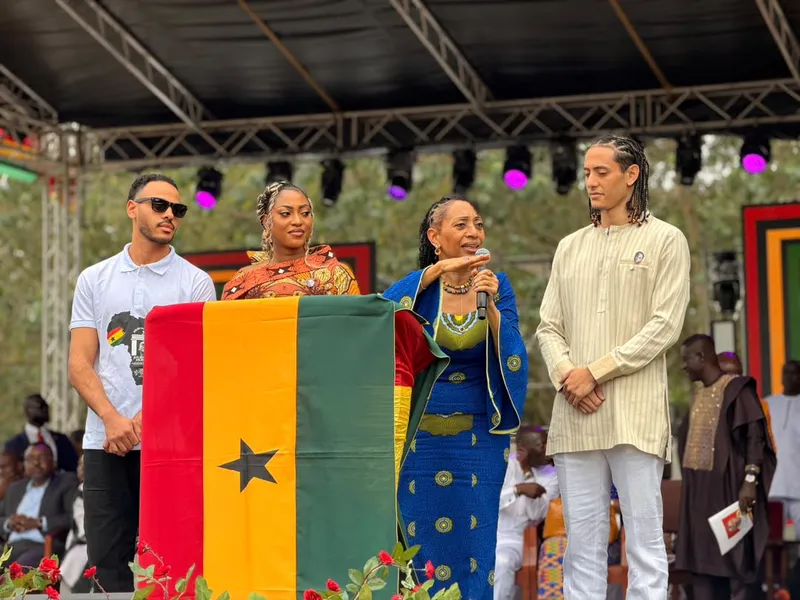 ‘We’ve come back to make sure our father's ideas never die’ – Nkrumah family
 Ghana Jollof: Akosua Manu appeals to Naana Jane to use her influence to free Sal...
 Yellow fever confirmed in Sissala East after 21 mysterious deaths
 Kenyasi man allegedly attacked by prison officers and inmates over yam theft cla...
 Germany’s far-right AfD makes strong gains in two state elections
 Savannah Regional Minister, IGP Yohuno visit Gbindabuor following lynching of po...
 Jehovah's Witnesses make blood component decisions a matter of personal conscien...
 Road contractors fed on contracts for years without completing projects – Alhass...
 Ghana Jollof saga: ‘She has no right to do what she’s doing’ – Inusah Fuseini


