




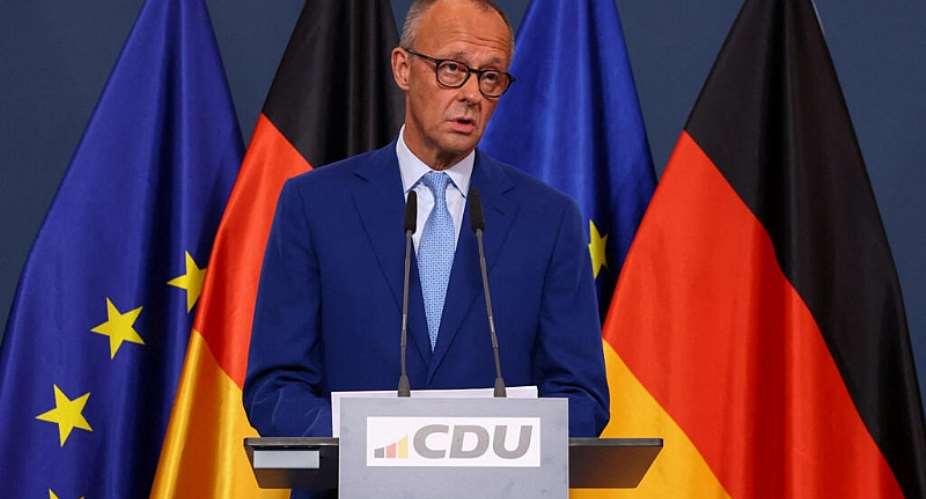
Exit polls by public broadcaster ARD on Sunday night indicated that Metz's centre-right CDU came in with just 5.5 percent percent in Mecklenburg-Western Pomerania.
It's the lowest result since World War II for the party in any state, with the party barely crossing the threshold to enter the state parliament.
The anti-migration, Russia-friendly Alternative for Germany (AfD) party was set to win 37 percent, ahead of the centre-left Social Democrats (SPD) on 35.5 percent.
Merz acknowledged the CDU's result as a “disaster” but struck a defiant note, rejecting any retreat from his government's reform agenda.
"The reforms have to come," he said. "I am taking on this responsibility, because I want to move our country forward."
In Berlin, the CDU was projected to come in second with 20 percent, behind hard-left Die Linke (the Left) at 24.5 percent, according to ARD's exit poll.
The AfD also gained in strength in Berlin, hitting 16 percent, according to exit polls. Die Linke (the Left) party top candidate Elif Eralp reacts as exit polls put her party in the lead in state elections in Berlin.
French far right keeps guarded silence over AfD Germany triumph
Weakened authority
Merz's authority was already damaged by CDU's stinging defeat to AfD in 6 September election in the small eastern state of Saxony-Anhalt.
That result shocked many Germans who had believed their country had developed an immunity to nationalism and assertions of racial superiority after confronting the horrors of its Nazi past through education and laws to outlaw persecution.
Merz, 70, became Germany's leader 16 months ago with promises to turn around an economy that has barely grown in years, but has failed to lift a sullen national mood and has himself become deeply unpopular.
The strong showing of AfD in the Saxony-Anhalt election, where it has its best chance yet of forming the country's first far-right regional government since World War II, has further weakened the chancellor's standing on the national level.
In the past two weeks there have been calls within his own party to replace him as chancellor, although no top-level allies have called publicly for his departure, and many have warned against “personnel debates".
Apparently anticipating a tough post-election period, Merz abandoned a planned trip to New York next week to attend the UN General Assembly.
Despite the setbacks, he has repeatedly said that he's determined to stay on and finish his term as chancellor.
(with newswires)


 Mysterious illness leaves children struggling to walk, hear in Mafi Kope
 ‘We’ve come back to make sure our father's ideas never die’ – Nkrumah family
 Ghana Jollof: Akosua Manu appeals to Naana Jane to use her influence to free Sal...
 Yellow fever confirmed in Sissala East after 21 mysterious deaths
 Kenyasi man allegedly attacked by prison officers and inmates over yam theft cla...
 Germany’s far-right AfD makes strong gains in two state elections
 Savannah Regional Minister, IGP Yohuno visit Gbindabuor following lynching of po...
 Jehovah's Witnesses make blood component decisions a matter of personal conscien...
 Road contractors fed on contracts for years without completing projects – Alhass...
 Ghana Jollof saga: ‘She has no right to do what she’s doing’ – Inusah Fuseini


