




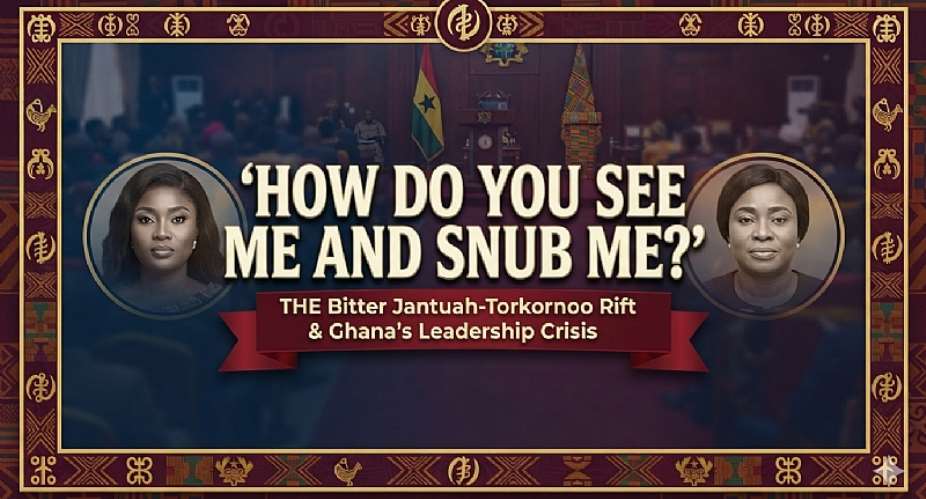
In a thriving constitutional democracy, the public conduct of national figures serves as a mirror for citizens, reflecting either the maturity of state institutions or the decay of leadership discipline. The recent explosive revelations by Presidential Staffer Nana Yaa Jantuah regarding her fractured relationship with the former Chief Justice, Gertrude Torkornoo, have sent shockwaves across Ghana's political landscape. Expressing her deep-seated frustration with the poignant question, "How do you see me and snub me?", Jantuah exposed a deeply deteriorated friendship that has crossed over into solemn, official state functions. This high-profile fallout marks a toxic intersection between private grievances and public office, serving as a stark reminder of what the legendary Abraham Lincoln once observed: "Nearly all men can stand adversity, but if you want to test a man's character, give him power."
When leaders allow the heavy coat of power to blind them to basic human courtesy, they risk reducing sacred national institutions into playgrounds for personal vendettas. As the Member of Parliament for Sannerigu, Hon. A.B.A. Fuseini, famously warns us in our rich traditional wisdom, "The man who allows a small insect to stay in his garment should not complain when he is bitten in public." By allowing the small insect of personal malice to infect public gatherings, our leadership class is setting a highly dangerous precedent for ordinary Ghanaians.
The Anatomy of a Broken "Brotherhood": The Facts of the Fallout
- From Trusted Friends to Fierce Foes: Nana Yaa Jantuah openly disclosed that she and the former Chief Justice once shared a close, cordial relationship. This bond has completely eroded over time due to irreconcilable personal and professional differences.
- Calculated Public Snubbing: Jantuah accused Justice Torkornoo of weaponizing her high office to inflict deliberate disrespect in public arenas. She specifically recounted painful instances where the former Chief Justice intentionally ignored or snubbed her greetings, even during an official, solemn National Peace Council function.
- Drawing the Irreversible Battle Lines: Frustrated by what she perceived as repeated, calculated slights, Jantuah stated that she reached a breaking point. Left with no choice but to protect her dignity, she reciprocated the cold treatment, announcing to the world that the "battle lines" had been officially drawn.
- The Boiling Political Undertone: This personal rift deepens against a backdrop of severe political warfare. Jantuah has been highly critical of Torkornoo following her controversial tenure and subsequent exit. She has previously accused the jurist of "politicizing" her legal battles by aligning exclusively with NPP legal counsel and publicly labeling her demeanor as "fake" during a national constitutional crisis.
The Weight of Leadership: Proverbial and Scriptural Truths
To fully understand the gravity of this dispute, one must look at both the scriptures and the timeless wisdom of our ancestors. When state officials use state platforms to trade silent treatments and hostile glances, they violate the divine principles laid out in Proverbs 16:18, which reminds us that "Pride goes before destruction, a haughty spirit before a fall." True leadership does not stomp its feet or turn its back; true leadership bows in service. Nelson Mandela captured this global standard perfectly when he noted, "Modesty and humility are the true hallmarks of a great leader."
When a public officer of high repute ignores a greeting at a peace gathering, it defeats the very purpose of the gathering. Hon. A.B.A. Fuseini would describe this counterproductive behavior with the brilliant Dagomba proverb: "You cannot use a basket to fetch water and then blame the river for your empty container." You cannot seek peace or institutional order while using the leaking basket of arrogance and petty malice. If you carry pride into public service, you will always leave the citizens thirsty for real leadership.
National Recommendations: The Way Forward for Ghana
- Separate the Personal from the Professional: Public officials must cultivate the strict discipline required to lock away private grievances before stepping into state functions. Personal animosity must never stain the robes of office or the sanctity of executive and judicial duties.
- Prioritize Emotional Intelligence: Holding power demands immense emotional maturity. Leaders must manage their reactions in public spaces, recognizing that a public display of anger or disrespect degrades the office they occupy more than the person they are fighting.
- Protect Institutional Sanctity: High-ranking officials are the physical embodiments of the state. When they trade public insults or snub one another, it severely weakens the average citizen’s trust in the integrity, neutrality, and fairness of our highest institutions.
- Embrace Private Conflict Mediation: Instead of letting disputes fester until they explode into media call-outs and public embarrassment, leadership figures must utilize quiet, private mediation channels to settle their differences.
The public fallout between Nana Yaa Jantuah and former Chief Justice Gertrude Torkornoo is far more than a passing political drama; it is a profound national wake-up call. When leaders allow personal friction to manifest as public hostility, they distract from national progress and erode the social fabric of our communities. As Ghana navigates its complex, polarized socio-political landscape, our leaders must remember that power is transient, but the legacy of character remains. For a nation deeply rooted in the cultural values of community, respect, and elder wisdom, public decorum must remain non-negotiable. Let our leaders heed the ancient Dagomba warning: "The firewood you gather when you are young and strong is the very fire you sit by to warm yourself when you are old." May our leaders gather the firewood of peace, humility, and mutual respect today, so our nation does not burn tomorrow.
✍️ Submitted by:
Retired Senior Citizen
For and on behalf of all Senior Citizens of the Republic of Ghana 🇬🇭
Teshie-Nungua, Accra
📧 [email protected]


 Mysterious illness leaves children struggling to walk, hear in Mafi Kope
 ‘We’ve come back to make sure our father's ideas never die’ – Nkrumah family
 Ghana Jollof: Akosua Manu appeals to Naana Jane to use her influence to free Sal...
 Yellow fever confirmed in Sissala East after 21 mysterious deaths
 Kenyasi man allegedly attacked by prison officers and inmates over yam theft cla...
 Germany’s far-right AfD makes strong gains in two state elections
 Savannah Regional Minister, IGP Yohuno visit Gbindabuor following lynching of po...
 Jehovah's Witnesses make blood component decisions a matter of personal conscien...
 Road contractors fed on contracts for years without completing projects – Alhass...
 Ghana Jollof saga: ‘She has no right to do what she’s doing’ – Inusah Fuseini


