




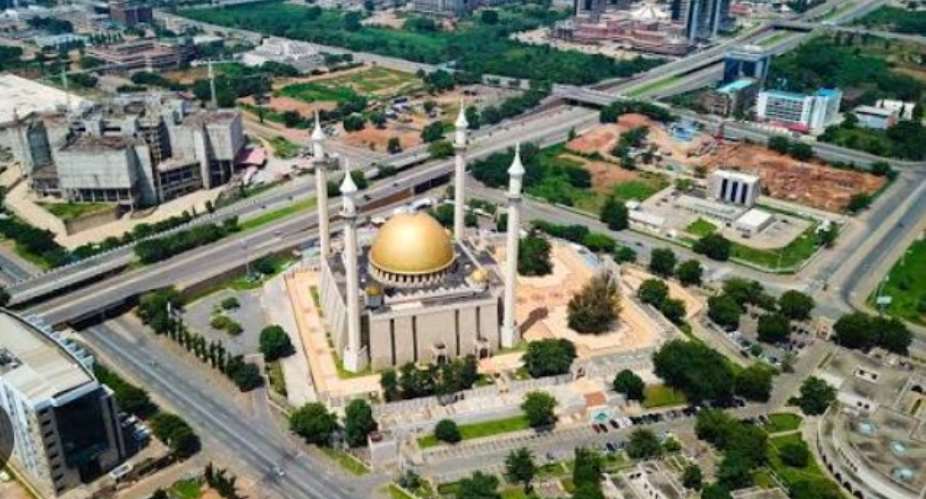
Fifteen Nigerian state governments spent a combined N3.47 billion roughly $2.61 million at the official exchange rate on generator maintenance over a six-month period, according to a report by The Whistler, underscoring the scale of public money still being funneled into backup power as the country's electricity crisis persists.
Lagos and Jigawa states accounted for the highest spending, jointly recording N1.63 billion (about $1.23 million) a striking pairing given the wide gap in the two states' budget sizes, with Lagos being Nigeria's largest sub-national economy and Jigawa one of its smaller ones.
At the other end of the scale, Borno State recorded the lowest spending, at just N36.41 million (roughly $27,390), a difference that likely reflects some combination of budget constraints, security conditions in the state, and possibly a smaller footprint of government facilities relying on generators.
The figures add to a growing body of evidence on how deeply Nigeria's unreliable grid supply has embedded generator dependence into public administration itself, not just households and businesses.
Independent estimates of the national picture have put Nigerians' combined annual spending on petrol and generator maintenance in the range of $10–14 billion, according to reports by Sustainable Energy for All and the International Monetary Fund figures that dwarf the country's education and health budgets combined.
Against that backdrop, state government-level generator spending, even in the billions of naira, represents a comparatively small but symbolically important slice of a much larger national cost of power failure.
The report lands amid renewed public frustration over Nigeria's electricity supply, with the front page noting the story under an "Electricity Crisis" tag suggesting The Whistler is framing state generator spending as part of a broader pattern of governments absorbing costs that ordinary Nigerians face at a smaller scale in their own homes and businesses.
Dollar conversions use the official NFEM rate of ≈N1,329/$1 (mid-September 2026); at the parallel-market rate (≈N1,390–1,410/$1), the totals would run slightly lower about $2.46–2.50 million for the full N3.47bn.
Mustapha Bature Sallama
Medical/ Science Communicator,
Private Investigator, Criminal Investigation and Intelligence Analysis,
International Conflict Management and Peacebuilding. ( USIP)
[email protected]
+233555275880
Sources:
The Whistler (Nigeria), front-page report, "15 States Spent N3.47bn On Generator Maintenance In Six Months," September 18, 2026 edition (full details on page 14)
Exchange rate: Central Bank of Nigeria (CBN) Nigerian Foreign Exchange Market (NFEM), official rate ≈N1,329.44/$1, as reported via TechEconomy, September 11, 2026
Parallel-market rate reference: Aboki Forex / TalentBase market trackers, ≈N1,390–1,410/$1, as reported via
AllAfrica/TechEconomy, early-to-mid September 2026
Background context on national generator/fuel spending: Sustainable Energy for All (SEforALL), "Beyond
Gensets: Advancing the Energy Transition in Lagos State"; International Monetary Fund (IMF) estimates cited via BusinessDay Nigeria

 November 7: Cedi sells at GHS12.25 on forex market, GHS11.65 on BoG interbank
 'It is not fair for the police to review their own decisions' – Bright Simons on...
 Bright Simons questions TraffiTech-GH revenue model, demands transparency in con...
 Akufo-Addo's former counsel Kow Essuman eyes Ablekuma West parliamentary seat
 Moscow strikes Kyiv as Ukraine prepares for talks with Russia and the US
 Ousted Paraguay president under house arrest after bank collapse
 Trump announces immigration hardliner Stephen Miller as new chief of staff
 Pope Leo arrives in Uruguay for first stop on 12-day South America tour
 No proxy voting, strict 7am to 5pm schedule – NDC outlines measures for Northern...
 Efya marries Nigerian singer Tomi Thomas in traditional ceremony


