




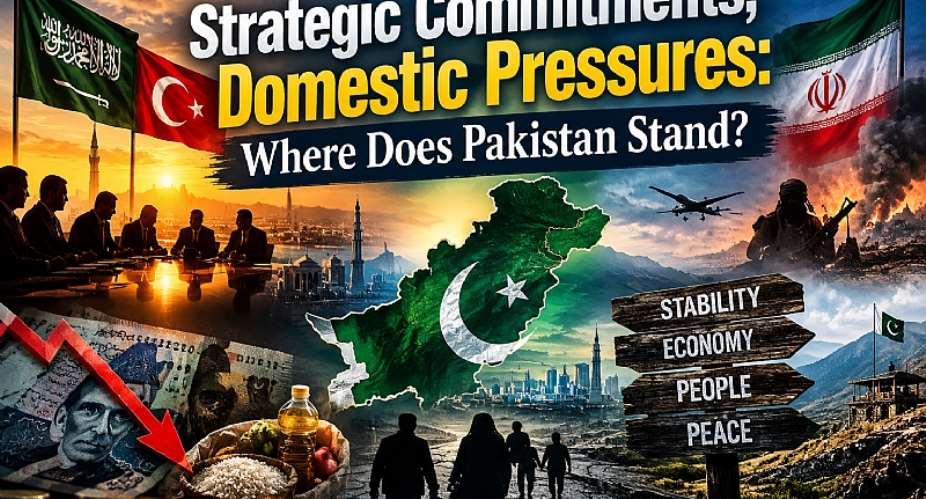
Middle East war and its post-war shocks continue to haunt many developing countries, but Pakistan is facing a particularly complex challenge. Islamabad has gradually moved from being a mediator to a facilitator and, increasingly, towards an anchoring role in the emerging regional security architecture. The Makkah Joint Defence Agreement with Saudi Arabia and Türkiye has created new strategic responsibilities for Pakistan. Yet, while the country expands its diplomatic commitments abroad, a fundamental question remains: how effectively is it protecting the economic interests of its own citizens?
What does the Makkah Accord actually put on the dining table of an ordinary Pakistani? Defence diplomacy may strengthen strategic deterrence, but it does not automatically improve purchasing power. As inflation, currency depreciation and economic uncertainty continue to pressure households, diplomatic achievements risk appearing disconnected from daily realities. Strategic partnerships must therefore translate into economic stability, investment, employment and energy security. Otherwise, diplomacy may magnify strategic ambitions while domestic hardships remain outside the frame.
Pakistan’s internal political situation presents another serious challenge. Opposition mobilisation, government countermeasures and an increasingly confrontational political environment continue to widen the distance between citizens and decision-makers. Balochistan remains troubled by a long-running insurgency and deep political grievances, while Khyber Pakhtunkhwa faces persistent security and governance pressures. In Azad Jammu and Kashmir, public discontent has also highlighted the importance of responsive administration and political engagement.
The immediate requirement is not merely greater coercive capacity. Pakistan needs political stability, institutional trust, mutual respect and a willingness to listen to the public. When citizens and state institutions begin viewing one another through suspicion and competing perceptions, a dangerous vacuum emerges. If this distance continues to grow, further public mobilisation and instability may become increasingly difficult to manage.
The diplomatic front is equally complicated. Reports of Pakistan’s expanding defence and technological engagement with American drone manufacturers indicate a changing pattern in Pakistan-US relations. Such developments may create opportunities for defence modernisation and technological cooperation. However, every strategic opening also carries obligations, expectations and geopolitical calculations. Islamabad must ensure that new partnerships serve clearly defined national interests rather than creating commitments that could later restrict its diplomatic flexibility.
The Houthi crisis demonstrates the sensitivity of Pakistan’s position. Islamabad has expressed concern over attacks threatening Saudi security while also maintaining diplomatic channels with Iran. Pakistan’s role as a Saudi defence partner and its efforts to facilitate regional dialogue require careful balancing. If its security commitments are interpreted as automatic participation in every regional confrontation, Pakistan could move from mediator to combatant without deliberately choosing that path.
Saudi Arabia has legitimate security concerns regarding attacks on its territory and critical infrastructure. Iran, meanwhile, maintains its own regional relationships and security calculations. The Houthi movement’s activities and alleged Iranian support remain subjects of regional dispute and international concern. However, Pakistan must distinguish between diplomatic solidarity, collective defence obligations and direct military involvement.
A useful comparison can be drawn with Pakistan’s own security concerns. If an external attack threatened Pakistan, Islamabad would reasonably expect its strategic partners to respect their commitments. Yet that principle does not necessarily mean that every internal conflict, insurgency or cross-border confrontation involving an allied state automatically becomes a collective military responsibility.
Iran’s engagement with Gulf states and Pakistan’s continuing diplomatic contacts with Tehran suggest that space for de-escalation still exists. Regional security cannot be built exclusively through military deterrence. Negotiation, communication and confidence-building measures remain essential. At the same time, concerns regarding Iranian influence over regional armed groups cannot simply be dismissed. Pakistan’s challenge is to acknowledge the security concerns of its partners without becoming trapped between competing regional blocs.
Pakistan undoubtedly has an important role to play as a facilitator between Iran and Saudi Arabia. However, that role must be guided by clearly defined national interests and respect for sovereignty. Intervention in another state’s internal affairs can create precedents that become difficult to control. Islamabad must therefore distinguish between facilitating dialogue and assuming responsibilities that could expose the country to unnecessary strategic risks.
Meanwhile, Pakistan’s economic obligations cannot be postponed. IMF commitments, fiscal pressures, energy insecurity, unemployment and declining household purchasing power require immediate and sustained attention. A country struggling to provide economic relief to its citizens must carefully assess the financial and strategic costs of every external commitment.
Ultimately, Pakistan’s strategic struggle is unfolding on two interconnected fronts: the diplomatic battlefield abroad and the economic-political battlefield at home. Defence agreements may strengthen national security, but national security is meaningful only when citizens also enjoy economic security, political confidence and social stability.
Pakistan’s foreign policy must therefore protect its strategic partnerships without losing sight of the people those partnerships are ultimately meant to serve. The real measure of diplomatic success will not be the number of agreements signed or the strength of external alliances, but whether Pakistan can convert its strategic position into stability, prosperity and dignity for its own citizens.


 NGSJF petitions Ghana Airports, IGP over Adwoa Safo travel records and 2021 parl...
 Transport Minister directs DVLA to deepen inter-agency collaboration towards enf...
 Famers at Anloga-Avume call for buyers, govt intervention as tomatoes rot in far...
 2026 World Cup: 'Minister’s driver, Chief Director’s secretary still in US' – Mi...
 Ho Central NPP threatens retaliation over demolition of party office fence wall ...
 Trump says 'major progress' made toward US military base in Poland
 US aid cuts are killing Kenyan sex workers
 37 suspected illegal miners die in custody in central Nigeria
 'When I go to sleep, I know I haven’t done anything wrong' – Finance Minister
 Trump threatens EU with tariffs over 'laughable' Canada association plan


