




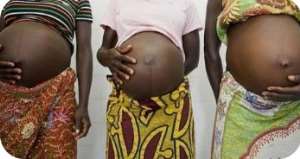
The Ghana Health Service (GHS) has released disturbing new figures showing that 53,415 adolescent pregnancies were recorded at health facilities nationwide between January and July 2026 including 1,501 cases involving girls between the ages of 10 and 14.
The numbers
The data, drawn from the GHS routine Health Information System, was presented by Sharifa Mohammed, Programme Manager for Adolescent Health and Development at the GHS, during a National Multisectoral Dialogue on the Reduction of Teenage Pregnancy held in Accra.
Mohammed said the seven-month total translates to an average of roughly 7,000 to 7,300 adolescent pregnancies recorded every month among girls aged 15 to 19, with the trend on pace to approach Ghana's estimated annual national burden of more than 100,000 adolescent pregnancies.
The regional breakdown points to sharp disparities. The Savannah Region recorded the highest prevalence nationally at 25.9 percent, while the Upper East Region logged more than 2,400 adolescent pregnancies in just the first five months of the year, with around 520 of those cases concentrated in the Bongo District alone.
Age and education both shape the risk. Girls aged 18 to 19 accounted for 28.2 percent of adolescent pregnancy cases, compared to 8.1 percent among those aged 15 to 17 but it is the 1,501 cases among girls aged 10 to 14 that have drawn the sharpest concern, since pregnancies at that age fall well below Ghana's legal age of consent and raise direct child protection and child sexual abuse questions rather than only reproductive health ones.
Education also correlates strongly with risk: girls with no formal schooling recorded a pregnancy rate of 34.3 percent, more than double the 12.3 percent rate among those with secondary education or higher.
These figures build on longer-running national data. The 2022 Ghana Demographic and Health Survey found that 15.2 percent of girls aged 15 to 19 had been pregnant at some point, and Ghana Statistical Service data released around World Population Day in mid-2026 reaffirmed that roughly 15 percent of girls in that age bracket have experienced pregnancy, with about 11 percent having already given birth.
Beyond a health statistic
Naa Dzama, founder of the Girl Unlimited Foundation, argued on Asaase Radio that the figures should prompt harder questions than a health briefing alone can answer.
She said the scale of the numbers and particularly the cases involving girls as young as 10 raises the question of who is impregnating these children, and what these girls actually know about their bodies and their reproductive health before it is too late to matter.
Clara Nyarkoah Anim, Programme Manager at MSI Reproductive Choices Ghana, framed adolescent pregnancy as a problem sitting at the intersection of education, access to information and services, gender and social norms, and poverty meaning no single intervention, health-sector or otherwise, is likely to resolve it on its own.
What is being done
Since 2017, the GHS has run a "Safety Net" programme offering pregnant adolescents maternal and child health services, sexual and reproductive health education, psychosocial support, and referral to social protection programmes.
Where circumstances permit, the programme works with the Ghana Education Service to support pregnant adolescents to return to school; those unable to resume formal education can instead be linked to organisations offering vocational and livelihood training.
Mohammed said the GHS has reached more than 310,000 young people with sexual and reproductive health information so far this year, and around 54,000 pregnant adolescents with direct support services.
The bottom line
A national count of over 53,000 adolescent pregnancies in seven months, with 1,501 of them involving children as young as 10, is not simply a data point for a health dialogue it is evidence of a child protection failure running in parallel with a public health one. The regional gaps, the strong link to school dropout, and the youngest cases in the data all point toward the same conclusion advocates have been repeating: closing this gap will take coordinated action across health, education, law enforcement, and social protection systems, not health messaging alone.
Mustapha Bature Sallama
Medical/ Science Communicator,
Private Investigator, Criminal Investigation and Intelligence Analysis,
International Conflict Management and Peacebuilding. ( USIP)
[email protected]
+233555275880
Sources
The Ghana Report, "GHS records more than 53,000 adolescent pregnancies in seven months" https://theghanareport.com/news/ghs-records-more-than-53000-adolescent-pregnancies-in-seven-months/
Adomonline, "GHS records more than 53,000 adolescent pregnancies in seven months" https://www.adomonline.com/ghs-records-more-than-53000-adolescent-pregnancies-in-seven-months/
Ghana Business News, "Ghana Health Service records more than 53,000 adolescent pregnancies in seven months" https://www.ghanabusinessnews.com/2026/09/16/ghana-health-service-records-more-than-53000-adolescent-pregnancies-in-seven-months/
YEN.com.gh, "Ghana Records Over 53,000 Teenage Pregnancies in 7 Months, GHS Data Shows" https://yen.com.gh/people/312048-ghana-records-53000-teenage-pregnancies-7-months-ghs-data-shows/
Asaase Radio, "Naa Dzama: Adolescent pregnancy is not just a health problem" https://asaaseradio.com/naa-dzama-adolescent-pregnancy-is-not-just-a-health-problem/
GhanaWeb, "15% of Ghanaian girls aged 15-19 have experienced pregnancy – GSS" https://www.ghanaweb.com/GhanaHomePage/NewsArchive/15-of-Ghanaian-girls-aged-15-19-have-experienced-pregnancy-GSS-2045361


 NGSJF petitions Ghana Airports, IGP over Adwoa Safo travel records and 2021 parl...
 Transport Minister directs DVLA to deepen inter-agency collaboration towards enf...
 Famers at Anloga-Avume call for buyers, govt intervention as tomatoes rot in far...
 2026 World Cup: 'Minister’s driver, Chief Director’s secretary still in US' – Mi...
 Ho Central NPP threatens retaliation over demolition of party office fence wall ...
 Trump says 'major progress' made toward US military base in Poland
 US aid cuts are killing Kenyan sex workers
 37 suspected illegal miners die in custody in central Nigeria
 'When I go to sleep, I know I haven’t done anything wrong' – Finance Minister
 Trump threatens EU with tariffs over 'laughable' Canada association plan


