




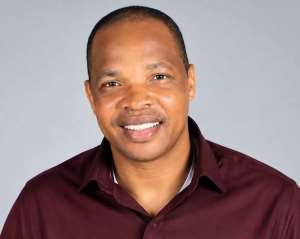
Johannesburg woke this week to a name it thought it knew well — Owen Ndlovu, the voice that once carried South Africa's football weekends into living rooms across the country — but this time attached to a headline no fan wanted to read. The 54-year-old former SABC sports presenter is dead, and the manner of his passing has done what few single incidents manage: it has stopped an entire nation mid-sentence.
What Happened
On the evening of Tuesday, 15 September, Ndlovu drove to a church in Katlehong, on Gauteng's East Rand, to pick up his wife, Portia, after a service. As she walked toward their parked Ford Raptor, three men — at least one of them armed — descended on the couple. Portia was shoved aside; her husband was forced into the back seat of his own vehicle, which was then driven off into the night.
By the next morning, residents of neighbouring Thokoza had made a grim discovery: a body, later confirmed to be Ndlovu's, dumped by the roadside with gunshot wounds. His Ford Raptor turned up separately, abandoned and partially stripped in Walkerville, Midvaal — the vehicle recovered, its owner not so fortunate.
His family confirmed the death publicly on Wednesday afternoon. Family spokesperson Eugene Mthethwa said they were still waiting on authorities to clarify the full circumstances, and asked, with the quiet dignity grief tends to demand, that the public respect their privacy while a postmortem proceeds to establish the precise cause of death. Gauteng police have opened an investigation and launched a manhunt for the three suspects; no arrests had been announced at the time of writing.
Who Owen Ndlovu Was
To an entire generation of South African sports fans, Ndlovu was a familiar fixture — a presenter and producer for the SABC, and a recognisable voice on Premier Soccer League radio coverage for years. But his relevance had, in recent times, stretched well beyond the commentary box. He had become an outspoken figure in the music industry, working with the advocacy group Artists United on issues of musicians' rights and royalty payments, and had been associated with initiatives such as the SABC's Summer Song of the Year.
That advocacy had, notably, put him at odds with the South African Music Rights Organisation (SAMRO). Ndlovu was a vocal critic of the body and its chief executive, Annabell Lebethe, and was reportedly involved in a long-running dispute that included a harassment case — since dismissed — and a court appearance that had been scheduled in connection with the matter. It is a detail that has not escaped South Africans online, some of whom have raised questions about the timing of his death; SAMRO had not responded to media requests for comment as of this writing, and nothing has emerged from the ongoing police investigation to substantiate a connection between the dispute and the killing.
The Reaction
Tributes arrived quickly and from unexpected corners. Fellow journalist Lelo Mzaca, writing in the Mail & Guardian, remembered him as a man whose light shone brightly while it lasted. Radio personality Sizwe Dhlomo reacted publicly with visible shock when the news broke. Portia Ndlovu, meanwhile, spoke of the toll on her family in stark, personal terms, describing the situation as devastating for her and her children.
Beyond the personal grief, Ndlovu's death has folded into a wider and more uncomfortable national conversation. South Africa's crime statistics for April to June this year recorded more than 5,000 murders and close to 4,000 carjackings nationwide — a scale of violence that Acting Police Minister Firoz Cachalia has acknowledged is being driven, in part, by organised and heavily armed criminal networks. Ndlovu's killing, unfolding as it did in front of his wife outside a church, has also fed into public discourse around gender-based violence and the particular vulnerability of women who witness such attacks on their partners, in a country where femicide rates remain far above the global average.
What Comes Next
For now, the facts on the ground are these: a well-known public figure, taken by force in front of his wife, found dead the following morning; a vehicle recovered but stripped of value; a family in mourning and awaiting answers; and a police investigation that has, as yet, produced no arrests. Whether the motive was a hijacking that went fatally wrong, or something connected to the disputes Ndlovu had waded into in his post-broadcasting career, remains for investigators — not speculation — to determine.
What is certain is that South Africa has lost a familiar and versatile public voice, and that his death has once again forced the country to confront the everyday arithmetic of violent crime that so many of its citizens live with, but few expect to claim someone so visible.
Chief Tutu Baffour Asare Brownsy Williams writes on current affairs for Modern Ghana.

 NGSJF petitions Ghana Airports, IGP over Adwoa Safo travel records and 2021 parl...
 Transport Minister directs DVLA to deepen inter-agency collaboration towards enf...
 Famers at Anloga-Avume call for buyers, govt intervention as tomatoes rot in far...
 2026 World Cup: 'Minister’s driver, Chief Director’s secretary still in US' – Mi...
 Ho Central NPP threatens retaliation over demolition of party office fence wall ...
 Trump says 'major progress' made toward US military base in Poland
 US aid cuts are killing Kenyan sex workers
 37 suspected illegal miners die in custody in central Nigeria
 'When I go to sleep, I know I haven’t done anything wrong' – Finance Minister
 Trump threatens EU with tariffs over 'laughable' Canada association plan


