




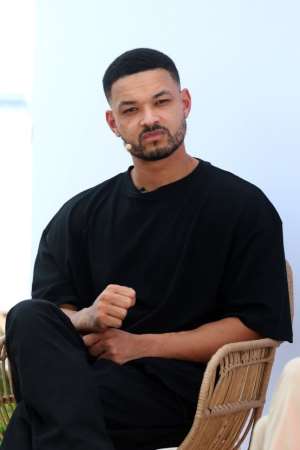
There is a particular kind of arrogance that only serious money can afford, and Steven Bartlett has just displayed it in front of the entire world. On September 14, in a room in New York packed with the internet's most photogenic millionaires, the "Diary of a CEO" host and his new partners at Authentic Brands Group did not simply announce a business deal. They announced a thesis: that the boy or girl with a ring light and a following of five million people is not a content creator waiting to be discovered by a real company. They are the real company. And they are prepared to spend up to $400 million proving it.
This is not a small claim. Gucci was built over a century by Florentine leather craftsmen. Chanel was built on the particular genius of one bereaved, ferociously disciplined French orphan. What Bartlett and Authentic are proposing is that in the year 2026, a brand of that scale and permanence can be assembled around a person who has never sewn a stitch, sat in a design atelier, or run a factory floor — provided that person commands enough attention, and provided the right machinery is built underneath them. It is either the most honest reading yet of where culture and commerce are heading, or it is the single most expensive act of hubris the creator economy has produced. Ghanaians who have watched their own influencers move from Instagram captions to clothing lines and back to obscurity within eighteen months have every right to ask which one it will be.
What Exactly Was Announced
The venture is called OBSN — pronounced "Obsession" — and it is a joint undertaking between Bartlett's holding company, Steven.com, and Authentic Brands Group, the licensing conglomerate that already owns or manages more than fifty brands, including Reebok, Champion, Brooks Brothers and Sports Illustrated, and that oversees the commercial afterlives of names like Marilyn Monroe, Muhammad Ali and Elvis Presley. Together, the two companies say they intend to deploy up to $400 million into creator-led businesses over the coming years, using OBSN as the vehicle at the centre of that strategy.
Bartlett has framed the logic plainly. "The next generation of global media companies and consumer brands will be built around creators," he said at the launch. "But a global audience of millions is not yet a company, and it certainly should not be the ceiling of a creator's potential." Authentic's president and chief executive, Matt Maddox, echoed the sentiment from the other side of the table, describing creators as forces who are "redefining media" and who are "poised to become multigenerational brands in their own right."
The division of labour between the two partners is deliberate and, frankly, sensible on paper. Steven.com — which now employs more than one hundred people across London, Manchester, Los Angeles and New York, and whose flagship podcast has crossed 1.5 billion YouTube views and 19 million subscribers — will handle media, audience growth, technology and data. Authentic, a company that drives more than $38 billion in annual systemwide retail sales across over 150 countries, will supply what most creators lack entirely: the unglamorous machinery of manufacturing, licensing, retail distribution and global scale. At the heart of the venture sits a media property called Obsession, already live with more than a million Instagram followers, which the partners describe as the intended "definitive voice" of the creator economy, with plans to expand into festivals, awards ceremonies and new content formats.
It is worth being precise about one thing the coverage has occasionally blurred: the $400 million is not a cheque that has already been written. It is, by the companies' own description, a target for deployment "over the coming years," with no creators named yet and no firm timeline disclosed. What was launched on September 14 was the platform and the intention. The spending itself is a promise still to be kept.
Why Bartlett, of All People, Is Making This Bet
Bartlett is not a passive observer of the problem he claims to be solving. By his own account, the idea for OBSN grew out of his personal frustration as his own profile expanded — various agencies and management firms, he has said, kept pressuring him to fragment his growing business into separate entities for podcasting, for merchandise, for investment, for media. The more he split himself apart to satisfy the traditional industry's categories, the less Steven.com felt like one coherent brand with one coherent identity. OBSN, in that sense, is Bartlett externalising a lesson he says he learned the hard way: that the industry does not yet have a template for a person who is simultaneously a media company, a product company and a cultural voice, and that someone needs to build one before the big legacy players build a worse version of it for creators from the outside.
Authentic's motivation is more straightforward, and rooted in decades of experience translating recognisable names into shelf-space. This is the same company that revived Reebok, propped up the licensing empire around Shaquille O'Neal, invested in Drake's OVO, and has spent years proving that a famous name, properly managed, can outlive the person or the moment that made it famous. What Authentic is betting is that the same playbook it has run on dead celebrities and faded sports brands can be run, faster and more profitably, on living creators who already have an audience paying attention to them every single day — an audience traditional celebrity licensing has to work much harder to manufacture from scratch.
The Steel-Man Case Against It
It would be intellectually lazy — and, worse, dishonest to my readers — to present this as an obvious triumph and stop there. There are serious people in this industry who think ventures like OBSN are chasing a mirage, and their case deserves to be made in full before I offer my own judgment.
The first problem is oversaturation. In the last three years alone, Logan Paul and KSI launched the energy drink Prime, Lionel Messi launched Mas+, and Alex Cooper launched Unwell — three enormous audiences all racing into the same crowded shelf space that Gatorade once dominated alone. Analysts who track this space have pointed out plainly that either the market for such products gets carved into ever-smaller slices, or it simply becomes harder for any single creator brand to ever become the category leader the way Gatorade did. The same crowding is visible in clean beauty, in "better-for-you" snacks, and in fast fashion. A following of millions used to guarantee a head start. Increasingly, it merely guarantees company.
The second problem is consumer fatigue. The audiences who once treated a creator's product launch as an event now treat it with something closer to suspicion — sobered by a decade of direct-to-consumer hype cycles that promised revolution and delivered, in many cases, an overpriced hoodie. Investors, too, are more clear-eyed than they were five years ago that a creator's massive reach does not automatically translate into a business that survives its first real supply-chain crisis.
The third problem is craft. Fashion journalists who have studied the wave of influencer-founded labels have identified two recurring failures: shaky product quality — threads that unravel, sizing that shifts — that becomes a serious liability the moment a brand tries to scale beyond its most forgiving fans; and what might be called the signalling paradox, in which a creator's entire commercial value rests on personal, recognisable taste, a well that eventually runs dry unless real design talent is brought in from outside. Even the successes carry warnings. The British influencer Victoria Magrath publicly abandoned her own sustainable fashion line in 2021 after months of preparation, citing manufacturing chaos and logistics she had not been equipped to handle, and choosing, in her own words, to "cut her losses" rather than pour more money into a dream that had outgrown her actual capacity. If a trained fashion blogger with a devoted following can be defeated by a factory floor, the same fate plainly awaits some share of whoever OBSN chooses to back.
Taken together, this is not a frivolous objection. It amounts to a serious argument that attention and capital, however large, cannot manufacture the one thing every enduring house — Gucci included — actually took decades to earn: trust that survives past the trend that built it.
Why I Still Think Bartlett Has the Better Half of the Argument
And yet. Having laid out the strongest case against OBSN as fairly as I can, I find myself unconvinced that it defeats the underlying bet.
The counterargument's own examples work against it more than they realise. Skims, built around Kim Kardashian's personal following, is valued near $1.6 billion. Glossier, built by a beauty blogger who understood her own audience better than any market-research firm could, is worth well over a billion dollars in its own right. These were not lucky accidents. They succeeded precisely because someone eventually paired the creator's cultural authority with genuinely professional infrastructure — manufacturing, quality control, retail relationships — rather than expecting the creator to build all of that alone from a bedroom studio. That is exactly the gap OBSN is designed to close. Authentic is not a fly-by-night licensing shop chasing a trend; it is the company that has spent years quietly proving it can turn a name into a durable retail machine at global scale. Pairing that machine with a creator of Bartlett's stature, rather than asking every ambitious young creator to reinvent Authentic's fifty-brand playbook from scratch, is not hubris. It is simply importing competence into an industry that has, until now, mostly lacked it.
What This Means, Seen From Accra
For a Ghanaian readership, this story should not be read as distant gossip about wealthy Westerners in a New York ballroom. It should be read as an early warning and an early opportunity in the same breath.
Our own creator economy — from the TikTok comedians of Kumasi to the fashion and beauty voices building audiences across Accra, Takoradi and the diaspora corridors of London and Toronto — is following the exact same arc that American and British creators walked five years ago, only compressed and faster. We have already watched several homegrown influencers rush a clothing line or a skincare product to market on the strength of followers alone, without the manufacturing discipline, the quality control, or the patient capital that this very column has just described as the difference between Skims and a forgotten Instagram store. The lesson from OBSN is not "get famous and the brand follows." The lesson is that fame is raw material, not a finished product, and that the creators who will actually build the next Gucci — whether in Hollywood or in Osu — will be the ones who pair their following with real operational partners, real quality standards, and real patience, rather than the ones who mistake a viral moment for a business plan.
Author's Note
I have spent enough years watching Ghanaian talent rise on the back of genuine gifts, only to stumble on the unglamorous mechanics of actually running a company, that I refuse to romanticise this story or dismiss it out of hand. What Bartlett and Authentic are attempting is genuinely ambitious, genuinely risky, and — if it works even partially — genuinely instructive for every creator on this continent who has ever wondered what comes after the follower count. I will be watching which creators OBSN actually signs, and how honestly the two companies report back when the market inevitably tests them. That is the story worth returning to. This is merely the opening chapter.
About the Author
Chief Tutu Baffour Asare Brownsy Williams is an author, filmmaker, and opinion columnist writing for Modern Ghana, with a readership spanning Ghana and its diaspora communities across the United Kingdom, the United States, Canada and Germany. He is the founder of Brownsy Silva Company, a multi-disciplinary creative platform spanning novels, film, engineering commentary and cultural criticism. He is currently a student at Accra Technical University, where his studies span software engineering and mechanical engineering — a dual grounding in technology and industry that regularly informs his commentary on global business, media and the creator economy.


 NGSJF petitions Ghana Airports, IGP over Adwoa Safo travel records and 2021 parl...
 Transport Minister directs DVLA to deepen inter-agency collaboration towards enf...
 Famers at Anloga-Avume call for buyers, govt intervention as tomatoes rot in far...
 2026 World Cup: 'Minister’s driver, Chief Director’s secretary still in US' – Mi...
 Ho Central NPP threatens retaliation over demolition of party office fence wall ...
 Trump says 'major progress' made toward US military base in Poland
 US aid cuts are killing Kenyan sex workers
 37 suspected illegal miners die in custody in central Nigeria
 'When I go to sleep, I know I haven’t done anything wrong' – Finance Minister
 Trump threatens EU with tariffs over 'laughable' Canada association plan


