




There is a peculiar kind of danger that does not announce itself with a closed border or a cancelled visa. It hides instead behind the reassuring fact that an airport is still open, that a flight schedule still exists, that a destination is still, technically, reachable. Moscow today sits squarely inside that danger zone and African travelers who assume "reachable" means "safe" are making a costly miscalculation.
A Sky Still Open, But No Longer Ordinary
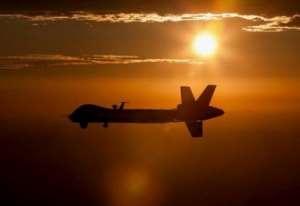
In late June this year, dozens of drones aimed at the Russian capital were intercepted within a single day, forcing all four airports serving Moscow to briefly halt operations. That the airports reopened soon after tells only half the story. The more important half is that the region's air-defense systems are now a routine, active feature of the airspace civilian jets share not a distant, theoretical hazard confined to a war map.
The European Union's aviation safety regulator has kept its warning in force well into 2027, urging operators to avoid Russian airspace west of a defined line, Moscow included, regardless of altitude. Its reasoning is blunt: the risk of a civilian aircraft being mistaken for a hostile target, the unpredictable timing of air-defense activation, and interference with satellite navigation systems used for safe flight.
When a Continental Carrier Blinks
For African audiences, the most telling data point isn't a European regulator's memo it's what an African airline actually did. In early September, Air Tanzania suspended its Dar es Salaam–Moscow route, citing a fresh risk assessment and insisting that safety could not be subordinated to commercial interest. Barely a week later, the route resumed.
Short-lived as the suspension was, it matters. This wasn't a Western carrier retreating from a market it barely serves; it was an African airline, flying African passengers, that judged the route unsafe enough to pause even briefly. When an operator with skin in the game hits pause to reassess, the ordinary passenger boarding that same route has every reason to ask the same question the airline just asked itself.
The Contradiction at the Heart of It
Moscow's official position is that civil aviation is functioning normally and that safety measures are constantly reinforced. Kyiv, meanwhile, has pressed the International Civil Aviation Organization to back a broader ban on flights through Russian airspace, arguing its own drone campaign compounds the danger for civilian traffic. Sitting between these two positions is the uncomfortable finding from European regulators: many of the recorded incidents occurred in airspace Russia had not bothered to close during drone attacks or air-defense activations.
That is the contradiction African travelers are being asked to fly into a state insisting all is well, while the agencies tracking the incidents describe a high-risk environment shaped as much by how the airspace is managed as by the drones themselves.
History Is Not Reassuring
Sceptics might ask whether any of this is more than worst-case speculation. It isn't. In 2014, Malaysia Airlines Flight MH17 was brought down over eastern Ukraine by a surface-to-air missile, killing all 298 aboard and investigators later found that 160 other commercial flights had crossed that same corridor on the very same day before it was finally shut. Just last year, the international body governing civil aviation formally concluded that Russia had failed to meet its obligations under air law in that disaster.
More recently, in December 2024, Azerbaijan Airlines Flight J2-8243 crashed near Aktau, Kazakhstan, killing 38 people, after Russian air defenses fired on it while targeting Ukrainian drones a fact Vladimir Putin himself later acknowledged, alongside an admitted malfunction in the defense system involved.
Two incidents, a decade apart, share the same underlying lesson: proximity between civilian air traffic and live air-defense operations does not need to be prolonged to turn fatal. It only needs to coincide once.
What This Means for African Passengers
None of this means a flight to Moscow will be struck tomorrow. It does mean that the ordinary calculus travelers use "the airport is open, so it must be fine" does not hold in this particular sky. Business travelers, diplomats, students on Russian scholarships, and the growing number of Africans drawn into Moscow's orbit through trade, education or recruitment pipelines should weigh this risk with open eyes rather than institutional reassurances alone.
For journeys that are not essential, the honest question is not whether Moscow remains accessible. It clearly does. The question is whether accessibility is worth trading for a small but real chance of becoming the next entry in a list that already includes MH17 and Flight J2-8243.
Mustapha Bature Sallama
Medical/ Science Communicator,
Private Investigator, Criminal Investigation and Intelligence Analysis,
International Conflict Management and Peacebuilding. ( USIP)
[email protected]
+233555275880
Sources
EASA, Conflict Zone Information Bulletin 2025-01 R3 Airspace of the Russian Federation (validity extended to 31 January 2027): https://www.easa.europa.eu/en/domains/air-operations/czibs/2025-01-r3
The Citizen (Tanzania), "Air Tanzania suspends Moscow flights over safety concerns," Sept. 3, 2026: https://thecitizen.co.tz/tanzania/news/national/air-tanzania-suspends-moscow-flights-over-safety-concerns-5583098
The East African, "Air Tanzania lifts Moscow flight suspension," Sept. 5, 2026: https://theeastafrican.co.ke/tea/business-tech/air-tanzania-reverses-moscow-flight-suspension-5583768
Caspian Post, "Air Tanzania Suspends Flights to Russia Indefinitely Over Safety Concerns" (on Ukraine's ICAO appeal and Zelenskyy's warning): https://caspianpost.com/regions/air-tanzania-suspends-flights-to-russia-indefinitely-over-safety-concerns
ICAO Newsroom, "ICAO Council vote on Flight MH17 case," May 12, 2025: https://icao.int/Newsroom/Pages/Insert-Subject-Here.aspx
Government of the Netherlands, "ICAO Council: Russian Federation responsible for downing of flight MH17," May 12, 2025: https://www.government.nl/latest/news/2025/05/12/icao-council-russian-federation-responsible-for-downing-of-flight-mh17
AP via PBS NewsHour, "Putin says Russian air defenses were to blame for Azerbaijani jet's crash last year, killing 38," Oct. 9, 2025: https://www.pbs.org/newshour/world/putin-says-russian-air-defenses-were-to-blame-for-azerbaijani-jets-crash-last-year-killing-38
The Moscow Times, "Russian Missiles Exploded Near Azerbaijani Plane That Crashed Last Year, Putin Admits," Oct. 9, 2025: https://www.themoscowtimes.com/2025/10/09/russian-missiles-exploded-near-azerbaijani-plane-that-crashed-last-year-putin-admits


 Former prisoner reveals how criminals use hearses, ambulances to smuggle weapons
 'NDC came to steal, kill and destroy Ghana' – Okyere Baafi on rising fuel prices
 'Mr President, stop your Mayor from targeting Konkomba tribe' – Nitiwul question...
 How SHS graduate who got down from VIP bus to urinate ended her life on Kumasi-B...
 “Justin Kodua is the weakest General Secretary we’ve had so far” – Sylvester Tet...
 ‘Huge and heavily-laden’ SHS prospectus burdens parents, must be reviewed – Dafe...
 Veteran Nollywood actor Olu Jacobs dies
 TUTAG gives govt 7-day ultimatum to pay Book and Research Allowance
 September 16: Cedi sells at GHS12.20 on forex market, GHS11.49 on BoG interbank
 South Africa evacuation: Minority boycotts Foreign Affairs Committee meeting ove...


