




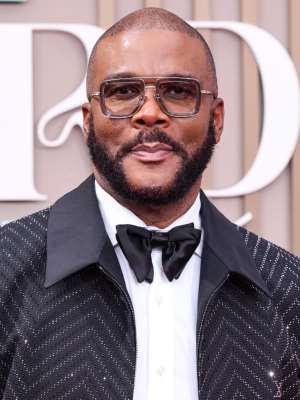
There is a particular kind of silence that falls over a room when a man who has carried a people's stories on his back for three decades finally says, out loud, "I am tired." That is the silence Tyler Perry created this week, sitting across from Justin Sylvester on TODAY With Jenna & Sheinelle, when he confirmed what many suspected but few dared say to his face: the 57-year-old filmmaker is packing up, pulling back, and moving to Puerto Rico at the start of 2027.
It sounds, on its surface, like a simple retirement story — a rich man buying peace with his fortune. But nothing about Tyler Perry has ever been simple, and nothing he does happens without stirring a debate that runs deeper than his bank account. This is a man whose entire empire was built, brick by brick, on the backs and the blessings of Black women. So when he says he is stepping back, the question that follows him to the airport is not "Does he deserve rest?" It is: what happens to the audience who built him, now that he is walking away from the stage they gave him?
THE BOY FROM NEW ORLEANS WHO REFUSED TO STAY BROKEN
To understand why this announcement matters, you have to go back to where Tyler Perry started — and it was nowhere close to Puerto Rico.
Born Emmitt Perry Jr. in New Orleans, Louisiana, Perry has spoken publicly for years about surviving a childhood scarred by abuse at the hands of his father, a wound so deep that he legally changed his first name to distance himself from the man who inflicted it. His mother, Willie Maxine Perry, a preschool teacher who worked most of her life at the New Orleans Jewish Community Center, became both his refuge and his muse — the blueprint for the loud, gun-toting, unapologetically righteous grandmother named Madea who would later make him a household name.
His path to that fame was brutal. In the 1990s, Perry poured his life savings into a self-written stage play, I Know I've Been Changed, and watched it collapse so badly that he found himself homeless, sleeping in his car on Sylvan Road in Atlanta. He has said plainly that there were nights he was "homeless and starving," holding onto nothing but prayer and stubbornness. It took years of relentless re-staging — church basements, community halls, word-of-mouth among Black congregations — before the show finally caught fire.
By the time Diary of a Mad Black Woman and Madea's Family Reunion hit cinemas in the mid-2000s, Perry was no longer just an entertainer. He was a phenomenon that Hollywood did not build and, by his own account, never fully understood. "My audience and the stories that I tell are African-American stories specific to a certain audience... Hollywood doesn't necessarily speak the language," he told Gayle King years later, when opening his own studio. In 2019, he made history by opening Tyler Perry Studios on 330 acres of the former Fort McPherson Army base in Atlanta — a $250-million campus that made him the first Black person to fully own a major American film studio. Forbes has since counted him among the world's few self-made Black billionaires, with a fortune built almost entirely on content he wrote, owns, and controls outright.
WHAT HE TOLD THE WORLD THIS WEEK
Now, that same man who once had nothing has told America he wants less — not more.
Sitting for the extended TODAY interview, Perry confirmed for the first time, on camera, that he is relocating to Puerto Rico at the top of 2027. "Yep, moving to Puerto Rico at the top of the year, and I'm pulling back a whole lot," he told Sylvester, in response to being asked whether he would ever "chill out." He explained the shift not as burnout in the abstract, but as fatherhood catching up with mortality: "Getting older inspired this. It's time to slow down a bit, enjoy more time with my son and just take it all in." His son, Aman, whom he shares with ex-partner Gelila Bekele, is eleven years old, and Perry has made clear the relocation is built around giving the boy a different kind of childhood from his own.
He also revealed that he has not been on a date in three decades — a fact he tied to the same all-consuming grind that built his empire — and that he began therapy for the first time at 54, a process he says reshaped how he thinks about love and marriage. "I think there is only one kind of love, and that's real. If it's real, it's enough," he said, before ruling out marriage entirely, joking that decades of writing about troubled unions in the Why Did I Get Married franchise left him permanently wary of the aisle.
Perry also used the platform, as he often has, to credit the community that made him: Black women, specifically, whom he has called the foundation of his thirty-year career, crediting his mother, aunts, sisters, and friends for teaching him "very early on what works and what doesn't work" long before critics or studios ever took him seriously. He spoke about the enduring grief of losing his mother in 2009 — a loss he has said took nearly a decade to "turn the corner" from, and one he still marks every holiday season, describing grief as "a living thing" that "shows up when it wants to."
THE DEBATE THIS ANNOUNCEMENT SHOULD PROVOKE
Here is where the story stops being gossip and becomes something worth arguing about.
Tyler Perry did not simply entertain Black America — he built a commercial infrastructure that, for two decades, gave thousands of Black actors, writers, and crew members work that mainstream Hollywood refused to offer them. His studio remains a functioning jobs engine in Atlanta today. That is not disputable; it is documented, structural fact. The question his Puerto Rico announcement raises is whether the man who built that machine now has a duty to keep running it at full speed, simply because so many people still depend on it — or whether thirty years of unbroken labor, three decades without a single date, and the compounding grief of losing his mother while chasing deadlines, have earned him the same right to rest that he has spent his career insisting Black women deserve.
There is no clean answer. A man who came from nothing built something that outlived his own exhaustion — and now the very audience whose loyalty made that possible is being asked to accept that the architect is stepping outside the building he built for them.
THE COUNTERARGUMENT: LET THE MAN BREATHE
But fairness demands we steel-man the other side, and it is a strong one.
Perry is not shutting down Tyler Perry Studios; he is stepping back from his own workload, not dismantling the machine that employs others. He timed this announcement in the same week he released a new film in the Why Did I Get Marriedfranchise and launched Maxscene, a new studio division built specifically to create theatrical opportunities for emerging filmmakers — hardly the behavior of a man abandoning the industry he built. He has also spoken, in this same stretch of interviews, about battling depression and past suicidal ideation, which reframes "pulling back" not as retreat from responsibility but as a hard-won act of self-preservation from a man who has openly said his mother's death cost him the very drive that once fueled his empire. No audience, however loyal, is entitled to a man's remaining years at the cost of his mind. Ownership — which Perry has always said "changes everything" — surely includes ownership of one's own exit.
A GHANAIAN LENS ON A HOLLYWOOD STORY
For those of us watching from Accra, Kumasi, and the diaspora corridors of London and Houston, Perry's story lands with a familiar weight. We know this arc intimately: the self-made man who builds an empire from nothing, who is celebrated as a symbol of what "our people" can achieve without waiting for permission from institutions that were never built for us — and who, one day, must decide how much of himself belongs to the public that adopted him.
Our own creative economy in Ghana is still fighting for the kind of ownership Perry achieved — Ghanaian filmmakers, gospel artists, and Kumawood veterans alike understand the exhaustion of building an industry from scratch while an entire community's expectations ride on your shoulders. Perry's decision to prioritize fatherhood over further conquest is a lesson our own hustling culture rarely permits itself to learn: that legacy is not only measured in box office numbers, but in whether a man is present enough to raise his own son.
AUTHOR'S NOTE
I do not believe Tyler Perry owes Black America an apology for wanting quiet. I do believe, however, that his story forces an uncomfortable but necessary conversation about what we ask of the people whose talent we adopt as our own — how quickly we crown them symbols, and how rarely we ask what the crown has cost them in private. Perry gave three decades, a mother's memory, and by his own admission, thirty years without love, to build something the rest of us now claim proudly as ours. Whatever Puerto Rico gives him back, he has more than earned it.
About the Author: Chief Tutu Baffour Asare Brownsy Williams is an author, filmmaker, opinion columnist, and founder of Brownsy Silva Company, a multi-disciplinary creative platform spanning novels, films, and cultural commentary. Writing for Modern Ghana with a readership spanning the UK, USA, Canada, and Germany, he explores the intersections of global culture, storytelling, and the diaspora experience through a distinctly African lens.


 Talensi: Minerals Commission orders Nanlamtaaba Enterprise to halt mining in Gba...
 'I faced those who openly insisted that there’s no galamsey going on' – Prof Gya...
 Trump threatens to not reopen Kennedy Center after board blocks renaming
 Minority boycotts Foreign Affairs Committee meeting on South Africa evacuation o...
 Police arrest two over 192 parcels of suspected cocaine in Wa
 Challenging Heights reveals how Ghanaian girls are recruited into sex trade thro...
 GHS records more than 53,000 adolescent pregnancies in 7 months
 No school being demolished to construct 24-hr economy market at Mankranso - Ash...
 Education Ministry to review 'problematic' CSSPS after Catholic Bishops’ concern...
 Family of Salormey Baffoe appeals for her release from alleged National Security...


