




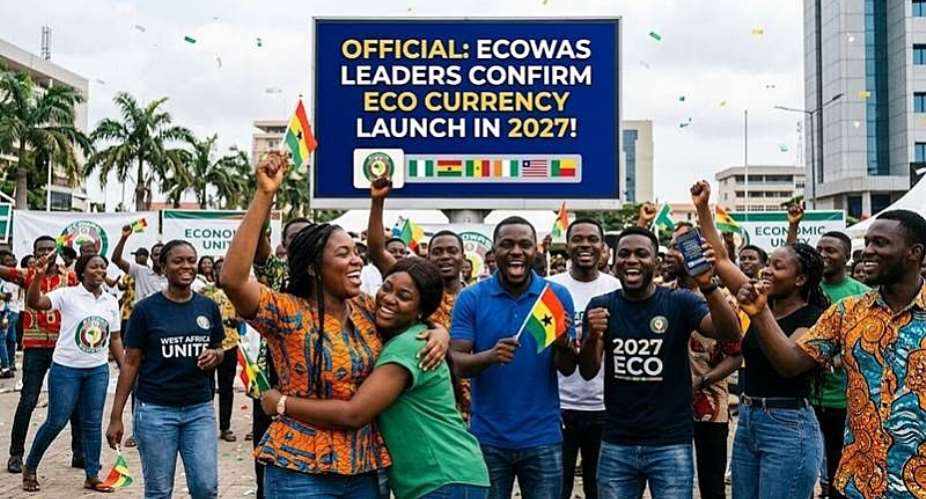
For more than four decades, the dream of a common West African currency had moved between hope, political declarations, technical committees and missed deadlines. It had been announced, postponed, revived and postponed again so many times that many West Africans had learnt to regard the ECO less as an approaching currency than as a permanent promise. Yet, as ECOWAS moves in 2026 to fast-track the project and retain 2027 as its target for launching the single currency, the old dream appears to be entering a more consequential phase.
The roots of the idea go back much further than the currency’s present name. The ambition for monetary integration emerged from the broader project of West African economic integration and can be traced to ECOWAS’s monetary cooperation efforts in the 1980s. The revised ECOWAS Treaty of 1993 gave the objective a firmer institutional foundation by providing for the establishment of a monetary union and common currency. The logic was straightforward: an economic community divided among numerous national currencies cannot fully realize the benefits of a genuinely integrated regional market.
But translating the dream into reality proved considerably more difficult.
West Africa was, and remains, a region of different economic structures, monetary regimes and political interests. Eight countries belonging to the West African Economic and Monetary Union already shared the CFA franc through the regional central bank BCEAO, while such countries as Nigeria, Ghana, The Gambia, Guinea, Liberia and Sierra Leone operated their own national currencies. The challenge was therefore not simply to print another currency. It was to construct a monetary union from economies whose inflation rates, fiscal positions, exchange rates, reserves and levels of economic development differed substantially.
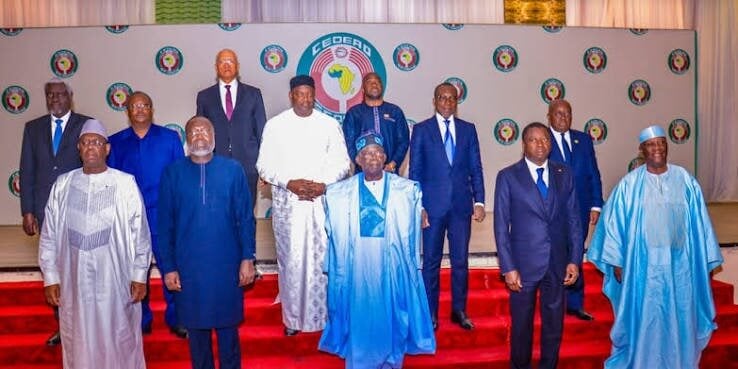
In April 2000, six countries—The Gambia, Ghana, Guinea, Liberia, Nigeria and Sierra Leone—signed the Accra Declaration establishing the West African Monetary Zone, or WAMZ. The intention was to create a second monetary zone which could eventually be merged with the existing CFA-franc monetary union. The West African Monetary Institute was subsequently established in Accra in 2001 as an institution to undertake the technical preparations for a future common central bank and single currency. Then began what might be called the long season of postponements.
The currency was initially expected to emerge in 2003. That deadline was moved to 2005, then to 2010. The financial crisis of 2008 and continuing difficulties in achieving economic convergence pushed the timetable further, eventually to 2015. Another ambitious deadline was set for 2020. Each postponement exposed the same fundamental problem: political enthusiasm for a common currency was considerably greater than the ability of individual countries to satisfy the economic conditions necessary to sustain one. The convergence requirements were designed precisely to prevent countries with widely divergent economic policies from being thrown prematurely into one monetary system. They included limits on inflation and fiscal deficits, restrictions on central-bank financing of government deficits, and requirements for adequate foreign-exchange reserves. More broadly, countries were expected to demonstrate fiscal discipline, exchange-rate stability and sustainable economic management.
This is where the ECO story becomes particularly instructive. A currency union is not merely a political arrangement. Once countries surrender their individual currencies, they also surrender important instruments of national economic management. A country can no longer simply devalue its currency to respond to a crisis or independently print money to finance government expenditure. Monetary policy becomes a regional responsibility.
That explains much of the caution that surrounded the project.
The drama intensified in 2019 and 2020 when ECOWAS formally adopted “ECO” as the name of the proposed currency. But an unexpected disagreement soon threatened to derail the entire project. Côte d’Ivoire and the West African Economic and Monetary Union proposed reforms to the CFA franc, including changing its name to ECO.
Nigeria and other WAMZ countries objected, arguing that simply renaming the CFA franc could not constitute the ECOWAS-wide single currency for which the region had spent years preparing. The dispute exposed the deeper political and institutional disagreements behind the currency project.
Then came COVID-19. The pandemic forced ECOWAS to suspend implementation of its convergence pact during 2020 and 2021, effectively making the 2020 target impossible. In June 2021, however, West African leaders adopted another roadmap, this time targeting 2027 for the launch of the ECO.
The difference today is that ECOWAS is increasingly attempting to make the 2027 deadline operational rather than merely aspirational. In 2025, ECOWAS’s leadership indicated that the bloc would no longer necessarily wait for every member state to satisfy all the convergence requirements before beginning the process. Instead, countries that are ready could participate in the first phase, while others could join subsequently. That phased approach could prove to be the most important change in the currency’s long history.
In July 2026, ECOWAS leaders again reaffirmed 2027 as the target, with the important qualification that countries meeting the convergence requirements would participate in the first phase. The technical work has also continued. In June 2026, experts met in Monrovia to work on the proposed ECOWAS Exchange Rate Mechanism, an important component of the architecture required for monetary integration.
And now, in September 2026, the project has taken another step. The ECOWAS Convergence Council met on September 7 to review progress towards establishing the single currency and called for the process to be accelerated, including the convening of the Presidents’ Task Force. The development is significant because it suggests that the regional authorities are trying to turn the 2027 deadline into a concrete implementation programme rather than another distant promise.
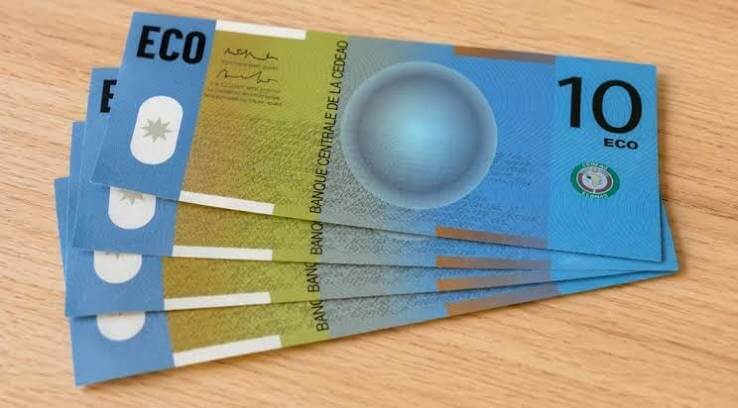
What, then, would a successful ECO mean to the ordinary citizen?
The first and most obvious benefit would be the elimination of currency barriers in regional trade. A Nigerian trader buying goods in Ghana, a Ghanaian business paying a supplier in Senegal or a Nigerian travelling through several West African countries would no longer need to exchange naira, cedi, CFA francs or other national currencies. The costs and uncertainties associated with currency conversion would be reduced.
For small businesses, this could be transformative. West Africa has an enormous informal trading economy, with millions of people buying and selling across borders. A common currency could make prices easier to compare, simplify payments and encourage businesses to think of the region as one larger market rather than a collection of separate national economies.
It could also encourage investment. A company operating in one ECO country could potentially expand into another without the same currency risks that currently complicate cross-border investment. Regional supply chains could deepen, while banks and financial institutions could operate more easily across national boundaries. For ordinary citizens, however, the greatest potential benefit would not be the novelty of carrying a different banknote. It would be the possibility of living in a region where economic activity is less constrained by national borders. But there is a warning here. A single currency does not automatically create prosperity. The euro provides an important lesson. Monetary union can facilitate trade and investment, but it also requires fiscal discipline, strong institutions and mechanisms for helping members cope with economic shocks. A common currency can expose weaknesses that national currencies sometimes conceal. If one country runs persistent deficits, experiences high inflation or accumulates unsustainable debt, the consequences can eventually affect the wider monetary union.
This is why the ECO’s convergence requirements matter so much. They are not bureaucratic obstacles invented to delay the currency. They are safeguards against creating a monetary union that could collapse under the weight of incompatible economic policies. ECOWAS’s convergence reports continue to monitor inflation, fiscal deficits, debt, reserves and other indicators across member states.
There is also the question of sovereignty. Nigerians, Ghanaians and citizens of other countries would have to accept that decisions affecting interest rates, money supply and exchange-rate policy would increasingly be made at the regional level. That could be beneficial if the regional institutions are independent, competent and accountable. It could become dangerous if monetary policy becomes hostage to political pressure.
The ECO therefore represents both an economic opportunity and a test of African political maturity. Its greatest promise is not simply that West Africans will carry the same currency. Its deeper promise is that a region of more than 300 million people could begin to operate as a genuinely integrated economic space. Its greatest danger is that political leaders could launch the currency before the economic and institutional foundations are strong enough to support it.
After more than 40 years of discussion, numerous deadlines and repeated disappointments, West Africa has reached another decisive moment. The 2027 target is more credible than some of the earlier deadlines because ECOWAS is now contemplating a phased launch and is building the technical machinery needed for monetary integration. Yet credibility must ultimately be measured not by announcements but by execution.
The ECO should therefore be judged neither by excitement nor by cynicism. West Africans have waited too long for a currency that exists mainly in official communiqués. What they need is a currency backed by disciplined governments, credible institutions, stable economies and confidence.
If those foundations are properly built, the ECO could become much more than a new note in people’s wallets. It could become a symbol—and an instrument—of West Africa finally beginning to trade, invest and prosper as one economic neighbourhood. If those foundations are neglected, however, the ECO could simply become another chapter in the region’s long history of postponed promises.


 Atewa Forest under ‘unprecedented attack’ from illegal mining – A Rocha Ghana
 NDC will cover its failure with 'fake news' ahead of 2028 elections – Osahen Afe...
 CSSPS resolution centres extended to September 18 over outstanding placement cas...
 AG, GBA clash at Ada Bar conference over 'political comments'
 Gov't secures US jobs pathway for nurses through Columbus partnership
 Expressway: “Eat your wife’s fufu” — Mahama shares light‑hearted joke with Kumas...
 Accra-Kumasi Expressway would allow people to live in Kumasi and work in Accra –...
 18years of legal battle: Retired lawyer urges Chief Justice to crack down on law...
 'Name NAPO as Running Mate again, kickstart 2028 campaign' – Former Manhyia Nort...
 September 15: Cedi sells at GHS12.20 on forex market, GHS11.47 on BoG interbank


