




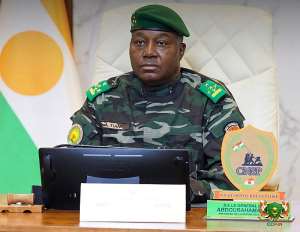
On September 10, 2026, Niger's Council of Ministers approved a sweeping overhaul of the country's media regulatory framework a move Niamey has framed as administrative housekeeping but which, read against the last three years of the junta's relationship with the press, looks far more like the codification of control.
The reform tightens accreditation rules for foreign correspondents operating in the country and introduces a draft ordinance requiring mandatory identification of online press publishers, placing new legal responsibility on digital newsrooms for the content they carry.
Officially, the government describes this as a clarification exercise: defining which categories of journalists are authorized to operate on Nigerien soil, and spelling out their professional obligations in exchange for that access. In practice, it is the latest instalment in a pattern that began within a week of the July 2023 coup, when signals for RFI and France 24 were cut.
Since then, Niger's National Communications Observatory (ONC) a junta-created body that replaced the constitutionally established Conseil Supérieur de la Communication has suspended nine major French-language outlets in a single May 2026 order, citing threats to "public order, national unity, social cohesion and the stability of republican institutions."
The casualties included AFP, TV5 Monde, Jeune Afrique, Mediapart and TF1 Info a roster that amounts to most of the French-language international press Nigeriens once relied on for independent coverage of their own country.
The accreditation-and-identification reform announced this month should be read as the institutionalization of that posture rather than a break from it. Where the May suspensions were an emergency measure against outlets already inside the country, the new rules are structural: they determine, prospectively, who gets in and under what conditions, and they extend the state's reach into the digital press by forcing online editors to attach a verifiable identity to what they publish.
For investigative and citizen journalism operating in the grey zones of anonymity that have kept some reporting alive under previous crackdowns, that requirement removes a layer of protection that many editors have depended on.
This adjustment lands in a media environment already among the most punishing in the Sahel. Niger fell 37 places in the 2026 RSF World Press Freedom Index, dropping to 120th of 180 countries a collapse that tracks the broader regional trend the Media Foundation for West Africa flagged this year, in which eleven of sixteen West African states recorded declining press freedom scores. Investigative editor Ali Soumana of Le Courrier was jailed in September 2025 after a complaint from the Prime Minister over a customs-fraud report.
Just this month, Moussa Kaka, director of Radio Télévision Saraounia and a former RSF correspondent, was reported missing since August 31 a disappearance RSF has publicly flagged as a case demanding urgent clarification from the authorities.
Viewed through a security-sociology lens, the logic is familiar to anyone who has tracked how the Alliance of Sahel States has managed its information environment since the French military withdrawal.
Media control functions here as a companion instrument to territorial and narrative contestation with JNIM and ISWAP, and to the broader realignment toward Russian security partnerships: an adversarial press asking uncomfortable questions about mutinies, troop losses, or Africa Corps deployments is treated as a variable to be managed rather than a check to be tolerated.
The September accreditation regime does not need to ban outlets outright to achieve this; it only needs to make continued access conditional, revocable, and administratively opaque enough that self-censorship does the rest of the work.
The Squeeze on Local and International Journalists
The new framework does not fall evenly. For Nigerien journalists, the pressure has been building since the coup's first weeks and now runs through the courts, the newsroom, and the street.
The Ministry of the Interior forced the Maison de la Presse the umbrella body representing the country's journalists' associations to shut down in January 2024, after it had spoken out against post-coup press violations, stripping local reporters of their main collective advocate.
Individual cases followed a similar arc: Samira Sabou was detained incommunicado for eight days in September 2023 over reporting deemed likely to disturb public order; Soumana Maiga of L'Enquêteur was arrested in April 2024 and charged with harming national defence after his paper reported on Russian listening equipment allegedly installed on state buildings; Ali Soumana of Le Courrier was jailed in September 2025 following a defamation complaint from the Prime Minister over a customs-fraud investigation.
The still-unresolved disappearance of Moussa Kaka since August 31, 2026, has become the starkest illustration yet of the physical risk now attached to running an independent Nigerien outlet. Amnesty International and CPJ have both documented a resulting climate of self-censorship, with several media professionals reportedly leaving the country altogether.
For international correspondents and foreign outlets, the constriction runs through access rather than arrest, though the two are not unrelated. RFI and France 24 lost their signals within a week of the July 2023 coup; the BBC was suspended in December 2024; and the May 2026 ONC order added AFP, TV5 Monde, Jeune Afrique, Mediapart, TF1 Info, LSI Africa and France Afrique Média to the list in a single sweep, leaving Nigeriens with almost no French-language international broadcaster still operating legally inside the country.
The September 10 accreditation reform formalizes that gatekeeping going forward: foreign correspondents will now need to satisfy defined categorical and professional-conduct requirements before they can report from Nigerien soil at all, converting what was previously an emergency suspension power into a standing entry filter.
Taken together, the two tracks prosecution and disappearance for those reporting from inside, accreditation and suspension for those reporting from outside describe a single strategy: narrowing, from both directions at once, who is left to tell Niger's story.
For journalists across the Sahel-Guinea corridor Nigerien, Malian, Burkinabè, and the correspondents from Accra and Lagos who cover this beat from outside the message from Niamey this September is consistent with what CPJ's Francophone Africa representative said of the ONC in May: a regulator meant to safeguard press freedom is instead formalizing the machinery of its restriction.
The question now is not whether Niger's newsroom environment will keep shrinking, but how much of the accreditation and identification apparatus quietly being built this month becomes the template the rest of the AES bloc adopts next.
Mustapha Bature Sallama
Medical/ Science Communicator,
Private Investigator, Criminal Investigation and Intelligence Analysis,
International Conflict Management and Peacebuilding. ( USIP)
[email protected]
+233555275880
Sources
Committee to Protect Journalists, "Niger suspends 9 French media outlets for alleged public order threat," May 15, 2026.
ARTICLE 19, "Niger: Lift the ban on international media and protect freedom expression," May 13, 2026.
Reporters Without Borders (RSF), Niger country profile, accessed September 2026, including the September 2, 2026 update on the disappearance of Moussa Kaka.
Media Foundation for West Africa (MFWA), "Niger: Media regulator suspends nine French outlets," May 11, 2026.
Free Press Unlimited, Niger country page, accessed September 2026.
ModernGhana.com, "Niger's Junta Suspends 9 French Media Outlets," May 9–10, 2026.
The Washington Post, "Press freedom alarm as Niger suspends 9 French media outlets over 'national security'," May 9, 2026.
Amnesty International, "Niger - Press Freedom in Jeopardy As Journalists Working On Conflict Intimidated and Arrested," via AllAfrica, 2024.
AllAfrica, "West Africa: Niger - Investigative Journalist Imprisoned Following Complaint By Prime Minister," September 2025.
Journal du Niger, "Niger: nouvelles règles strictes pour les médias étrangers," September 11, 2026 reporting on the September 10 Council of Ministers decision on accreditation and online press identification.
Media Foundation for West Africa, World Press Freedom Day 2026 regional statement, as republished on ModernGhana.com, May 3, 2026.

 CSSPS resolution centres extended to September 18 over outstanding placement cas...
 AG, GBA clash at Ada Bar conference over 'political comments'
 Gov't secures US jobs pathway for nurses through Columbus partnership
 Expressway: “Eat your wife’s fufu” — Mahama shares light‑hearted joke with Kumas...
 Accra-Kumasi Expressway would allow people to live in Kumasi and work in Accra –...
 18years of legal battle: Retired lawyer urges Chief Justice to crack down on law...
 'Name NAPO as Running Mate again, kickstart 2028 campaign' – Former Manhyia Nort...
 September 15: Cedi sells at GHS12.20 on forex market, GHS11.47 on BoG interbank
 Kwaso Chief applauds Mahama over Accra-Kumasi Expressway, calls for national sup...
 Julius Debrah champions cocoa transformation as Ghana targets 50% local processi...


