




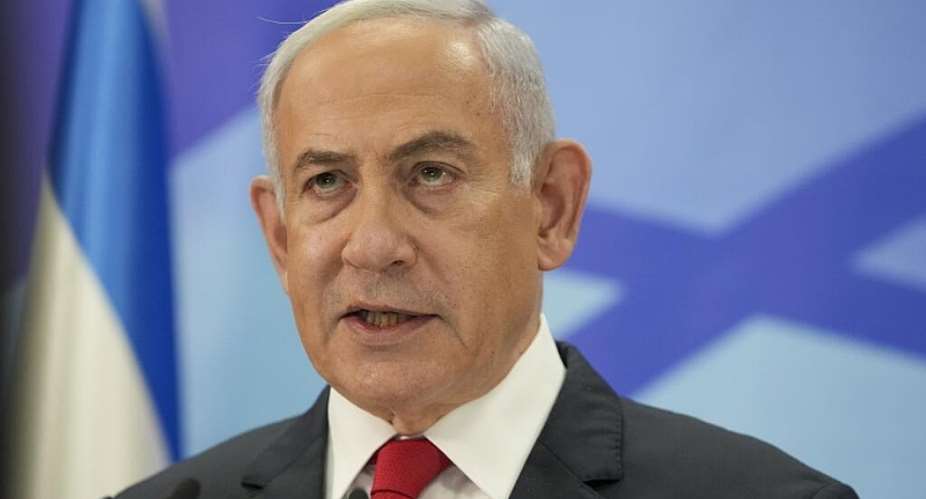
Whatever awaits him this coming November, few politicians could claim to have the endurance, bloody mindedness and sense of granite staying power than Israel’s Benjamin Netanyahu. With some prowess, he has wooed, deceived, and lied his way to power, and, for the most part, stayed the course for the best part of a generation. He bloomed in arid soil when sceptics thought him dead. He offers lessons of Machiavellian proportions almost unsurpassed.
What, then, of being found out for falling short ahead of the October 27 elections? Errors in the making, the sundering blunder to soil the image of strength? History offers the guidance of tragic and foolish mistakes. The British failure to anticipate their routing in Singapore by the Imperial Japanese Army in 1942 is always a topic of interest (they wagered on a sea attack, not a jungle incursion); even, dare one say, the failure of the United States to anticipate an attack on Pearl Harbour in December 1941 despite doing much to aggravate a power that had done so much to put the Western powers on edge. Did, in other words, the individual in a position of power and influence know and, for whatever said reasons, not take the threat seriously? Self-confidence, or, as the ancient Greeks might put it, hubris, bulks complacency and places it on a pedestal. This is the case being made about Netanyahu. And more besides.
The latest bruising claim by Haaretz, based on research for a book Hostages: 843 Days of Abandonment by Shlomi Eldar and Ruth Yuval, involving “dozens of sources in Israel and worldwide, including very senior officials, as well as sound recordings, internal documents and recordings”, is chastening. Netanyahu was, according to the authors, told, in unequivocal terms, that an attack by Hamas was being planned. According to the report, a 45-minute conversation took place between UAE President Sheikh Mohamed bin Zayed (MBZ) and Netanyahu, in which the Emirati leader warned of the intentions of the late Hamas leader Yahya Sinwar that could lead to an exaction of bloodiness from Israel and a destabilising of the Abraham Accords. This came after the stymieing of negotiations between Hamas and Netanyahu’s office that had begun in 2023 in pursuit of a temporary truce, known as a hudna, that would pave the way for a more durable arrangement regarding the Gaza Strip. Ghazi Hamad took the lead for Hamas, as he did in 2014 when talks are also said to have taken place between Netanyahu and Hamas, unbeknown to security officials.
The paper notes the views of Israeli President Isaac Herzog on MBZ on the escalation taking place in the West Bank and Gaza in September 2023. Bin Zayed is said to have, according to Herzog, spoken to him “about this often in the months leading to the war.” He “constantly conveyed messages that the situation needed to be defused. He even sent a special envoy to Israel who met with the prime minister. The emir seemed to sense that the area was on the verge of explosion.”
To dilute the scorching acid in the mix, a senior Fatah official, cast in the role of “Coal Eyes” to both Hamas and the internal intelligence agency Shin Bet, was brought in. Talks proceeded. It seemed that some semblance of an agreement was made. “The atmosphere was so optimistic that Fatah’s Coal Eyes repeatedly reported that an agreement with Israel was closer than ever and that both sides viewed the proposals as ‘feasible options.’”
Netanyahu, however, baulked. “Perhaps,” speculate the logically minded scribblers, “he did so out of fear of reaching an agreement with Hamas, or perhaps out of fear from the reaction of his extremist partners in his new government.” His right-wing coalition partners, cut and dried fanatics as they are, were not likely to have approved. Sinwar remained sly, fielding his options: he was still conducting negotiations with Hezbollah and Iran in the context of an attack on Israel. “He simply vanished from our radar, evaporated,” Haaretz records a senior Shin Bet official as saying. The journalists float the suggestion that Iran, Hamas and Hezbollah, bound in that axis of growling resistance, thought Israel vulnerable at that particular point in time. “In September 2023, Coal Eyes has a meeting with Sinwar: ‘Tell the Israelis that if they don’t make progress, I’m preparing a huge surprise for them.’ They could expect a ‘zilzal’ (earthquake).”
Events transpire with dull inevitability, but Coal Eyes eventually readies himself to tell Shin Bet about the ominous developments. Its head, Ronen Bet, seeks Netanyahu for discussions. Briefings take place on the “earthquake” threat. The defence establishment remained largely phlegmatic, almost cocky. The threat by Sinwar was, according to an Israeli intelligence official, something of a prodding tease, a scouting exercise: “due to being tired about Israel’s delays, placing pressure on seeking an arrangement and not so eager to start a war. Or, as we prefer to think, it was part of his ‘Great Deception’ plan, and he wanted to test the IDF’s readiness.”
To cloud matters further for Netanyahu, the Egyptian intelligence chief Gen. Abbas Kamel is also said to have warned the PM’s office that Hamas was readying to launch “something unusual, a terrifying operation.” The CIA-director William Burns is also said to have been told by bin Zayed about “something there [...] about to explode.” The jam spread of imminent attack, in other words, becomes harder to avoid. Following the October 7, 2023 attack, Netanyahu, according to a report by Smadar Perry writing for Ynet, is said to have told Kamel that, “In Gaza, we are in the picture, we are in control. Our problem is with the West Bank, and that’s where we are diverting our forces.”
The PM’s office poured corrosive scorn on the Haaretz report, describing it as “a complete lie. Prime Minister Netanyahu did not speak with the president of the United Arab Emirates during the period in question and did not receive a warning from him.” The opposition leaders thought far more of the revelations, eager to pluck the fruits of electoral opportunity. “Netanyahu bears personal and direct responsibility for the failure that led to the deaths of thousands of Israelis on his watch,” former Prime Minister Naftali Bennett stated. “His ignoring of the warnings is criminal negligence, and therefore he is doing everything to prevent the establishment of a state commission of inquiry that will expose the truth.”
In a joint statement, opposition leaders Bennett, Gadi Eisenkot, Yair Golan and Avigdor Lieberman demanded that, “The Israeli public is entitled to know: What did Netanyahu know, and when did he know, why he didn’t update the security establishment, and why he didn’t act to protect Israeli civilians?” Reasons await from the wily Netanyahu, a man so confident he thought he could outwit oppressive precedent and damn Clio. As with previous disasters in history, he may well have been found out.
Dr. Binoy Kampmark was a Commonwealth Scholar at Selwyn College, Cambridge. He currently lectures at RMIT University. Email: [email protected]


 How IGP Yohuno led Police team to rescue victim, arrest four kidnappers in Assin...
 Akufo-Addo would have used Accra-Kumasi expressway for galamsey – Mahdi Gibrill
 Nigeria's Dangote refinery launches continent's biggest IPO
 Accra-Kumasi Expressway to cut travel time to 2hours, drive 120km per hour — Mah...
 'Our own money $2billion ready, we have not gone to borrow money from anywhere' ...
 Founder’s Day September 21 declared public holiday
 Council of State was not qualified to determine prima facie case against Torkorn...
 'Grounds for removal of Chief Justice and justice of superior court shallow, eph...
 Don't be a Bar that flips on principles but a Bar that is consistent — AG tells ...
 Prostate cancer may show no symptoms until advanced stage – Urologist warns


