




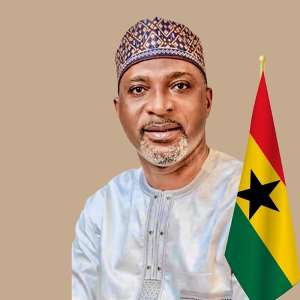
In public administration, leadership is often defined by policy documents, infrastructure projects, and strategic reforms. Yet, the true measure of political leadership lies in how a leader treats the vulnerable—those who lack wealth, influence, or high-profile networks to navigate complex governance structures. Within Ghana’s political landscape, the Minister for the Interior, Hon. Alhaji Muntaka Mohammed-Mubarak, is forging a leadership ethos rooted in moral clarity and public duty.
At the heart of Hon. Muntaka’s administration is an active expression of compassion and love for the ordinary Ghanaian taxpayers. By opening his office to ordinary citizens seeking resolution on legitimate law enforcement issues, he has turned the Interior Ministry into a refuge for those who traditionally feel invisible within the machinery of the state.
This compassionate approach stands in stark contrast to past leadership eras, where public trust was undermined by allegations of institutional protection for the elite. For years, ordinary Ghanaian taxpayers—small-scale traders, artisans, and hardworking citizens, watched with frustration as financial wrongdoers and influential figures allegedly used administrative influence to evade accountability. Such practices breed cynicism and chip away at public confidence in the rule of law. By insisting that law enforcement respond strictly to the facts of a case rather than the status of the parties involved, Hon. Muntaka is helping to break a cycle of elite impunity and rebuild faith in state institutions.
However, the Ministry of the Interior does not operate in isolation. The Minister sets policy, provides administrative oversight, and establishes moral tone, but the practical execution of law enforcement rests largely with the Ghana Police Service. For this vision of equal justice to fully materialize across all communities, the Police Service must match the Minister's goodwill and commitment.
When the Interior Minister refers a case involving a vulnerable citizen to police commands, officers and investigators must treat the referral with urgency, neutrality, and professional integrity. Law enforcement officers are the frontline custodians of public trust. When a low-income taxpayer seeks help from a local police station, the handling of that matter directly reflects on the state’s commitment to fairness. The Ghana Police Service must ensure that referrals from the Ministry are handled without administrative delays, bias, or susceptibility to external pressure.
To sustain these reforms, Hon. Muntaka is encouraged to deepen his administrative oversight. Institutional reform requires constant vigilance to ensure that policies yield consistent outcomes.
First, the Ministry should consider establishing a dedicated internal oversight tracking mechanism to monitor the progress of cases involving vulnerable citizens referred to security agencies. Following up on reported abuses, particularly those where powerful financial actors exploit ordinary workers sends a clear signal that the Ministry expects thorough accountability.
Second, the Minister should continue engaging directly with police leadership to strengthen institutional safeguards against corruption and selective justice. Institutionalizing protection mechanisms for whistleblowers and vulnerable complainants ensures that citizens can report cases without fear of reprisal.
It is important to note that regardless of the minister's effort and goodwill, if the sector is saddled with financial and logistical constraints—as is currently the case—its failures will always overshadow its successes. It is little wonder, then, that most of the security agencies under the Interior Ministry are perceived as underperforming.
Hon. Muntaka Mohammed-Mubarak’s leadership demonstrates how faith and public duty can intersect to restore public trust. By grounding his public service in equity, empathy, and accountability, he offers a clear governance model. If the Ghana Police Service fully aligns with this standard, and if the Minister continues his active oversight, Ghana will take a major step toward a security and justice system where the law protects every citizen equally—regardless of wealth, status, or influence.
The author is an Information Officer with the Information Services Department.

 Transport fares increased 8% from September 26
 Golokuati residents call for operationalisation of abandoned ECG office
 Frank Danquah declared wanted over alleged narcotics offences
 Ghana TVET Service warns against collection of fees in TVET institutions
 16 arrested as National Security uncovers counterfeit currency printing syndicat...
 Work without fear or favour — Shamima Muslim urges broadcasters
 MFWA begins 5-day training for journalists from northern sector on media law and...
 A/R: Assemblyman for Nkwantakese Electoral area killed
 Kumasi: Roadside trader killed in tragic accident at Brewery Traffic Light in As...
 Law student petitions CHRAJ over alleged military killing of Gbewaa Training Col...


