




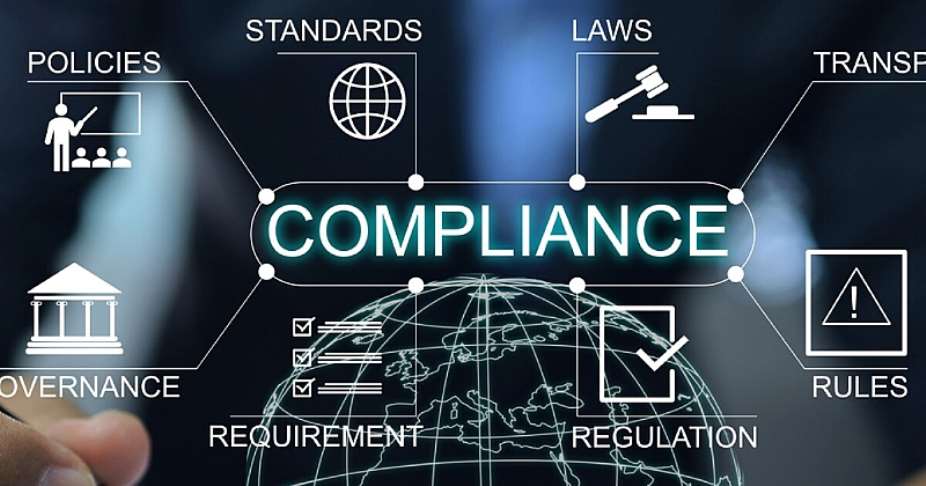
There is a misinterpretation that with the establishment of strict rules and regulations, code of ethics, compliance departments, internal audits and whistleblower programs within the organizational structure corporate integrity is inevitably ensured. The above-mentioned elements serve as significant bases, yet alone they cannot guarantee the development of the corporate integrity culture. It can be achieved via interactions between such formal structures, leaders, people, incentives, due processes, sanctions and organizational expectations.
The organizational culture is not only reflected in the policy itself, but in what is rewarded, allowed and penalized by employees. Therefore, corporate integrity is measured by the ability to survive in the operational environment where commercial, managerial and institutional pressures make acting ethically quite challenging. The similar point is expressed by Batista and Molina [1] who define corporate integrity as an ability of governance and compliance systems to cope with the mentioned challenges.
Being Compliant Is Not Integrity
Compliance and integrity are the notions that are very closely interconnected and yet differ from each other. Compliance refers mainly to following laws, policies, regulations and control procedures. On the other hand, integrity implies questioning of the consistent adherence to ethical standards and principles, responsible behavior of the organization and its accordance to declared values even in the absence of legal requirements for a certain activity.
Modern researches [2] also warn about the possible misinterpretation of having compliance framework for ethical performance. In a recent study [3] of corporate compliance among Brazilian organizations suggests that one should pay attention to the 'means-ends decoupling' phenomenon when formal compliance occurs without changes in organizational behavior.
The Integrity Challenge and Organizational Culture
According to Isséki and Ferhani [4], the corporate integrity concept has transformed from rather fragmented ethical one into multi-dimensional governance one including ethical leadership, organizational behavior, regulatory systems performance and digital ethics.
Integrity within the corporate world clearly transcends mere compliance.
The development of integrity within the corporate world can be viewed as the evolution from complying with external legalities to compliance with ethical values that are internal to the organization.
Integrity within the corporate world has indeed become an essential element of organizational culture and cannot be considered as an individual challenge but rather one that has moved on from being an ethical idealism to becoming a developed organizational capacity with the ability to influence risk management, internal controls, disclosures, and corporate decision-making [5].
The key issue faced by organizations in Ghana is thus not merely whether there is adequate rulemaking, but whether organizational systems can respond convincingly to situations where organizational values conflict with personal interests, business pressures, or managerial interests. Organizational culture will then determine the response to this issue.
This can be approached in view of the following elements:
a. The attitude and culture behind the integrity policy
In the case of any policy, there will be some basic principles and practice guidelines that will require a positive attitude change in relation to past policies. Policies do not create an environment of integrity; they have to be backed with actions such as proper reward and sanctioning system for everyone in the ranks and hierarchy.
Policy alone does not execute itself. The credibility of the policy depends on whether employees see the organization implementing their standards and doing so in a fair manner. Horsey, Guo and Huang [6] based on experience from Ghana highlights dimensions of ethical culture in terms of clarity of expectation, management congruence, feasibility, support, transparency, discussion and sanction. The implication here is clear; integrity policy only makes sense when the organizational culture makes it credible, feasible and enforceable. Rules that are selectively implemented could reduce rather than enhance the credibility of the organization.
b. The hypocrisy effect
The most damaging signal that the organization could send is the one whereby leaders publicly endorse ethical standards but privately exempt themselves from following them. This is called moral hypocrisy where the promotion of ethical behavior goes beyond the demonstration of ethical behavior.
According to Rees, Smith and Soderberg [7], moral hypocrisy perception of the leader causes reactance and this leads to increased follower deviance. These findings are crucial because they mean that leadership hypocrisy is more than just a reputation issue since it affects behavior of the employees [8]. When employees are faced with senior figures demanding something that they are not following themselves, they make it known to the organization that integrity is about performance rather than principles. They end up observing the rules when there is visible enforcement and breaking them when there is no possibility of getting caught.
As an Akan saying says “he who walks behind imitates the footsteps of the one ahead”.
c. The role of leadership
It is imperative that ethical leadership and organizational culture should complement each other. There exists a positive and significant relationship between ethical leadership and productivity work attitudes, namely organizational commitment and organizational citizenship behaviour, and organisational climate acts as a moderator in this relationship [9] .
Thus, the 'tone at the top' should reflect the organisational ethical standards and should pass through the organisation without fear and favour. A similar finding can be drawn from another study [10] , in which sustainable ethical leadership in public hospitals was related to an enduring ethical culture and compliance with codes of conduct, and professional practice, stakeholder confidence and quality of services.
d. Failure to recognize whistleblowing as the central test of integrity
However, the mere existence of a whistleblower channel cannot constitute an indication of the organisational integrity. The more rigorous test involves actions following a disclosure. The research carried out by Kenny and Batishcheva [11] concerning 'disclosure injustice' demonstrates that whistleblowers encounter testimonial and structural barriers in their ability to get believed, heard and protected.
Whistleblowing, by its nature, involves challenging the existing power, hence why the whistleblowing mechanism might be rather sophisticated in paper and not so effective in reality if any credible disclosures were not taken into account, disbelieved or followed by any retaliation.
Domfeh and Bawole [12] concluded that besides legal regulations, political and institutional commitment is necessary for the protection of whistleblowers from retaliation and intimidation.
Consequently, an organization's whistleblower policy that lacks any substance despite being in place is one perfect instance of compliance without integrity.
e. Beyond legal requirements
The conduct may be legal, but it may violate the principles of good faith and public trust. Firms may justify their behavior based on its being tradition, convenience, or legality, even if it goes against the very values that they uphold as an organization.
Integrity demands that an organization look at the areas of grey rather than using legality as the final factor of consideration. These questions can arise:
- Does the decision show justice to stakeholders involved?
- Is it possible for the company to disclose the rationale?
- Does this decision lead to a conflict of interest?
- Will the employees see this behavior as aligned with organizational values?
- Is this decision still justified if it is revealed to the public?
- Is there unnecessary injury or inequality in this practice?
- Should the organization behave in a way that is more careful than what the law requires?
The approach outlined above corresponds with the principles of governance in the contemporary world whereby the notion of good and responsible governance is viewed in the context of governance. For instance, ISO 37000 [13] views governance as the ability to govern well while acting ethically and responsibly.
According to section 190 of the Companies Act [14], directors of the corporation should act in the best interests of the firm taking into consideration such factors as the long-term consequences, effects of the operation of the firm on the community and the environment, and desirability of maintaining a reputation for high standards of business conduct.
Presence of integrity policies shows intention of the institution to implement all the standards, and the way of building capacity and handling those individuals that comply with the policies and those that disregard them indicates character of the institution.
f. Building integrity-based organizations
Integrity-based organization should integrate its governance structure with the operations of the day-to-day activities of the organization. The above process involves not only writing down the values but identifying integrity risks, assigning responsibilities, measuring outcomes and learning from the mistakes.
Practical measures include:
- Integrate integrity into strategy and risk management. Ethical risks should be managed together with financial, operational, legal, cybersecurity and reputational risks.
- Hold leaders accountable. Boards and top executives must check that actions align with their values, and they should investigate how incentive structures affect behaviors.
- Promote ethical decision-making. Workers require help making decisions in cases where business interests, self-interest, stakeholder interests, and laws are in opposition.
- Ensure employee whistleblower protection. Whistleblower processes must be available, private, independent, and backed up by credible anti-retaliation policies.
- Assess culture effectively. Firms can assess their culture using employee satisfaction surveys, complaints data, investigation results, exit interviews, audit results, and persistent control system failures.
- Leverage technology responsibly. Organizations should ensure digital technologies, artificial intelligence, analytics, and decision-making processes follow ethical principles.
- The key is to learn rather than hide. The development of the integrity system goes beyond finding out whose rule was broken, but includes understanding what incentives, procedures, leadership practices, or lack of communication made the behavior possible.
Such practices indicate a move away from the narrow checklist-based approach and toward a broader concept of governance, whereby integrity is considered an organizational capacity that helps to make right decisions, gain trust, build resilient risk management, and deliver good performance.
Conclusion
The corporate integrity cannot be evaluated based only on how many rules have been introduced in an organization and how many controls have been developed. Audits, rules, codes of conduct, and reporting lines are all necessary for the effective functioning of a firm, but they depend greatly on the culture that is established within it.
Therefore, a proper integrity system needs to link the compliance efforts to such aspects as ethical leadership, fair incentives, proper governance, voice of employees, independent monitoring, and learning. In addition, new risks in form of misuse of data, AI technologies, cybersecurity incidents, fraud in supply chains, sustainability statements, and conflict of interest issues cannot be addressed just by the checklists.
Thus, for organizations working in Ghana and elsewhere, the issue is not about making one rule after another. Instead, the challenge lies in making the already existing rules more credible. This requires that the organizational leaders are accountable, people feel safe to raise ethical concerns, sanctions are consistent, and decisions of the firm can be justified in terms of ethics.
The key question is not whether an organization can show compliance on paper. It is whether its people, systems, and leadership always do the right thing despite challenges, costs, and lack of immediate monitoring of their actions. This is the point at which compliance takes the form of culture, and corporate integrity is transformed into an organizational competence.
Frank Okyere Darko Appenteng, MSc, MSc, BSc, LLB, BL Candidate.
Corporate Integrity, Fraud Risk and Forensic Investigation Consultant
Bibliography
- Emanuel Batista and Juliana Jaccoud Molina, 'From the Pitch to the Boardroom: Building a Championship-Level Compliance & Governance System' (Corporate Compliance Insights, 29 June 2026).
- Marco Antonio Portugal, 'Integrity for English Eyes Only? Evidence of Means-Ends Decoupling in Brazilian Corporate Compliance' (2026) Regulation & Governance .
- ibid.
- Brice Isséki and Billel Ferhani, 'Organizational Integrity Between Ethics and Performance: A Bibliometric Synthesis of 80 Years and Research Agenda' (2026) Journal of Business Ethics ; Araceli de los Ríos-Berjillos, Maria Luisa Rodero-Cosano, Mercedes Ruiz Lozano and Enrique Mesa Pérez, 'The Institutionalization of an Ethical Culture Through the Implementation of Compliance Systems' (2025) 32(5) Corporate Social Responsibility and Environmental Management 6416.
- Md Samsul Alam, Faizul Haque, Prem Puwanenthiren and SM Sohrab Uddin, 'Whoever Walks in Integrity Walks Securely: Does Corporate Integrity Culture Mitigate Climate Change Exposure?' (2026) 204 Journal of Business Ethics 885
- Horsey Emmanuel Mensah, Guo Lijia and Huang Jiashun, 'Ethical Party Culture, Control and Citizenship Behavior: Evidence from Ghana' (2023) 10 Humanities and Social Sciences Communications 238
- Horsey Emmanuel Mensah, Guo Lijia and Huang Jiashun, 'Ethical Party Culture, Control, and Citizenship Behavior: Evidence from Ghana' (2023) 10 Humanities and Social Sciences Communications 238
- Rees, McKenzie R., Isaac H. Smith, and Andrew T. Soderberg. "Psychological Reactance to Leader Moral Hypocrisy." Business Ethics Quarterly 34, no. 4 (2024
- ibid.
- Prince Addai, John Avor, Isaac Nti Ofori, and Daniel Ntiamoah Tweneboah, 'Ethical Leadership and Productive Work Attitudes Amongst Micro Financial Institutions in Ghana: The Moderating Effect of Organizational Climate' (2019) 42(9) Management Research Review 1
- Jefthy KAM Hattoh, ‘Sustainable Ethical Leadership Practices in Managing Public Hospitals in Ghana: An Insight from the Health Services of the University of Ghana’ (2026) 16(1) Journal of Business and Professional Studies.
- Kate Kenny & Maria Batishcheva, 'Whistleblowing as Disclosure Injustice: Testimonial and Structural Obstacles to Being Heard' (2025) 32 Gender, Work & Organization 2103
- Kwame Ameyaw Domfeh and Justice Nyigmah Bawole, ‘Muting the Whistleblower through Retaliation in Selected African Countries’, 11 Journal of Public Affairs 334 (2
- ISO 37000:2021, Guidance on Governance of Organizations (International Organization for Standardization
- Companies Act, 2019 (Act 992).


 How IGP Yohuno led Police team to rescue victim, arrest four kidnappers in Assin...
 Akufo-Addo would have used Accra-Kumasi expressway for galamsey – Mahdi Gibrill
 Nigeria's Dangote refinery launches continent's biggest IPO
 Accra-Kumasi Expressway to cut travel time to 2hours, drive 120km per hour — Mah...
 'Our own money $2billion ready, we have not gone to borrow money from anywhere' ...
 Founder’s Day September 21 declared public holiday
 Council of State was not qualified to determine prima facie case against Torkorn...
 'Grounds for removal of Chief Justice and justice of superior court shallow, eph...
 Don't be a Bar that flips on principles but a Bar that is consistent — AG tells ...
 Prostate cancer may show no symptoms until advanced stage – Urologist warns


